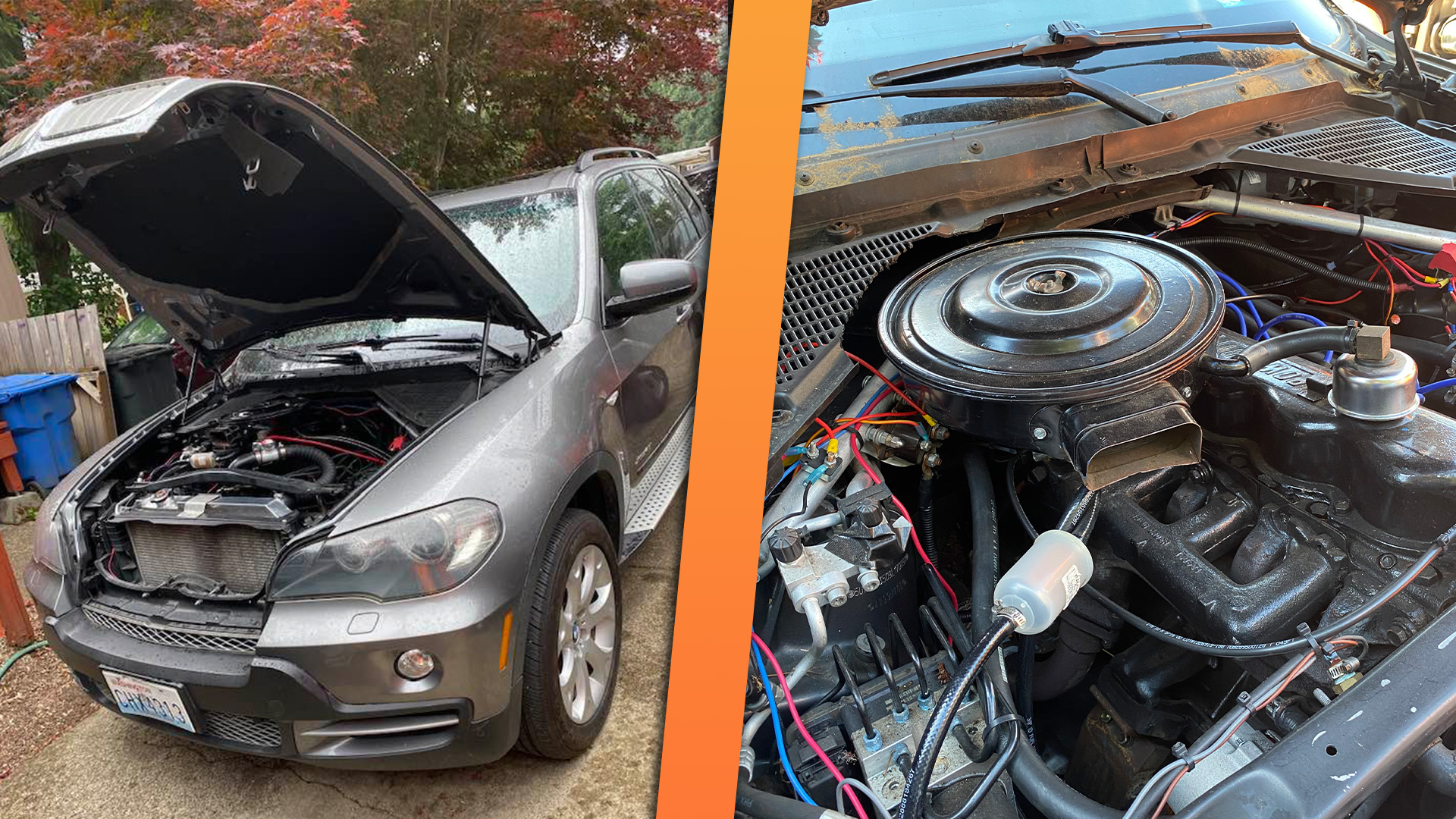
A shadetree mechanic solved a broken BMW X5's engine problem the unconventional way. Instead of sourcing an expensive replacement V8 from the German automaker, the builder dropped in a 50-year-old Ford inline-six paired with a three-speed automatic transmission.
This swap trades modern performance for reliability and cost. The original X5's V8 had failed, and the repair bill through BMW would have been substantial. A salvage-yard Ford I6 from the 1970s offered a bulletproof alternative. These engines are legendary for durability and parts remain cheap and plentiful.
The trade-offs are obvious. The old Ford powerplant produces a fraction of the original engine's horsepower and torque. The three-speed auto lacks the refinement of modern transmissions. Fuel economy suffers. Acceleration becomes leisurely by modern standards.
But the X5 runs. Cooling systems, electrical harnesses, and drivetrain components required rewiring and adaptation, work that demands fabrication skills and problem-solving. The builder solved mounting challenges and integrated the vintage engine into a vehicle designed four decades after that engine left the factory. That requires knowledge of both old and new automotive systems.
This approach reflects a growing DIY ethos among car owners facing repair bills that rival used car payments. Luxury vehicles like the X5 carry premium repair costs. Engine replacement through dealerships often exceeds five figures once labor is factored in. A salvaged Ford six and a weekend of wrench-turning costs dramatically less.
The result won't impress anyone chasing performance. But it represents automotive pragmatism. The owner regains a running X5 for a fraction of the proper repair cost. The engine will likely outlast the vehicle's remaining years. Parts stores stock Ford I6 components everywhere.
This swap embodies the garage culture that