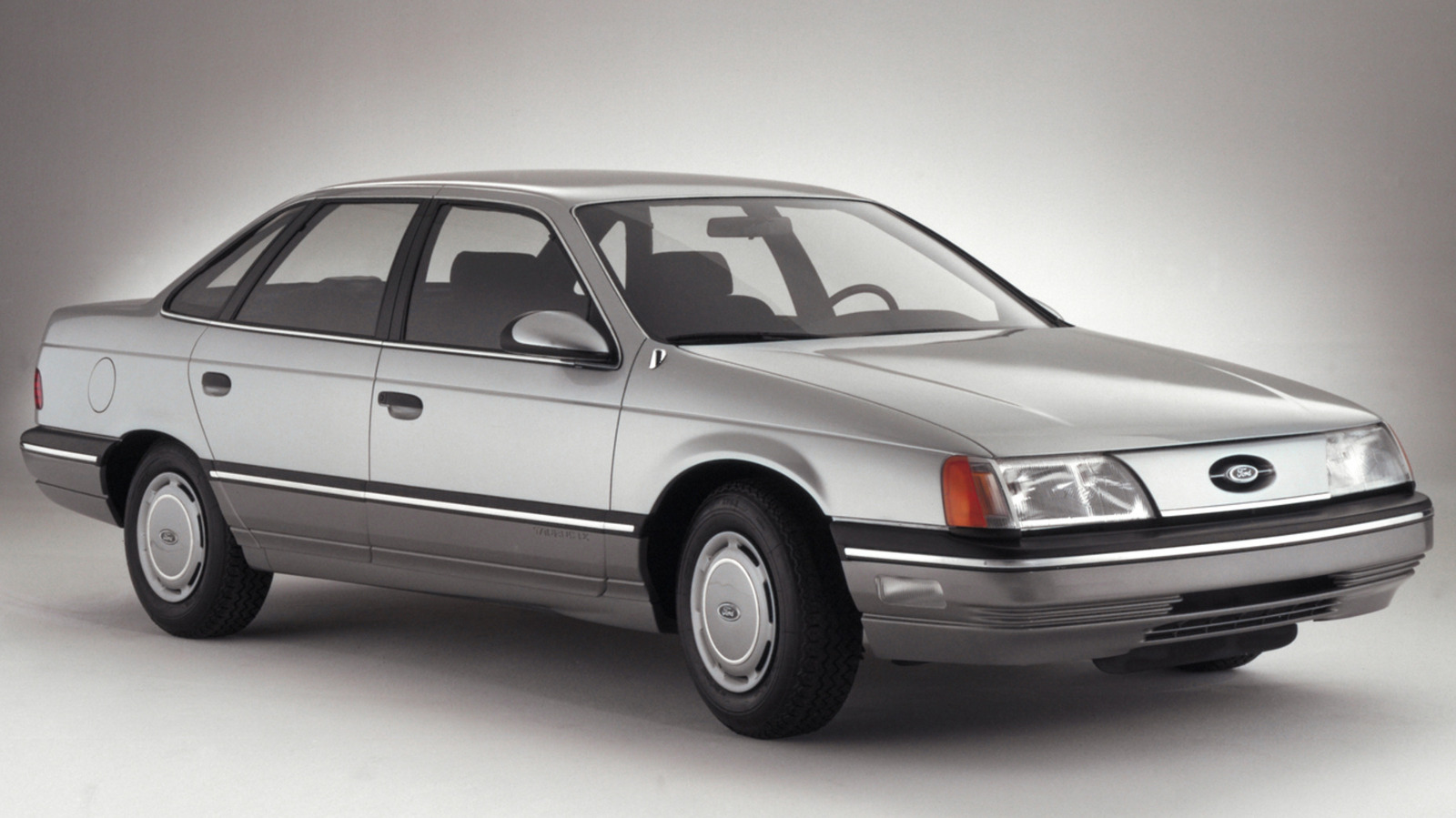
Ford's Taurus revolutionized the midsize sedan market when it launched in 1986, but early V6-equipped models carried an embarrassing flaw. Consumer Reports documented a persistent odor problem in V6 variants that became notorious enough to damage the car's reputation despite its otherwise groundbreaking design.
The Taurus arrived as a bold departure from Ford's boxy 1970s and early 1980s sedans. Its aerodynamic, rounded shape reflected contemporary design trends and delivered real performance advantages. The car proved immediately successful, becoming one of America's best-selling vehicles and fundamentally saving Ford's sedan business during a critical period.
Yet initial V6 models suffered quality control issues beyond the documented smell. The odor originated from manufacturing defects or material selection problems in the engine bay or ventilation system. Consumer Reports' testing highlighted the issue prominently, creating a PR headache for Ford. The publication's findings carried enormous weight with buyers in that era, and negative assessments could tank sales momentum.
This flaw underscored a persistent weakness in Ford's build quality during the 1980s. While the Taurus's design proved revolutionary, execution lagged behind intent. Ford eventually addressed the odor problem in subsequent model years, but the damage to early adopters' ownership experience was done.
The V6 smell episode illustrates why Consumer Reports testing mattered so heavily before internet reviews fragmented automotive journalism. A single finding in that magazine could shape buyer perception for years. The Taurus ultimately transcended this blemish to become iconic, but those early V6 owners lived with a car that literally stunk despite its innovative engineering.