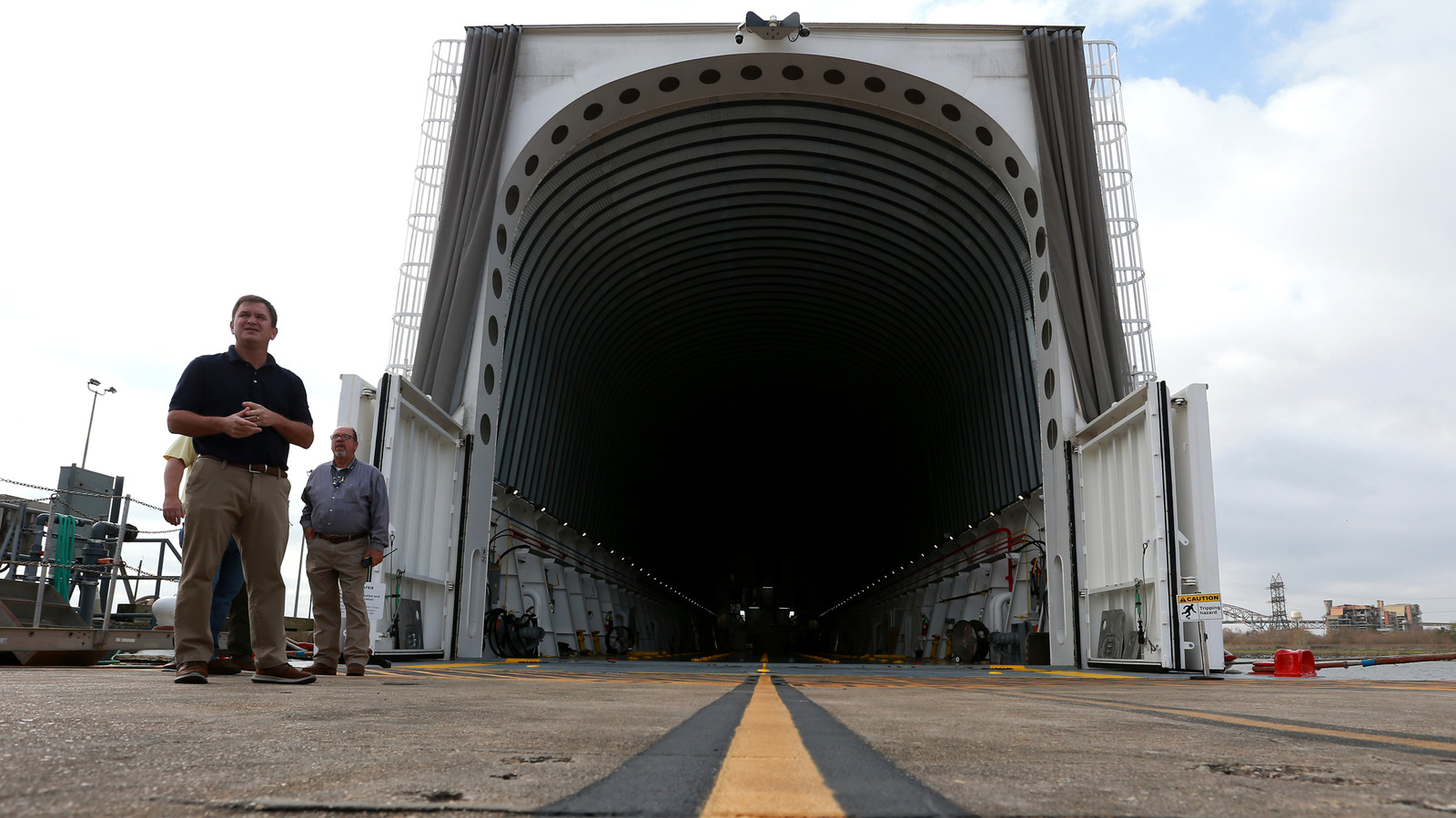
NASA relies on a specialized 380-foot barge called the *Pegasus* to transport massive rocket components across the country's inland waterway system. The vessel carries Space Launch System boosters, external tanks, and other hardware for the Artemis program from manufacturing facilities to Kennedy Space Center in Florida.
The *Pegasus* operates on a deliberately slow schedule, averaging just 5 mph during transit. Shallow-draft design allows navigation through rivers and canals that standard cargo ships cannot access. The barge accommodates components too large and heavy for conventional trucking. A single Space Launch System booster segment stretches 149 feet long and weighs 1.2 million pounds. Moving such hardware by road would require specialized heavy-haul rigs, multiple lanes, and significant infrastructure modifications.
NASA selected water transport for cost efficiency and safety. The journey from Utah to Florida by barge takes approximately 30 days, compared to higher costs and logistical complexity for ground transport. The agency has used variants of this shipping method since the Space Shuttle era, when the *Pegasus* and sister barges transported external tanks.
The Artemis program accelerated barge usage. NASA plans multiple lunar missions requiring continuous delivery of rocket segments to Kennedy Space Center. Water transport avoids congestion on Interstate highways and eliminates bridge-clearance constraints that plague heavy-haul trucking.
Modern infrastructure supports this approach. The Tennessee-Tombigbee Waterway, completed in 1985, connected the Mississippi River system to Gulf ports and provided NASA with a viable route for transporting SLS components manufactured in places like Huntsville, Alabama. Without this inland waterway network, NASA would face substantially higher costs and extended assembly timelines.
The *Pegasus* represents a practical solution to one of spaceflight's overlooked challenges: moving components that dwarf standard industrial equipment.