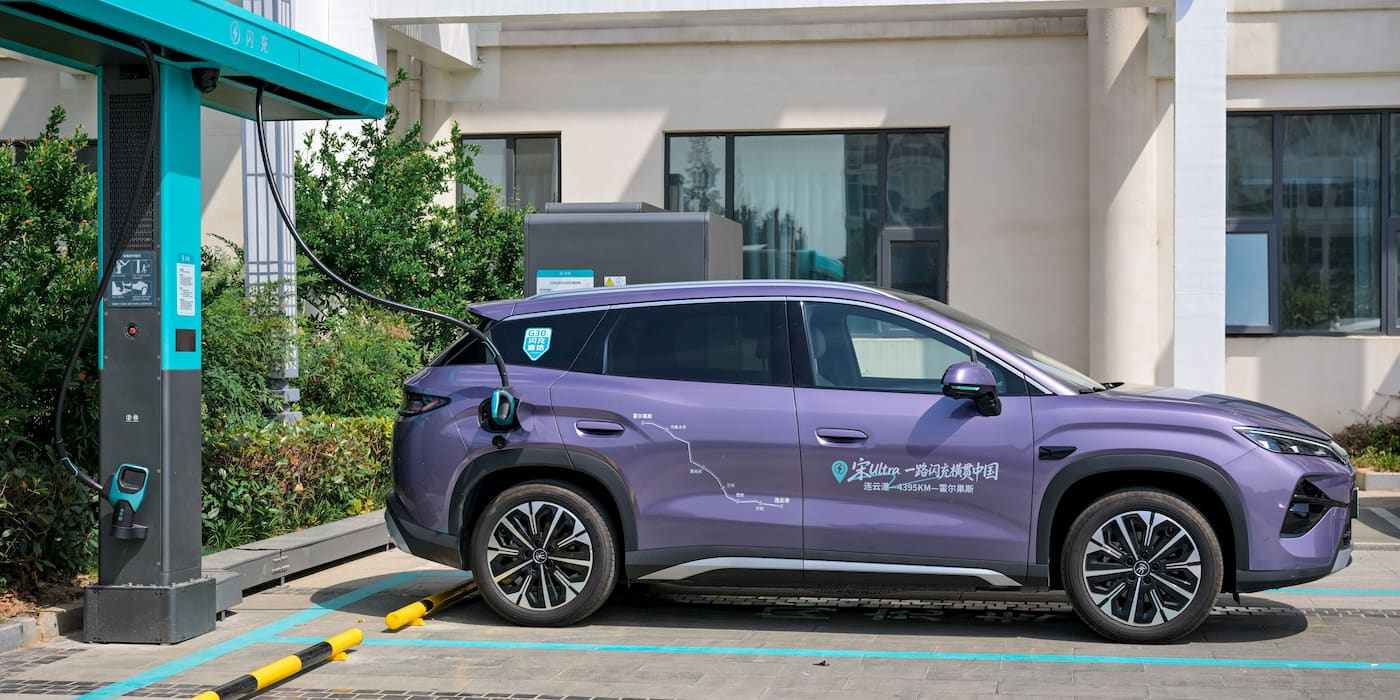
BYD completed a landmark 2,700-mile journey across China's largest expressway using its Song Ultra EV equipped with new Blade Battery technology and 5-minute Flash Charging capability. The feat marks the first EV to successfully traverse the full route, demonstrating real-world viability of the Chinese automaker's latest battery and charging innovations.
The Song Ultra EV relies on BYD's Blade Battery architecture, which prioritizes energy density and thermal stability. The 5-minute Flash Charging system delivers rapid replenishment during highway stops, directly addressing range anxiety on long-distance trips. This combination addresses the two biggest obstacles to EV adoption in markets where drivers regularly cover extended distances without charging infrastructure density comparable to urban centers.
BYD structured the journey to prove practical usability rather than theoretical capability. The automaker selected China's largest expressway specifically because it represents a genuine stress test for EV logistics. Competing EVs have struggled with consistent range delivery at highway speeds, where aerodynamic drag and sustained high-power consumption expose battery limitations that city driving masks.
The timing matters. BYD operates as the world's largest EV and battery manufacturer by volume, competing directly with Tesla on performance credentials while undercutting on price in key markets. Tesla's Supercharging network remains faster in raw throughput, but BYD's 5-minute claim—if sustained under realistic conditions—narrows the charging gap significantly. Most drivers recharge every 300 to 400 miles on highway runs, meaning a 5-minute stop beats traditional gasoline pit stops for coffee and restroom breaks.
The Song Ultra EV itself targets volume buyers rather than premium segments. BYD prices aggressively in China's crowded sedan market, making long-range capability with fast charging accessible to mainstream consumers instead of luxury buyers. This positions BYD vehicles as practical family