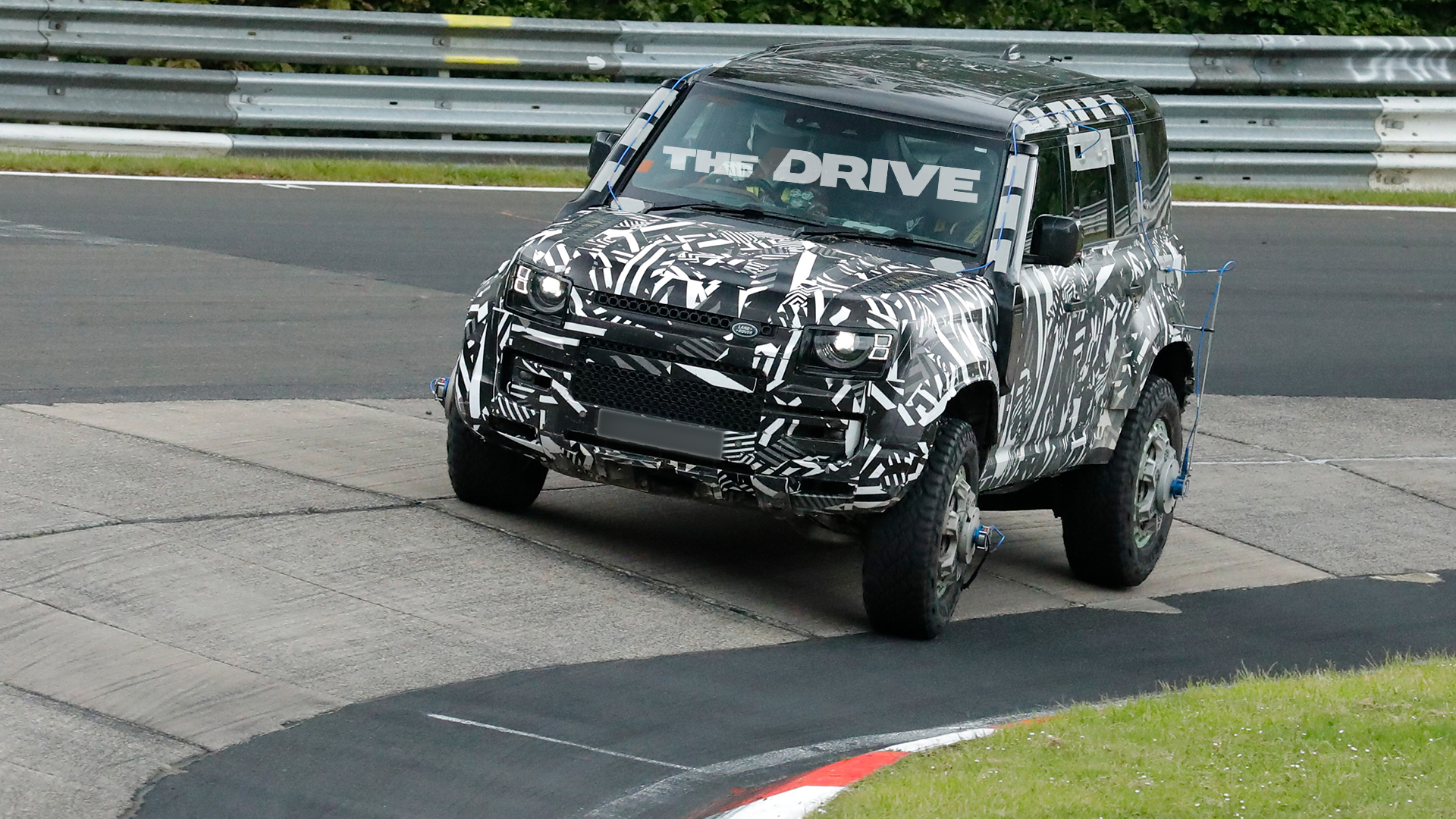
Land Rover has a track-focused Defender variant undergoing testing at the Nurburgring, and it's clearly engineered to shed the SUV's everyday compromises in favor of outright performance.
The prototype, inspired by Land Rover's Dakar rally heritage, ditches the typical concerns that constrain a standard Defender. Body roll becomes irrelevant when a vehicle is built for high-speed circuit work rather than family hauling. The testing reveals Land Rover's intent to create an extreme variant that pushes the boundaries of what the Defender platform can handle.
This isn't the first time the British manufacturer has explored performance variants of its iconic nameplate. The SVX models introduced performance credentials, but this new prototype appears to take things further. Rally-derived suspension geometry, reinforced chassis work, and power upgrades likely headline the build. The Nurburgring test sessions suggest Land Rover is validating handling dynamics and brake performance at sustained high speeds.
The Dakar connection matters here. Rally-raid trucks operate in environments where terrain changes violently and speed matters across unpredictable surfaces. That DNA transfers to a road-focused performance Defender through suspension tuning, damper calibration, and weight distribution optimization.
What makes this development relevant is the broader market trend. Automakers increasingly blur the lines between utility vehicles and performance machines. Lamborghini's LM002 legacy, Porsche's Cayenne Turbo, and even the Ford Mustang Mach-E GT demonstrate that buyers want capability alongside speed. Land Rover recognized this appetite.
The testing duration and intensity suggest this variant won't arrive as a one-off special. A production variant could target wealthy enthusiasts seeking a genuine off-road machine that also satisfies on a track. Pricing would likely position it well above standard Defender V8 models, potentially reaching six