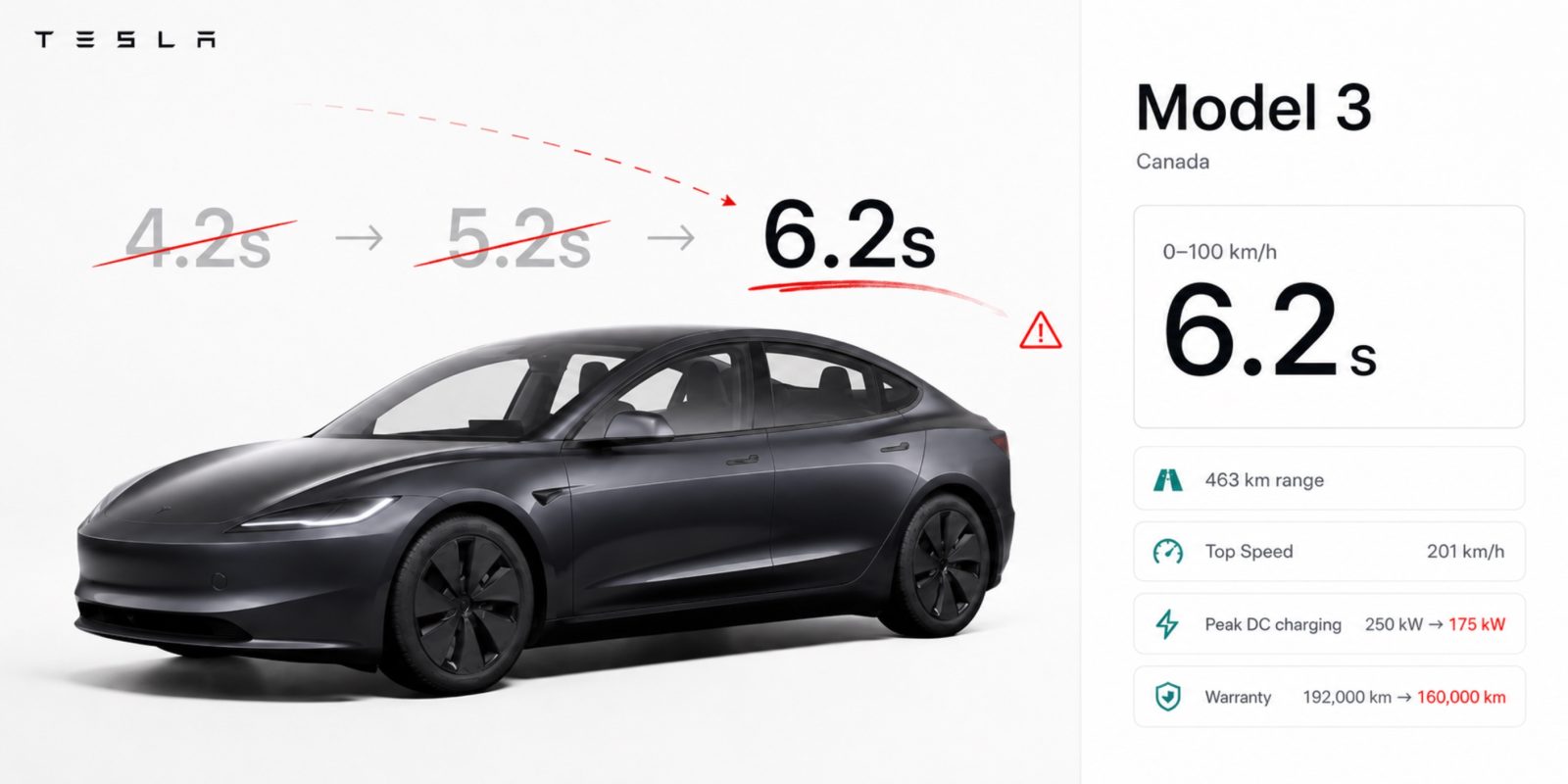
Tesla has adjusted the acceleration specs on its new budget Model 3 Premium RWD twice in three weeks, creating confusion among Canadian buyers. The Shanghai-built sedan now carries a 6.2-second 0-100 km/h rating, down dramatically from the 4.2-second figure Tesla advertised at launch on May 1.
The changes trace a troubling path. Tesla first listed 4.2 seconds, then revised to 5.2 seconds within days, and now settled on 6.2 seconds. That two-second swing represents a 48-percent performance drop from the original claim. The $39,490 CAD entry-level Model 3 Premium RWD is Tesla's aggressive pricing push in Canada's competitive market, where the company battles EVs from Hyundai, Kia, and legacy automakers launching affordable electric options.
Repeated spec adjustments destroy buyer confidence. Consumers rely on published numbers to compare value across vehicles. When a manufacturer changes acceleration figures multiple times in rapid succession, it raises questions about testing methodology, battery optimization, or basic product readiness. Were the original specs aspirational? Did Tesla encounter thermal management issues with the RWD powertrain? Is the Canadian market receiving a different configuration than other regions?
Tesla faces pressure on the affordable end of the EV market. The Model 3's $39,490 price targets mainstream buyers who expect transparency and consistency in published specifications. Competitors like the Hyundai Ioniq 6 and Kia EV6 Light offer predictable, honest performance metrics that build buyer trust.
The messaging problem compounds Tesla's credibility challenge. In a category where consumers weigh the Model 3 against similarly-priced combustion cars and affordable EVs, spec consistency matters. Buyers comparing this Model 3 against a $40,000