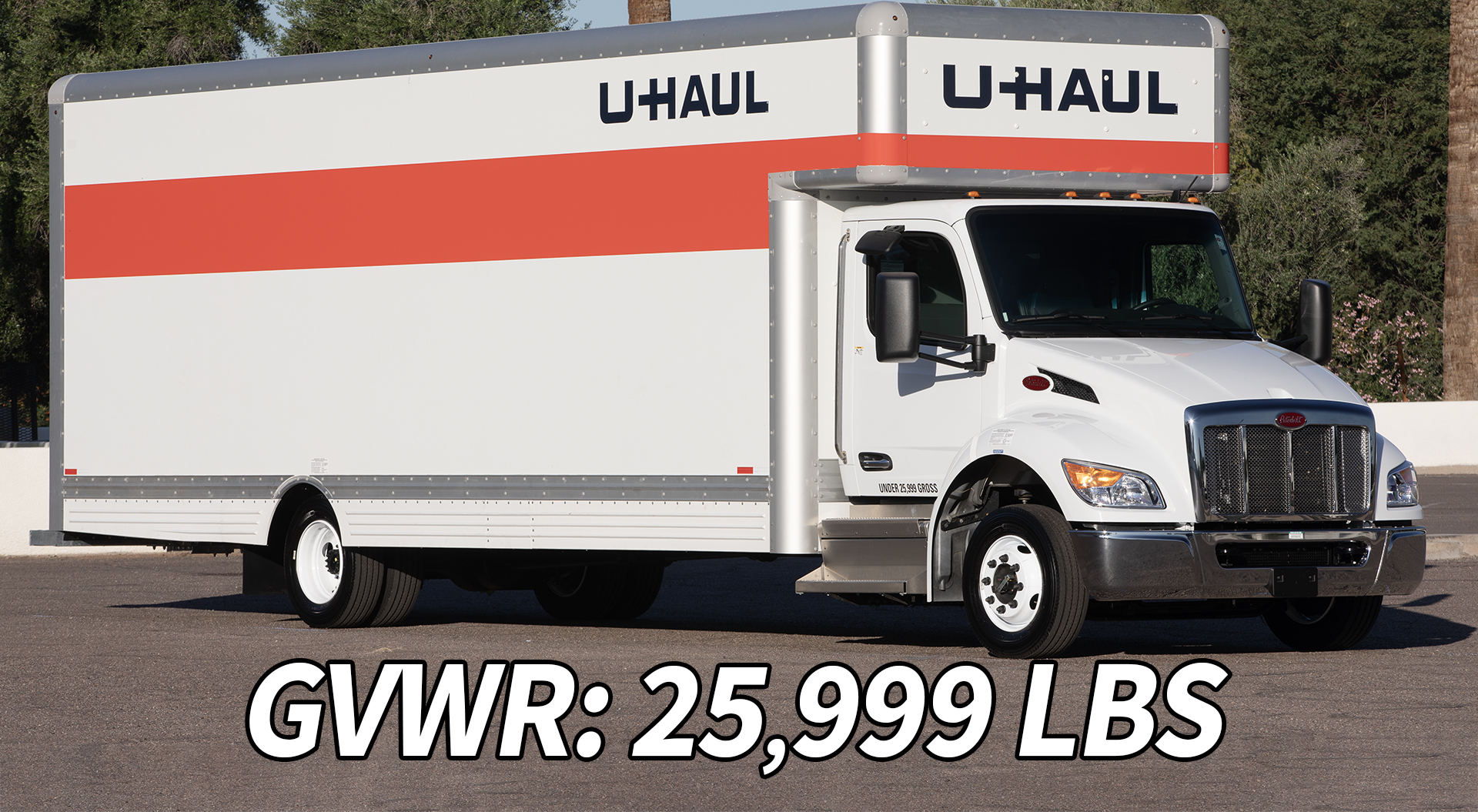
U-Haul now rents a Peterbilt truck that operates in a legal gray zone, engineered to stay just under the 26,000-pound gross vehicle weight rating threshold that requires a commercial driver's license. The truck carries a GVWR of 25,999 pounds, one pound shy of CDL requirements.
This move lets U-Haul rent a serious hauling vehicle to unlicensed drivers for under $100 per day. The loophole exploits federal regulations that classify any truck under 26,000 pounds as drivable by standard passenger-license holders, regardless of cargo capacity or vehicle size.
The strategy addresses a persistent problem in the rental market. Many drivers need heavy-duty hauling capability but lack commercial licensing. Rather than direct customers toward smaller trucks or commercial rental divisions, U-Haul engineered this Peterbilt specifically to thread the regulatory needle. The company stripped weight elsewhere in the design or specified lighter components to hit that magic 25,999-pound threshold.
Regulators and safety advocates question the practice's wisdom. A truck rated for nearly 26,000 pounds in untrained hands carries accident and liability risks. Drivers unfamiliar with large vehicle handling, blind spots, and weight transfer dynamics pose dangers on public roads. Insurance implications remain murky, as standard auto policies typically exclude commercial use and heavy trucks.
The arrangement reflects broader industry pressure to maximize revenue from the moving and hauling segment. CDL requirements represent a barrier to customer access and rental frequency. By engineering around those restrictions, U-Haul expands its addressable market.
This Peterbilt represents the logical endpoint of regulatory arbitrage in commercial vehicles. Manufacturers and rental companies continue testing boundaries between consumer-accessible equipment and professional-grade machinery. The approach works legally but tests the spirit of licensing requirements designed to protect public safety. Whether regul