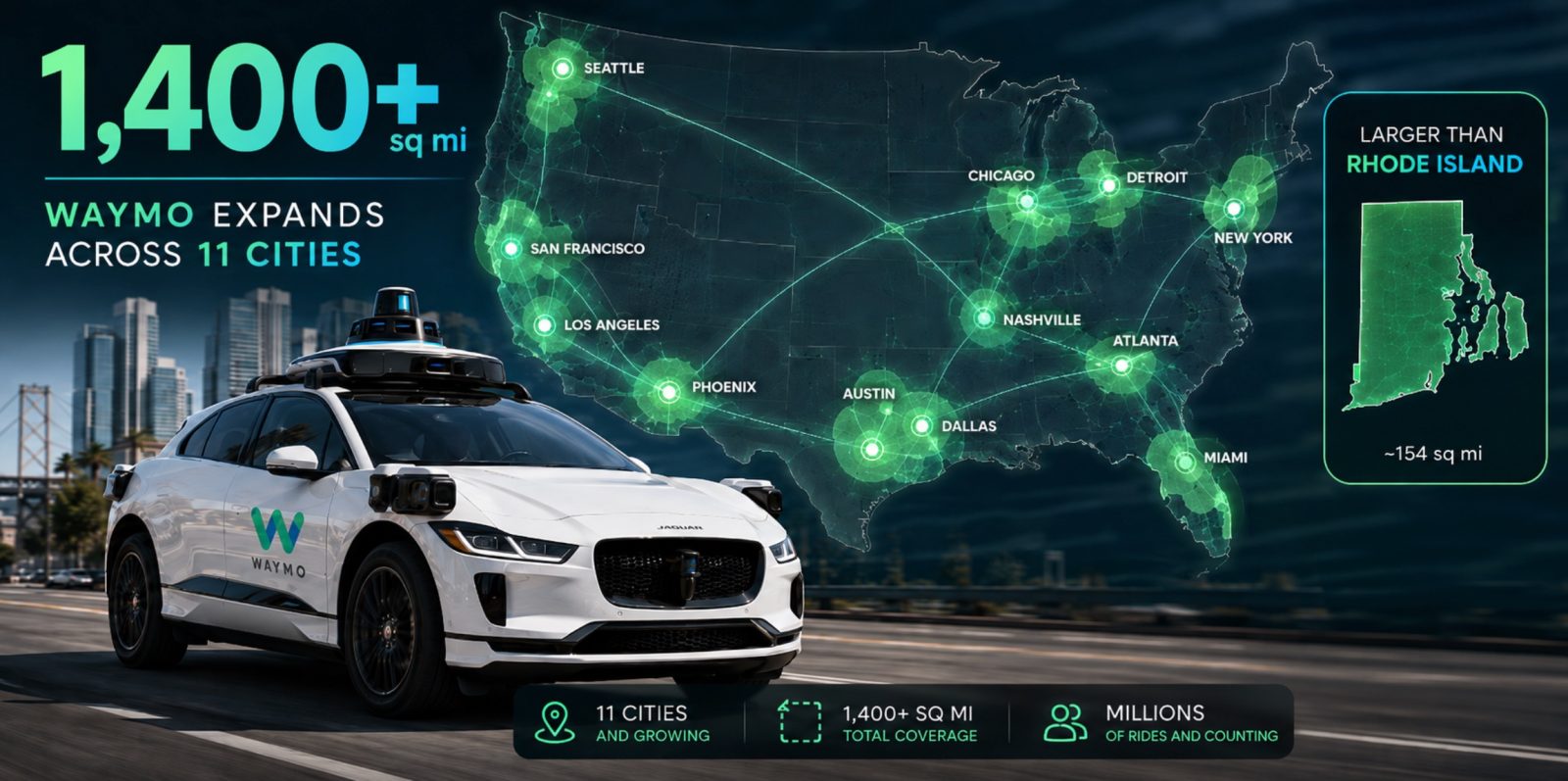
Waymo is expanding its robotaxi footprint across America with aggressive new territory. The autonomous vehicle operator now covers more than 1,400 square miles spanning 11 US cities, representing a 27 percent jump from previous service areas. That's larger than Rhode Island.
The rollout begins in Miami, followed by broader coverage in Austin, Atlanta, Houston, and the San Francisco Bay Area. This expansion signals Waymo's confidence in scaling autonomous ride-hailing beyond its established strongholds.
The growth matters because robotaxi adoption remains geographically fragmented. Waymo competes against Cruise, which paused operations after a pedestrian incident, and Tesla's promised robotaxi network, still unreleased. By clustering services across major metros, Waymo builds brand recognition and operational density.
Coverage expansion directly addresses a practical barrier to adoption. Riders in Miami or Austin now have access to autonomous options that didn't exist before. The moves into Atlanta and Houston particularly matter because neither market has seen significant autonomous ride-hailing deployment. These are dense urban centers with growing tech populations and weather patterns different from California.
San Francisco Bay Area expansion is worth noting because Waymo started there. Broader coverage in the region demonstrates the company believes it has solved operational challenges and can handle more traffic volume. Austin and Houston offer mild winter conditions and relatively straightforward road networks compared to northern cities.
The scale reveals how Waymo thinks about business. Rather than pursuing one perfect market, the company is executing a land-grab strategy. More cities mean more rides, more data, and more distance toward profitability. Each expansion also validates the underlying technology and customer demand.
Regulatory approval remains the real constraint. Waymo operates under state and local permits that require ongoing safety performance. The company's zero-fatality record gives it credibility to request expanded licenses.
Competition intensifies as autonomous technology