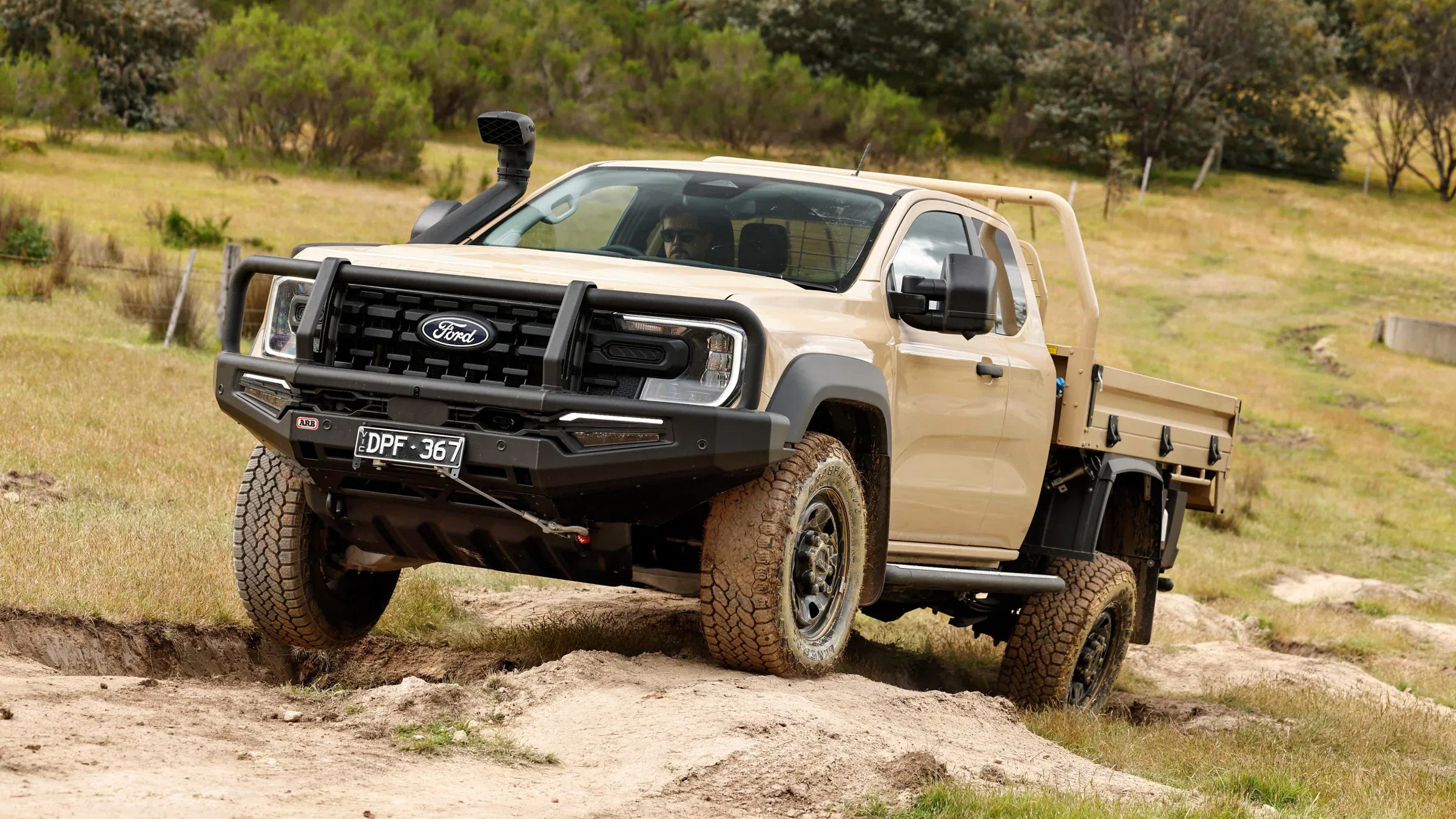
Ford is pursuing military vehicle contracts by positioning its Ranger midsize pickup and Super Duty heavy-duty truck as adaptable platforms for government and defense applications. The automaker is actively campaigning to the U.S. military and allied governments, arguing both trucks meet the ruggedness and payload requirements essential for combat and logistics operations.
The Ranger, Ford's segment leader in the midsize truck market, offers a 2.3-liter EcoBoost engine producing 290 horsepower and up to 3,860 pounds of payload capacity. The Super Duty line, which includes F-250, F-350, and F-450 variants, delivers higher torque and towing capability. Ford argues these commercial platforms provide cost advantages over purpose-built military vehicles while offering proven reliability in civilian markets.
This strategy reflects broader industry trends. Automakers increasingly see government contracts as growth opportunities as civilian truck demand faces cyclical pressures. The U.S. military typically rotates through vehicle lifecycles spanning 10 to 15 years, creating sustained revenue streams. Ford's push also competes directly against rival General Motors, which has pitched its own trucks to military procurement processes.
Ford's pitch hinges on modularity. Both the Ranger and Super Duty can integrate military-spec electronics, armor packages, and specialized equipment without complete platform redesign. This adaptability reduces engineering costs and accelerates production timelines compared to developing vehicles from scratch.
The military vehicle market operates differently from commercial sales. Contracts involve lengthy evaluation periods, competitive bidding, and strict specification compliance. Ford must demonstrate durability under extreme conditions, interoperability with existing military systems, and logistical support capabilities. Allied nations like Canada, the UK, and Australia also procurement military vehicles regularly, expanding Ford's addressable market.
Success in this arena would complement Ford's commercial business. Military contracts provide stable, predictable