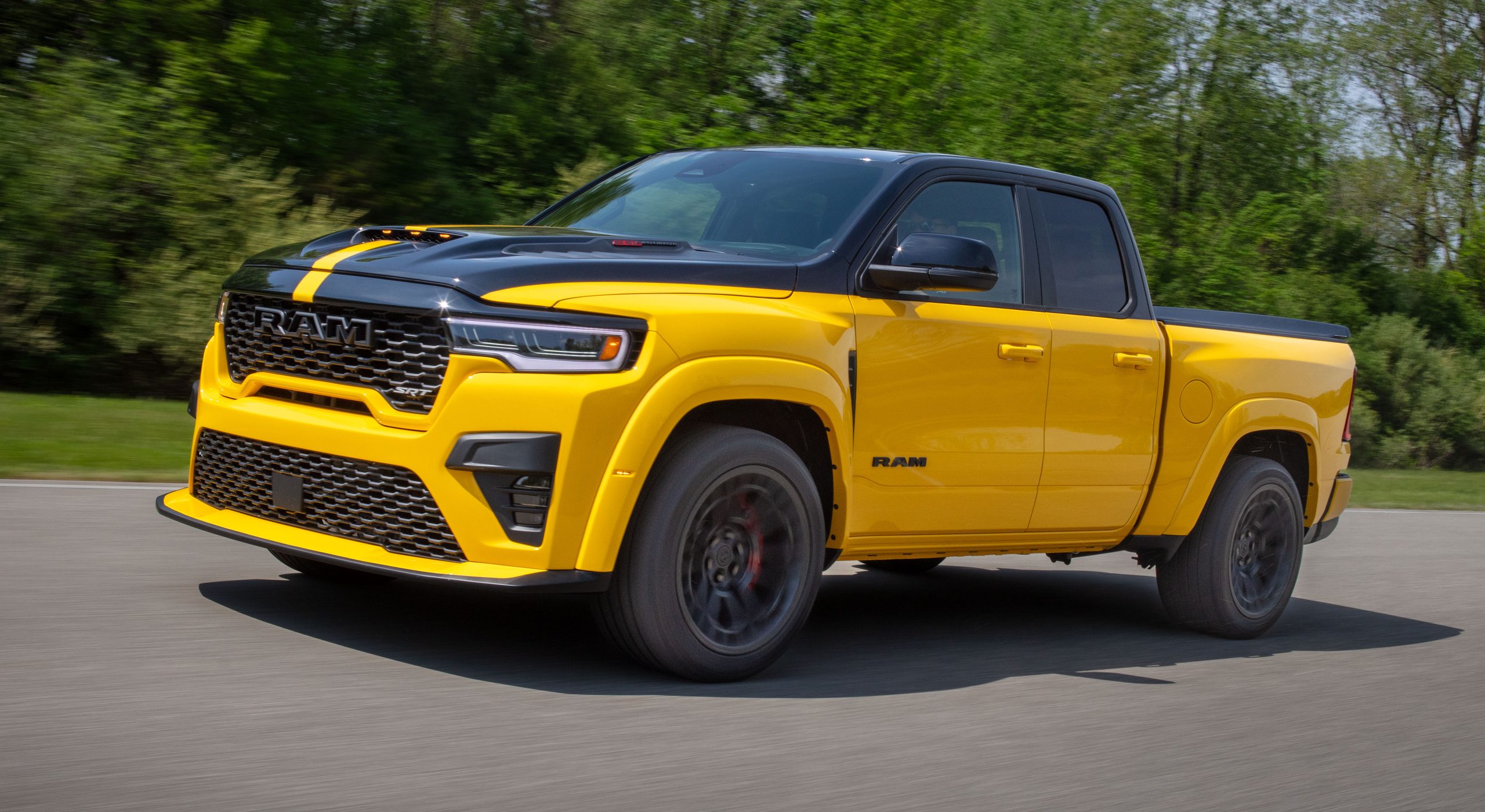
Ram's new Rumble Bee truck family has dramatically shifted the performance pickup hierarchy. The manufacturer equipped its latest Rumble Bee lineup with a 645-horsepower Hellcat V8 engine, delivering genuine supercharged muscle to the truck segment. This move directly challenges Ford and Chevrolet's current performance truck strategies.
Ford's response appears modest by comparison. The company introduced a lowering kit for the F-150, a cosmetic and handling upgrade that addresses stance and ride height but lacks the raw power Ram now offers. The lowering kit targets buyers seeking visual customization rather than engine performance.
Chevrolet, meanwhile, has largely stepped back from the Rumble Bee nameplate without introducing competing performance variants. The brand's absence from this segment leaves Ram with minimal direct competition in the high-output truck market.
The Rumble Bee family represents Ram's aggressive positioning against Ford's F-150 Lobo. The Lobo attempted to establish a performance truck identity through styling and heritage branding, but it lacked the mechanical aggression Ram now delivers. The F-150's lowering kit, while useful for buyers seeking visual differentiation, cannot match the engineering commitment of a Hellcat powertrain.
This dynamic reflects broader industry trends. Manufacturers increasingly deploy nameplate heritage and engine technology to segment truck buyers. Performance pickup buyers prioritize horsepower, torque, and distinctive visual treatment. Ram's Hellcat strategy acknowledges this directly.
Ford's lowering kit suggests the automaker is prioritizing styling customization over straight performance. This approach may appeal to buyers seeking visual impact without committing to extreme horsepower. However, in the truck market's performance segment, displacement and boost matter more than suspension geometry alone.
Ram's move establishes clear separation between itself and competitors. The Rumble Bee's 645 horses create a real