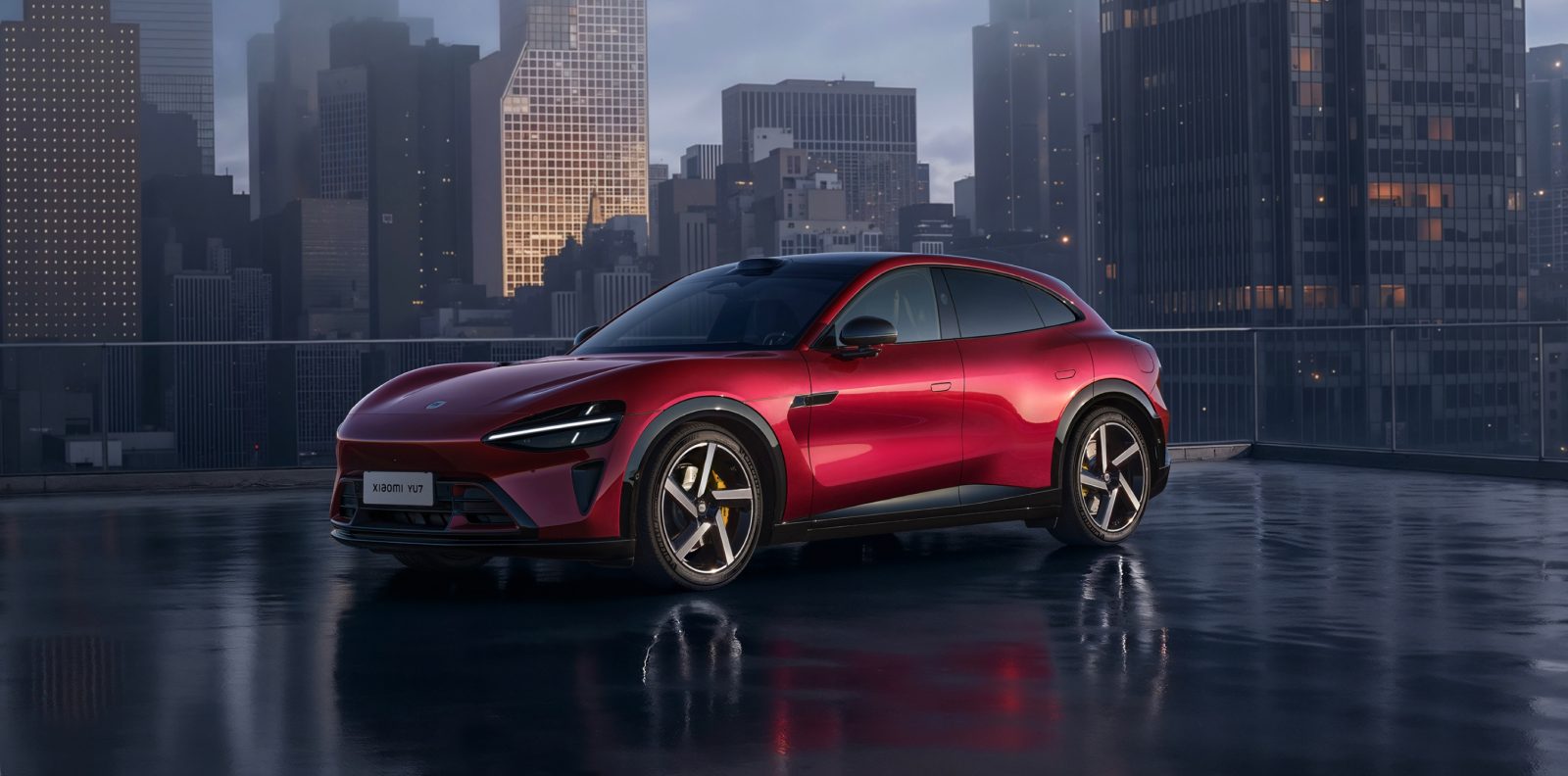
Xiaomi sharpened its pricing strategy in the Chinese EV market, launching a new entry-level YU7 Standard Edition at RMB 233,500 (roughly $32,400). The move undercuts Tesla's Model Y by $4,350 while offering 643 kilometers of range, compared to the Model Y's 593 kilometers.
CEO Lei Jun acknowledged that the original YU7 pricing lacked competitiveness, with only a marginal RMB 10,000 ($1,450) advantage over Tesla. The wider $4,350 gap on this Standard Edition variant signals Xiaomi's commitment to aggressive positioning in the world's largest EV market, where Tesla remains the dominant foreign brand but faces intensifying pressure from homegrown competitors.
Xiaomi simultaneously unveiled the YU7 GT, a high-performance variant generating 1,003 horsepower. This model set a Nürburgring SUV lap record, beating the previous benchmark by 14 seconds. That achievement matters beyond marketing optics. Performance credentials influence buyer perception, particularly among affluent Chinese consumers evaluating premium EV options. Tesla Model Y variants dominate EV pricing tiers globally, but in China, domestic automakers have repeatedly undercut Tesla's pricing while matching or exceeding specifications.
The Standard Edition's 50-kilometer range advantage over the Model Y's baseline configuration addresses a buyer priority. Chinese consumers scrutinize EPA-equivalent distance metrics intensely, and Xiaomi's numbers suggest either battery efficiency gains or optimized power management compared to Tesla's equivalent offering.
Xiaomi's automotive ambitions extend beyond spec sheets. The company positions its YU7 line as technology-forward vehicles, leveraging its smartphone and IoT ecosystem expertise. Lei Jun's candid admission about competitive weakness indicates Xiaomi recognizes that early-market positioning proved