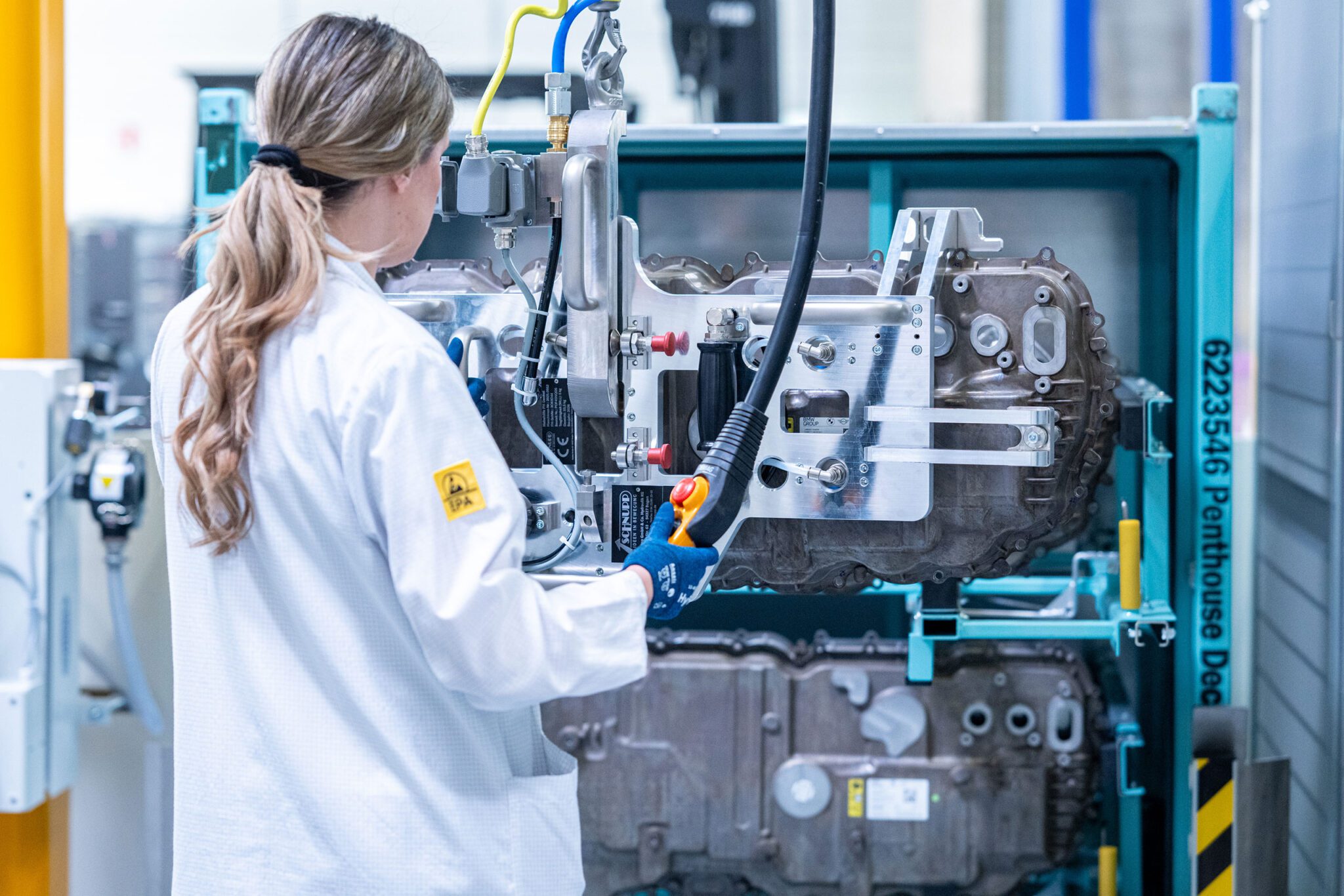
BMW has begun pre-series production of the Energy Master control unit for its iX5 Hydrogen at the Landshut plant in Germany. The Energy Master represents the brain of the hydrogen fuel cell system, managing power distribution and energy flows across the vehicle's drivetrain and onboard systems.
This production milestone marks a critical step toward commercializing the iX5 Hydrogen, BMW's hydrogen-electric SAV that pairs a fuel cell stack with a battery pack. The dual powertrain architecture gives the iX5 Hydrogen roughly 374 horsepower and a projected range exceeding 300 miles on a single hydrogen fill, addressing range anxiety that has plagued hydrogen passenger vehicles in limited markets like California and Japan.
BMW's decision to manufacture the Energy Master in-house at Landshut demonstrates confidence in the hydrogen strategy. The control unit's complexity demands precision engineering and integration testing that determines overall system reliability and performance. By localizing production in Germany, BMW gains supply chain resilience and accelerates iteration cycles ahead of market launch.
The iX5 Hydrogen competes directly against Toyota's Mirai and Hyundai's Nexo in a dormant hydrogen passenger segment. BMW targets a limited initial release, likely beginning in 2025 with availability in hydrogen-infrastructure-forward regions. The pre-series phase typically lasts 18 to 24 months and involves rigorous durability and real-world testing.
Hydrogen fuel cells remain a niche technology in passenger vehicles despite zero tailpipe emissions and fast refueling times comparable to gasoline. The infrastructure barrier remains acute. Germany boasts roughly 100 hydrogen stations, while California and Japan lead globally with sparse networks. Battery electrification dominates BMW's roadmap, but hydrogen addresses specific customer segments requiring longer range and rapid refueling without battery degradation over a vehicle's lifetime.
The