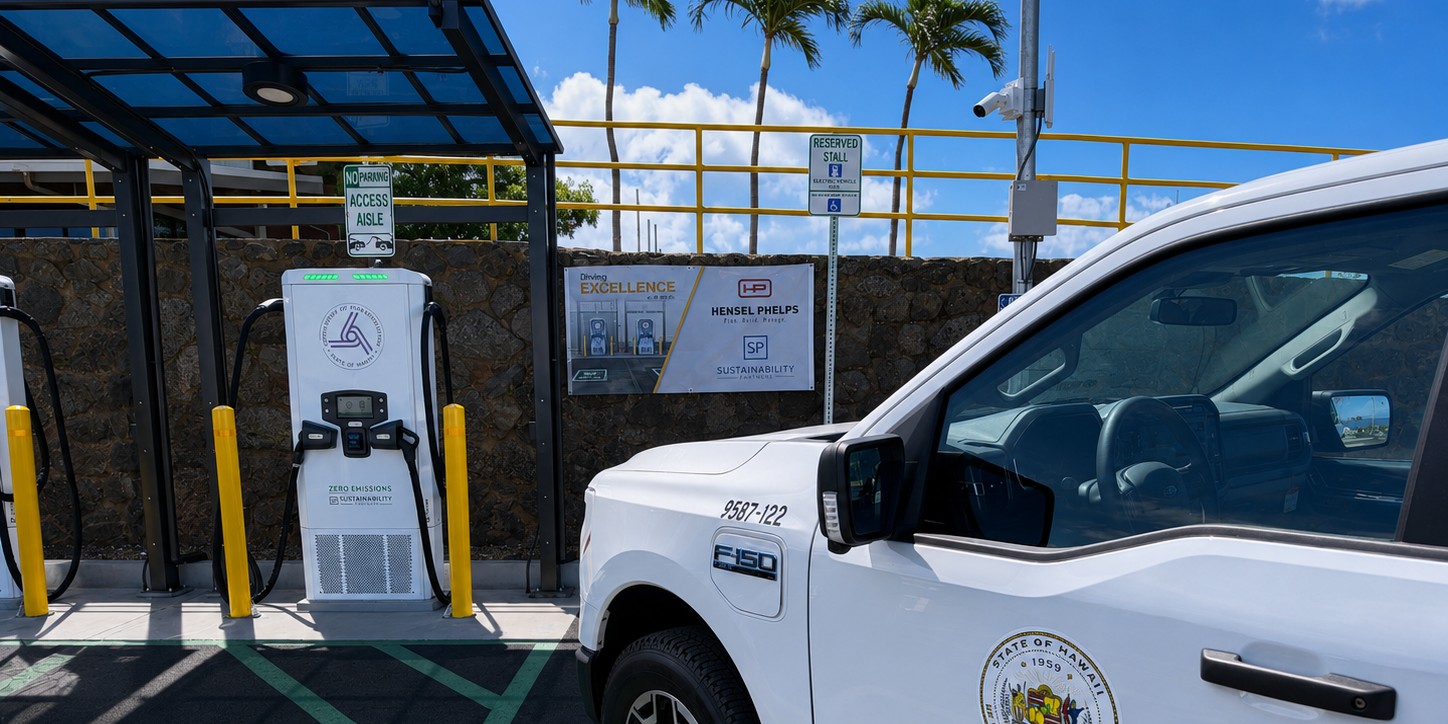
Hawaii opened a new DC fast charging station at Kapalua Airport on Maui, funded through the federal NEVI program. The installation marks the state's continued expansion of public EV charging infrastructure across its islands.
The station represents a strategic approach to charging deployment in Hawaii, where geography and island isolation create distinct challenges compared to mainland markets. Kapalua Airport serves both residents and tourists, making it a logical hub for fast charging access. The NEVI (National EV Infrastructure) funding comes from the Biden administration's $7.5 billion federal commitment to build 500,000 charging stations nationwide, with states receiving grants for corridor and community charging networks.
Hawaii faces unique constraints in EV adoption. The islands depend on limited electrical grids and must import most fuel, making the transition to electric vehicles economically attractive but infrastructurally complex. Tourist-heavy destinations like Maui drive demand for reliable charging to support rental fleets and visitor vehicles.
The Kapalua Airport location specifically targets travelers and commuters moving through West Maui. Fast chargers capable of adding 200 miles of range in 20-30 minutes address range anxiety for island driving, where most journeys stay within modest distances but reliability matters in remote areas.
Hawaii has deployed NEVI funding across multiple islands, with Honolulu and Maui receiving priority for charging corridors connecting major population centers and airports. This rollout differs from mainland strategies that emphasize interstate highways. Island deployments focus on inter-island travel corridors and urban nodes where vehicles concentrate.
The new Kapalua station adds capacity at a time when Hawaii's EV market grows faster than the national average. State incentives, high gasoline prices, and environmental commitments drive adoption, but charging availability remains a limiting factor for prospective buyers.
Federal infrastructure grants allow states to build networks without waiting for private investment to materialize in