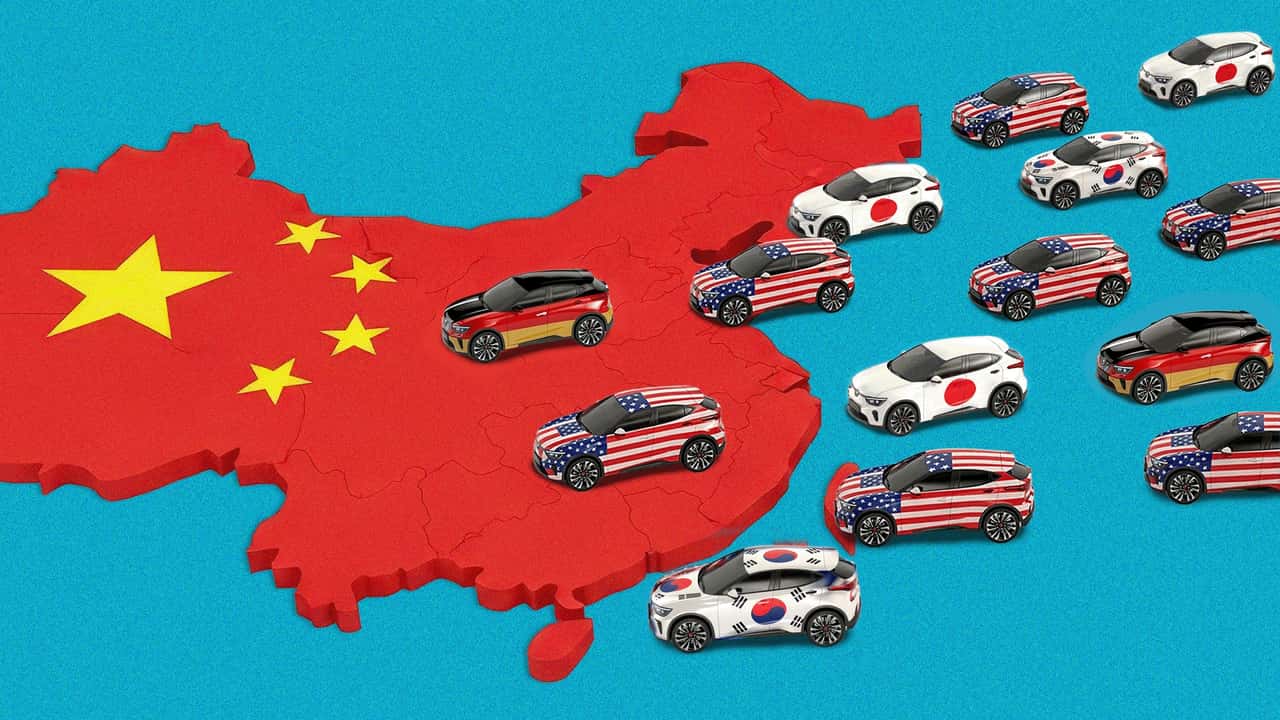
Western automakers are reversing years of market share losses in China through aggressive partnership strategies and localized product development. General Motors, Volkswagen, and BMW have pivoted from defensive postures to competing directly against homegrown Chinese brands in the world's largest EV market.
The partnerships work as follows. Joint ventures with domestic manufacturers give legacy automakers access to supply chains, manufacturing expertise, and distribution networks Chinese competitors built over the past decade. GM expanded its Wuling partnership to produce affordable EVs that undercut standalone Chinese brands on price. Volkswagen deepened its collaboration with local partners to launch ID-series vehicles at competitive pricing. BMW worked with local battery suppliers to reduce costs on its iX and i3 lineups.
New product launches target affordability and practicality rather than premium positioning. Legacy automakers recognized that competing on luxury alone failed against BYD, Li Auto, and Nio. They introduced mass-market EVs with 300-400 mile ranges priced between 200,000 and 400,000 yuan (roughly $28,000 to $56,000). This directly addresses where Chinese consumers actually buy.
Technology transfer remains essential. German and American engineers now embed within Chinese joint ventures to improve battery management systems, fast-charging protocols, and autonomous driving software. This breaks the previous model where Western firms exported finished vehicles to China. Instead, they build Chinese capacity from the ground up.
The competitive landscape shifted dramatically. Five years ago, Tesla dominated foreign EV sales in China. Today, legacy automakers' localized offerings capture growing market share. Their advantage centers on brand heritage, warranty support, and established service networks that Chinese startups still lack.
However, challenges persist. Chinese automakers continue developing superior battery technology and software. BYD leads in EV production volume and battery innovation. Price wars intensify quarterly. Legacy automakers face margin pressure as they