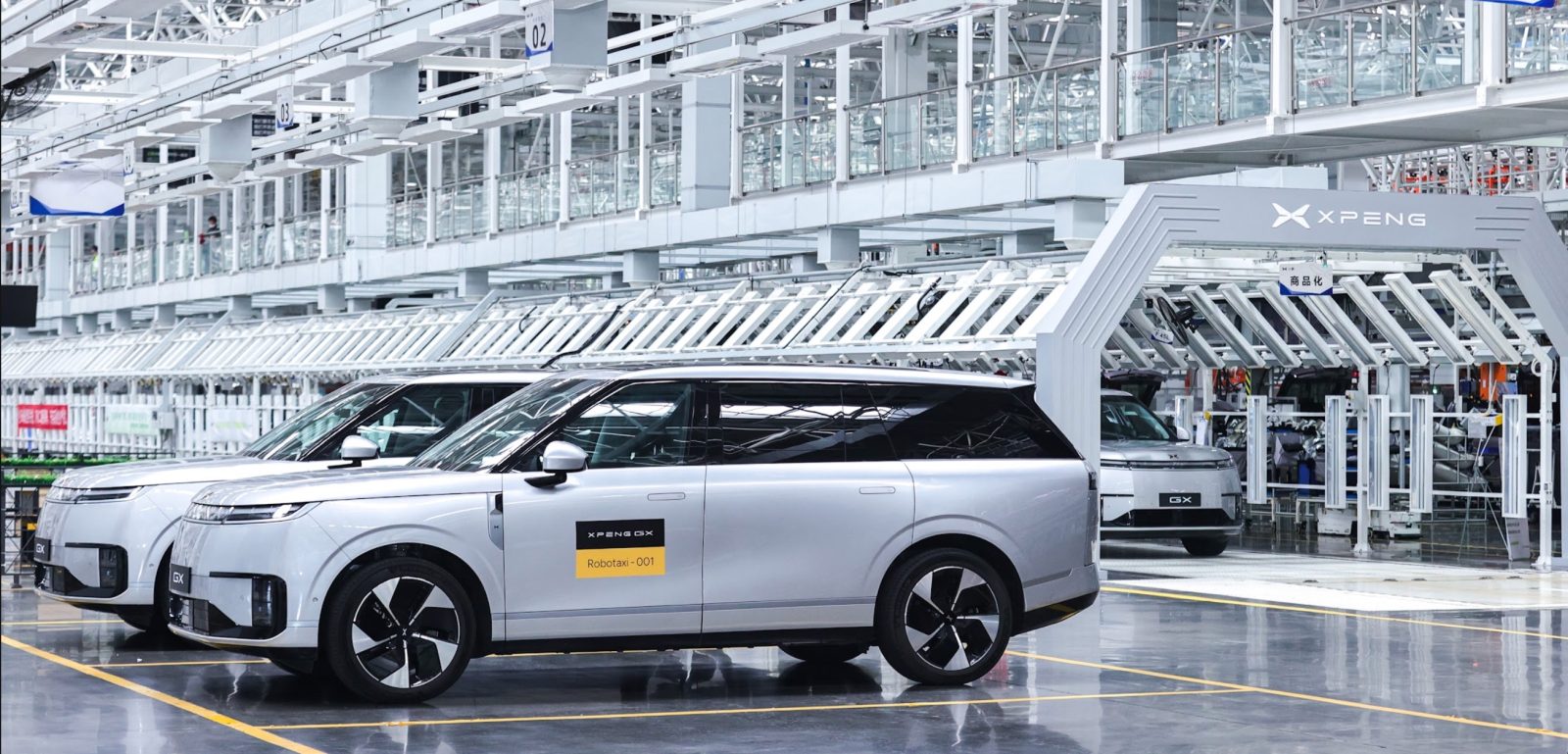
XPeng achieved a major milestone by rolling off the first mass-produced robotaxi from its Guangzhou facility, marking China's first fully in-house developed autonomous vehicle to reach production scale. The manufacturer developed the entire platform using full-stack, proprietary technology rather than relying on third-party suppliers.
The purpose-built robotaxi meets L4 autonomous driving standards, the second-highest level of automation available. XPeng powered the vehicle with four of its self-developed Turing AI chips, which collectively deliver 3,000 TOPS of computing power. Notably, the design eliminates LiDAR entirely, the expensive rotating laser sensor competitors like Tesla and others use for perception.
This LiDAR-free approach aligns XPeng's strategy with Tesla's camera-centric vision system philosophy, reducing component costs and complexity while claiming sufficient sensor redundancy through the onboard compute architecture. The four Turing chips handle real-time processing of camera feeds, radar data, and ultrasonic sensors to navigate traffic and obstacles autonomously.
XPeng's robotaxi entry intensifies competition in China's autonomous vehicle race. Competitors like Baidu with its Apollo robotaxis, and Alibaba-backed AutoX, already operate limited autonomous fleets in select Chinese cities. However, achieving mass production demonstrates XPeng can scale manufacturing beyond prototypes, a critical step toward commercial deployment and profitability.
The vertical integration approach gives XPeng control over hardware, software, and chip development. This contrasts with Western automakers relying on suppliers like Waymo, Mobileye, or Cruise for autonomous systems. Full ownership of the tech stack allows faster iteration, lower licensing costs, and proprietary advantages in the highly competitive robotaxi market.
XPeng hasn't announced pricing, commercial launch timelines, or which Chinese cities will receive initial deploy