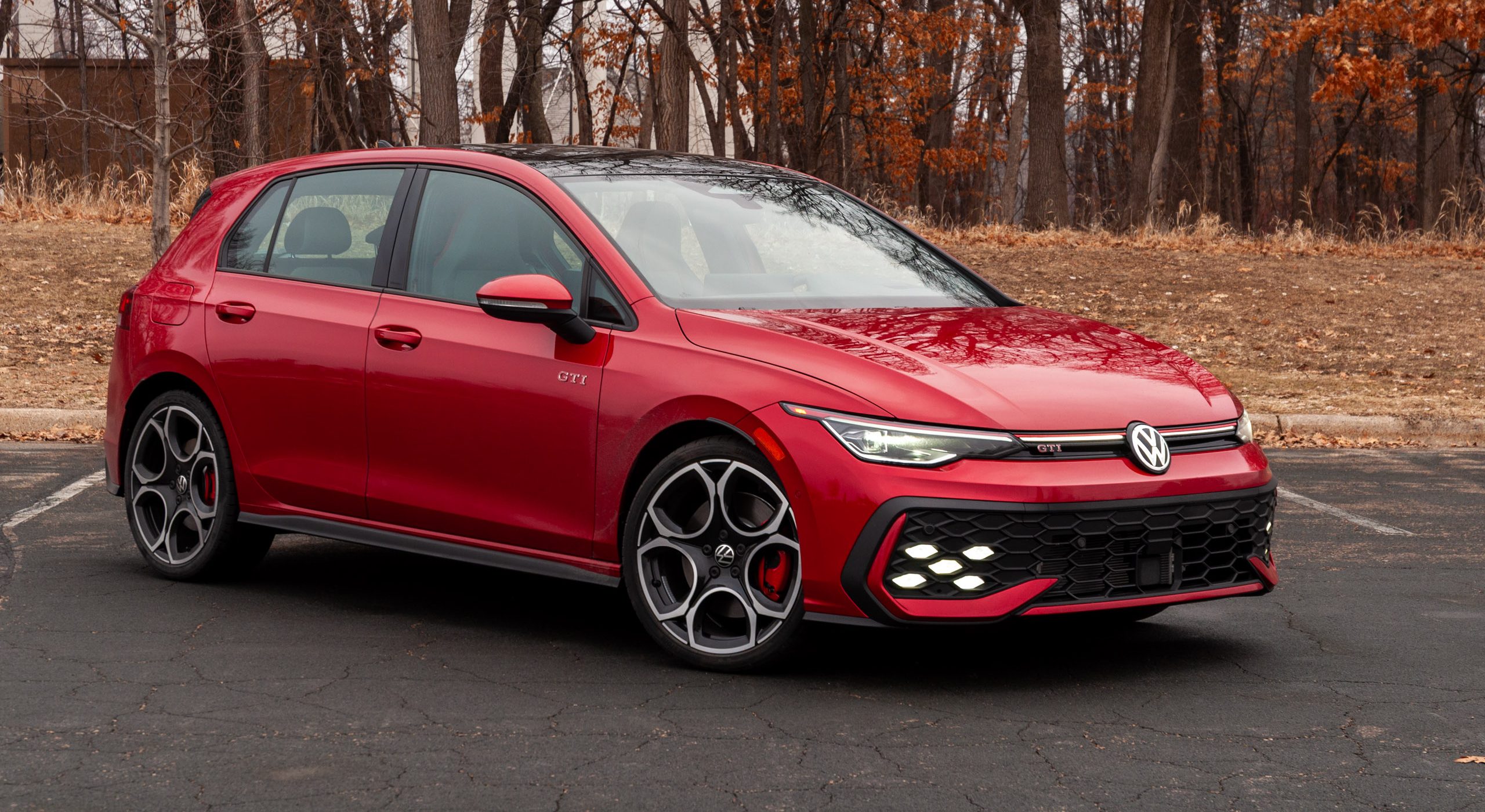
The 2026 Volkswagen Golf GTI remains the class standard for hot hatches, but Volkswagen's pricing strategy pushes it into territory that challenges its value proposition. The German automaker's iconic performance hatchback delivers the handling, engine response, and overall driving character that made the GTI legendary, yet the newer generation straps on frustrating digital controls that undermine the tactile experience enthusiasts expect.
The GTI's 2.0-liter turbocharged four-cylinder continues to deliver the punch needed to embarrass far pricier machinery on a canyon road. The transmission, whether manual or automatic, remains competent. Volkswagen's tight suspension tuning and balanced weight distribution keep the hatchback planted through corners with minimal body roll. These fundamentals explain why the GTI still dominates its segment against rivals like the Honda Civic Si and Hyundai Veloster N.
The problem lies elsewhere. The infotainment system and climate controls rely on touchscreen menus that demand driver attention better spent on the road. Physical buttons and knobs vanished in favor of capacitive surfaces that feel imprecise. For a car that champions driver engagement, this paradox stings.
Pricing tells the real story. The 2026 GTI costs substantially more than previous generations, narrowing the gap between it and entry-level turbocharged sport sedans. Buyers can snag a Civic Si or step up to a used Subaru WRX for less money. The GTI justifies premium pricing through superior chassis dynamics and heritage, yet the argument grows weaker as costs climb.
Volkswagen still builds the best hot hatch on sale. The golf fundamentals work. The engine delivers character. The chassis talks back to the driver. But the automaker has made the GTI harder to defend to wallet-conscious enthusiasts who remember when this