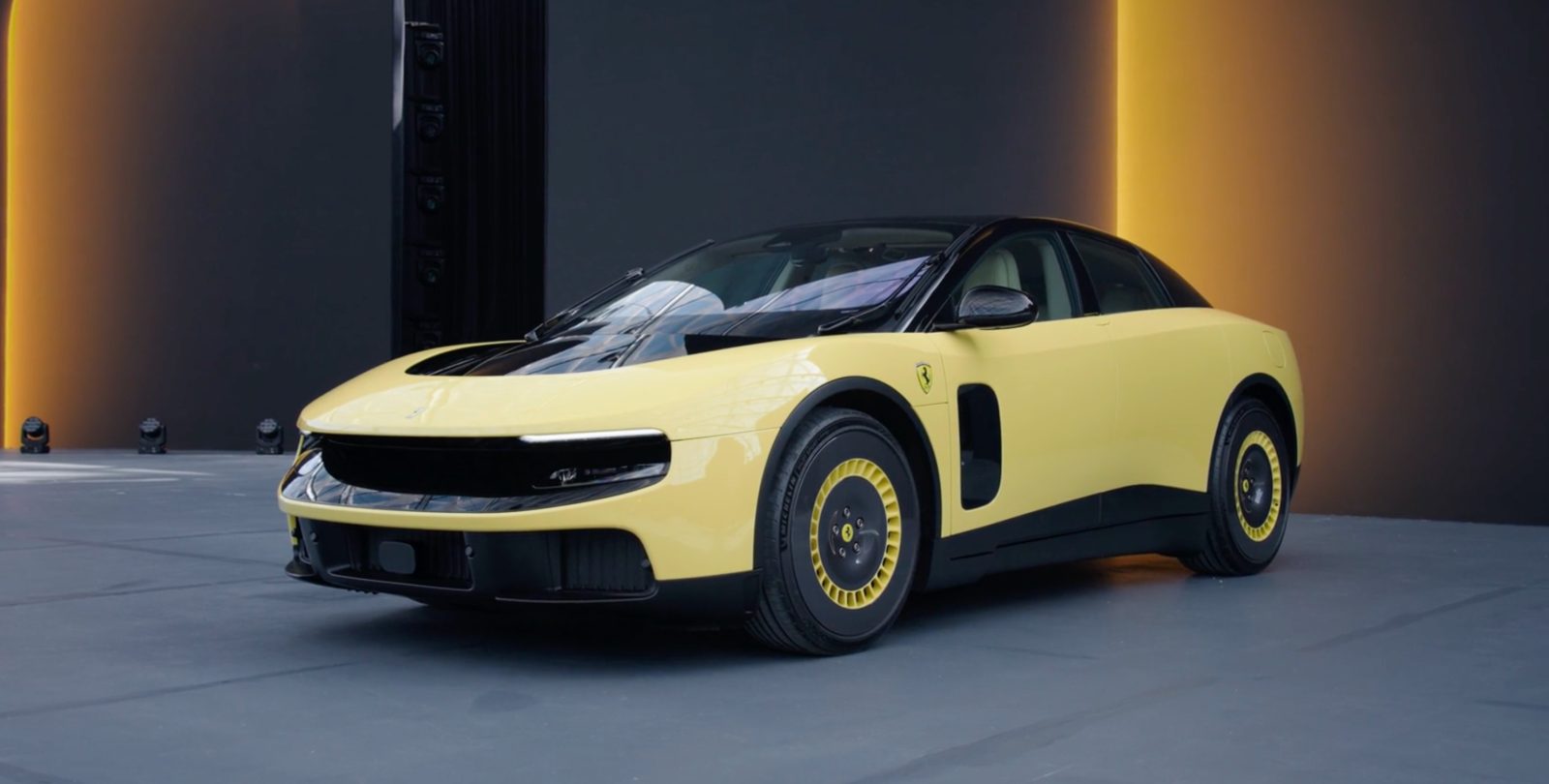
Ferrari has officially unveiled the Luce, its first all-electric vehicle, completing a three-phase reveal that began with performance specifications last October and continued with the Jony Ive-designed interior in February. The car made its public debut in Rome.
The Luce represents Ferrari's decisive move into battery-electric territory, a shift that ranks among the most consequential decisions in the brand's 77-year history. For decades, Ferrari built its identity on naturally aspirated and turbocharged internal combustion engines. The Luce abandons that entirely.
What distinguishes the Luce is its departure from Ferrari convention across every dimension. The design challenges assumptions about what a Ferrari should be, moving beyond the low-slung sports car silhouette that defined the marque. Jony Ive's interior design signals a different approach to luxury, prioritizing minimalism and digital integration rather than traditional leather-trimmed cockpits.
Ferrari engineered the Luce to compete directly with Tesla's Roadster and Lucid Air rather than pursue incremental electrification like some competitors. The company positioned this not as a compliance car but as a genuine performance statement. The battery architecture and motor configuration deliver the acceleration and handling characteristics expected from the Prancing Horse badge, even without combustion engines.
The timing places Ferrari in a peculiar spot. The Luce launches as global emissions regulations tighten and wealthy buyers increasingly demand electric powertrains. Yet it also arrives as some performance enthusiasts question whether electric cars can truly replicate the visceral engagement of gasoline engines. Ferrari addressed this head-on by designing the Luce as a complete reimagining rather than an electric version of existing models.
Hands-on time revealed meticulous attention to materials, proportions, and controls. The Ive interior strips away superfluous elements while maintaining the technical sophistication