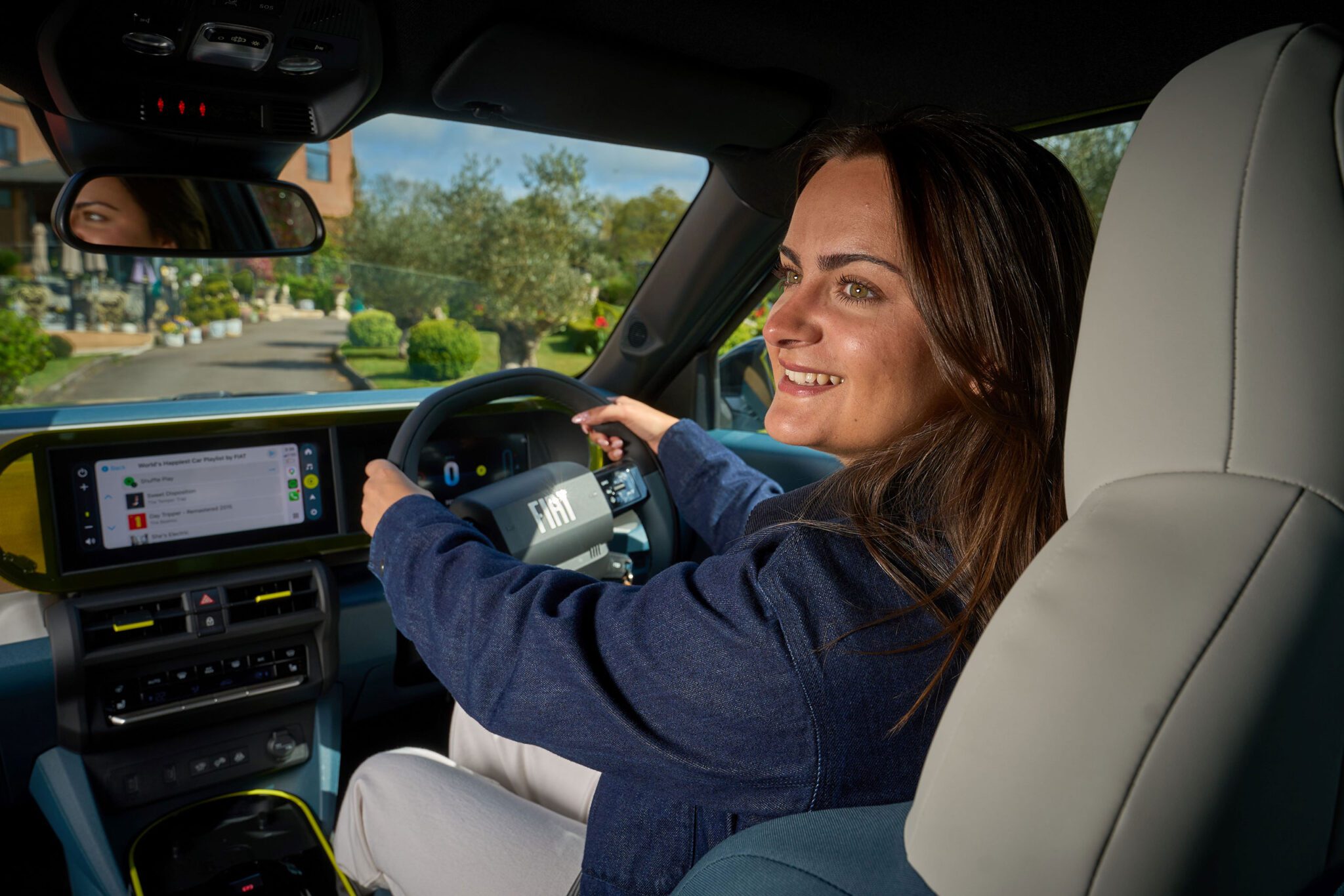
Fiat has launched a UK marketing campaign for the new Grande Panda that abandons traditional performance metrics in favor of "Smiles Per Hour," a metric the automaker created to measure driver happiness rather than acceleration.
The campaign reflects research showing that 40% of UK drivers view their car as a happy place, yet 81% remain ignorant of their vehicle's 0-60mph time. Fiat is betting that British consumers care more about emotional connection and practicality than horsepower sheets.
The Grande Panda, a redesigned successor to Fiat's iconic city car, targets budget-conscious buyers seeking affordable, compact transportation. The original Panda launched in 1980 and became one of Europe's best-selling vehicles. This new generation expands the range with the Grande Panda, offering more space while maintaining the brand's commitment to simplicity and affordability.
Fiat's shift toward emotional messaging reflects broader industry trends. As EVs proliferate and performance specs converge across platforms, automakers increasingly compete on lifestyle positioning and user experience rather than raw numbers. Tesla proved this strategy works by focusing on innovation narrative and brand identity over zero-to-sixty benchmarks.
The data Fiat cites reveals a disconnect between automotive journalism and buyer priorities. Enthusiasts obsess over lap times and 0-60 data, but mainstream buyers prioritize reliability, cost, practicality, and how a car makes them feel. A compact hatchback's appeal lies in easy parking, low running costs, and daily usability, not track performance.
Fiat's gambit targets family buyers and first-time car owners in price-sensitive markets. In the UK, where fuel costs remain high and city driving dominates, the Grande Panda's efficiency and compact footprint hold real value. The brand positions itself against Volkswagen's Up, Hy