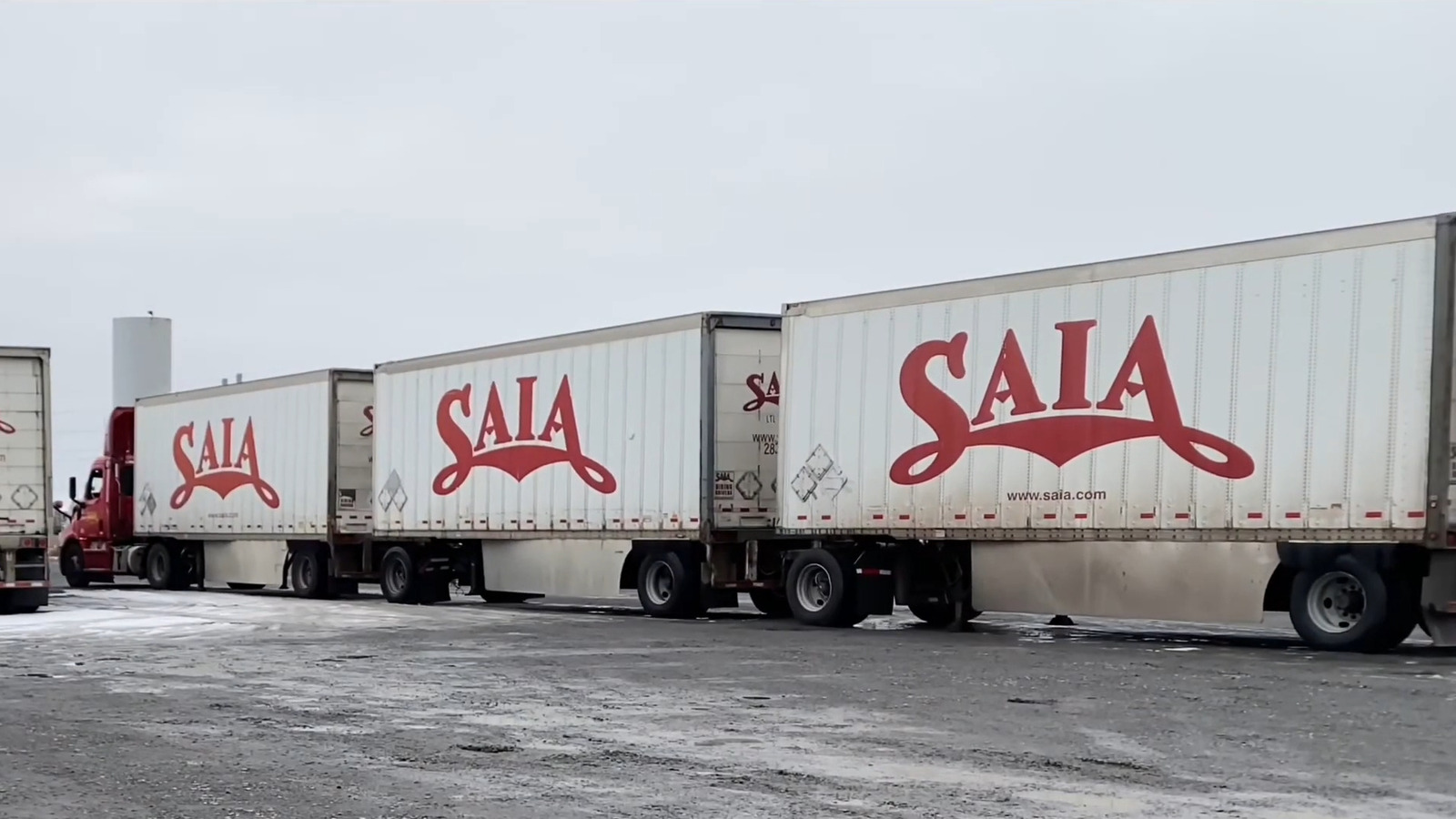
A handful of US states permit semi trucks to operate with three trailers simultaneously, a regulatory exception that stands apart from the federal standard limiting most commercial hauling to double trailers. These permissive jurisdictions create operational advantages for trucking companies willing to navigate state-specific rules.
The federal government restricts interstate commerce to twin-trailer configurations on most highways. States including Montana, Nevada, New Mexico, and parts of the upper Midwest carve out exceptions allowing triple-trailer rigs, often called road trains. These configurations stretch 100 feet or longer and demand specialized driving skills and equipment.
Trucking companies exploit these state corridors to move freight more efficiently on rural routes where traffic density and highway infrastructure support longer combinations. A single driver moving three trailers instead of two increases cargo volume per trip, reducing fuel costs per ton-mile and boosting profitability. The practice reflects how regional regulations shape logistics networks and driver economics across America.
Critics argue triple trailers pose safety risks on congested highways and in poor weather. Longer rigs complicate turning maneuvers at interchanges and reduce stopping distances. Advocates counter that these trucks operate primarily on open roads where conditions favor their operation, and that experienced drivers maintain safety records comparable to standard doubles.
States allowing triple trailers typically implement geographic restrictions, confining the rigs to designated routes and excluding urban corridors. Nevada, for instance, permits three-trailer operations in select areas but prohibits them near Las Vegas and Reno. Montana's regulations extend further, permitting them across much of the state's sparsely populated highways.
The regulatory patchwork reflects ongoing tension between efficiency and safety in freight transport. As trucking companies face driver shortages and rising labor costs, interest in triple-trailer operations remains strong. However, proposals to expand federal approval for three-trailer configurations have stalled, with safety advocates and highway departments expressing reservations about nationwide implementation