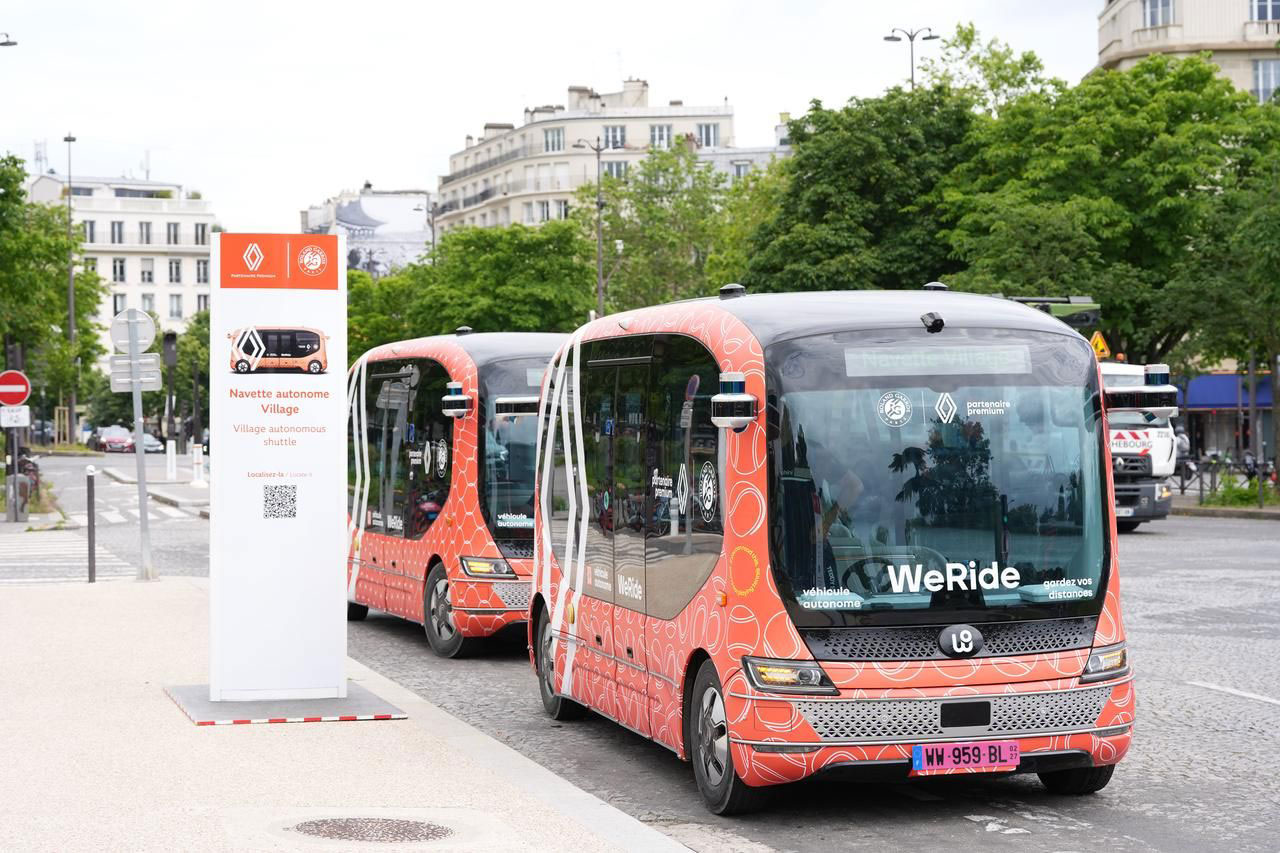
WeRide, the Chinese autonomous vehicle specialist, has deployed its self-driving Robobus fleet to serve passengers at the French Open tennis tournament, marking the company's return to one of Europe's largest sporting events. The shuttle service ferries attendees around the Roland Garros grounds without a human driver.
This deployment underscores WeRide's aggressive European expansion. The company already operates autonomous services in France, Belgium, and Switzerland, with recent moves into Slovakia signaling deeper penetration across the continent. For WeRide, Europe represents a critical growth market outside China, where regulatory environments have become more structured and consumer acceptance of autonomous technology continues to mature.
The French Open assignment serves a dual purpose. It provides real-world operational data in high-traffic, complex scenarios while generating visibility for WeRide's technology among European audiences and policymakers. Major sporting events create controlled environments ideal for showcasing autonomous capabilities to large, diverse crowds.
WeRide competes directly with other autonomous shuttle operators vying for European contracts, including Navya and EasyMile, both European firms with established fleets. The competitive intensity reflects Europe's openness to autonomous public transit solutions, particularly in cities and venues seeking to reduce congestion and emissions. France itself has been supportive of autonomous vehicle testing, with regulatory frameworks that encourage deployment across multiple use cases.
The Robobus project differs from most autonomous development focused on personal vehicles. WeRide pursues the shuttle and transit market, where lower speeds, fixed routes, and predictable environments reduce technical complexity compared to Level 4 autonomy in mixed urban traffic. This strategy targets municipalities and event operators seeking cost reduction through eliminated driver wages and improved operational efficiency.
WeRide's European presence remains modest compared to its dominant position in China, where it operates extensive robo-taxi and shuttle networks. However, establishing consistent operations across multiple countries builds regulatory credibility and operational expertise that