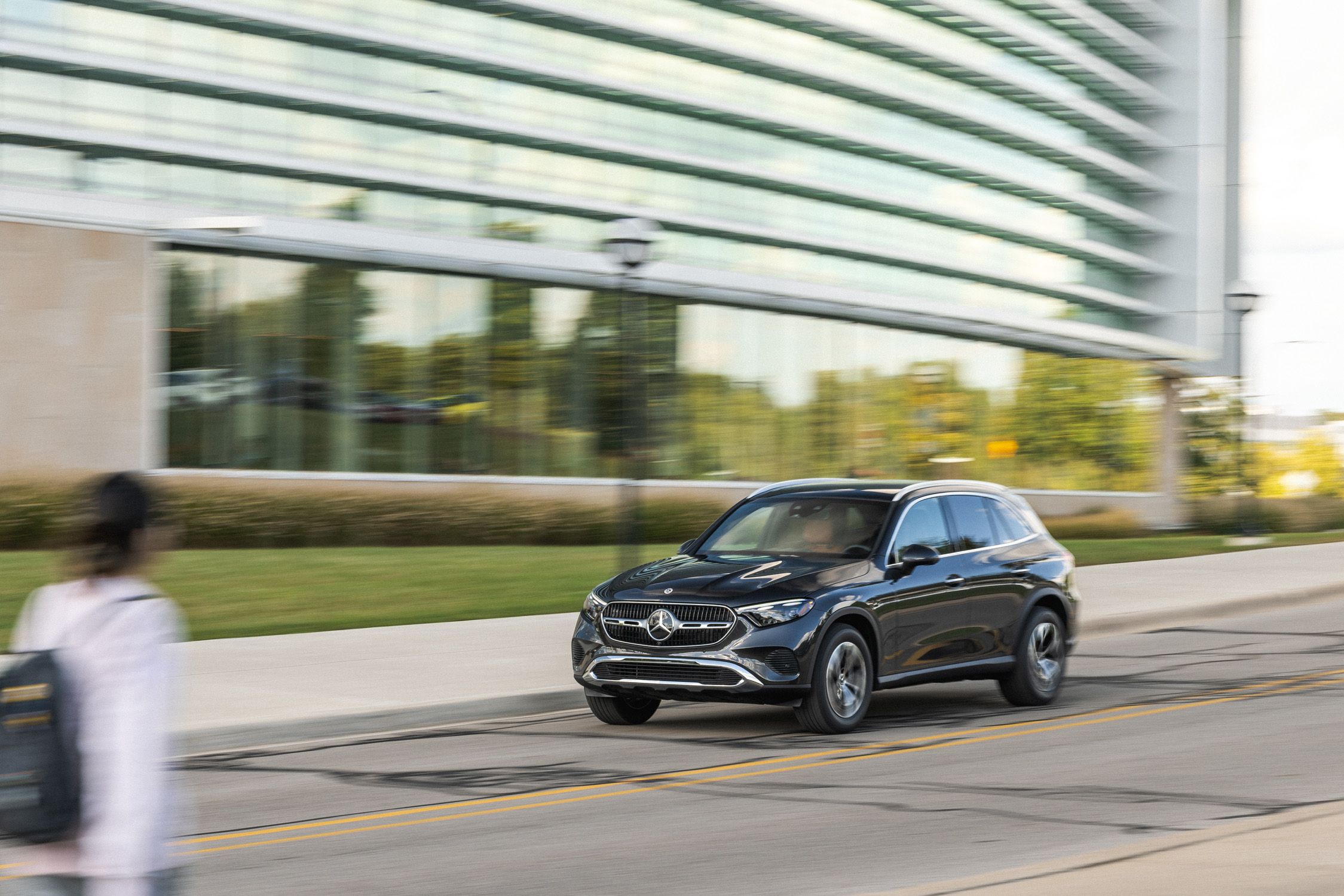
Mercedes-Benz tightens the screws on performance-oriented hybrid buyers with the 2027 GLC350e, blending turbocharged combustion with electric torque in the compact luxury segment. The model pairs a 2.0-liter turbocharged inline-four engine with an electric motor, generating combined output that positions it as a credible rival to the BMW X3 45e and Audi Q5 TFSI e.
The GLC350e targets affluent shoppers unwilling to sacrifice either driving dynamics or fuel economy. The hybrid powertrain reduces emissions during urban commutes while preserving the acceleration and handling expected from a Mercedes performance variant. Real-world fuel consumption sits substantially lower than gasoline-only counterparts, appealing to environmentally conscious executives.
Pricing anchors the GLC350e firmly in premium territory, starting around $63,000 before destination charges. That commands a meaningful premium over the non-hybrid GLC300, justified by the added electric motor and battery system. The package includes Mercedes' latest infotainment interface, panoramic sunroof, and adaptive air suspension as standard.
Interior space remains a strength. The GLC350e preserves cargo capacity despite battery packaging, offering 54.9 cubic feet of storage with rear seats folded. The cabin delivers soft-touch materials and intuitive controls characteristic of current Mercedes design language.
Real weaknesses emerge in efficiency trade-offs. The battery pack, while enabling all-electric driving for limited distances, adds weight that dulls the GLC's traditional agility. Range anxiety crops up for drivers operating outside urban environments where charging infrastructure remains sparse. Battery degradation over ownership cycles creates long-term cost uncertainties that pure-gasoline competitors sidestep entirely.
The 2027 GLC350e occupies an awkward middle ground. It costs more than a