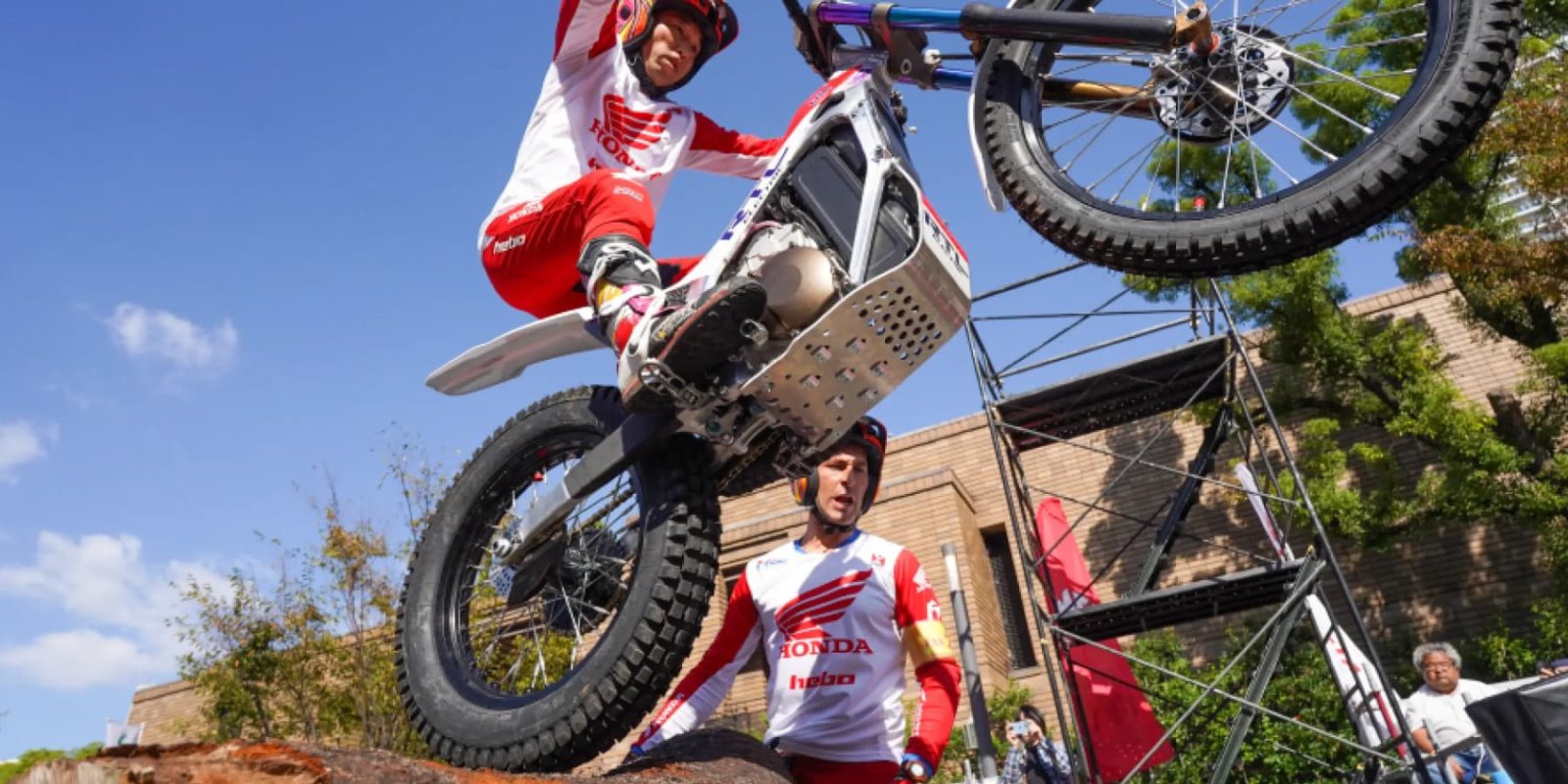
Honda's electric RTL trials motorcycle achieved a watershed moment for battery-powered off-road bikes at the 2026 TrialGP World Championship opener in Japan. Rider Miquel Gelabert finished sixth overall on day one, then climbed to fifth on day two. This marks the first time an electric motorcycle has genuinely competed in TrialGP's premier class, running near the front against gas-powered rivals rather than serving as a novelty entry.
The RTL Electric's performance matters because trials competition is brutal. Riders navigate rocky, technical terrain at low speeds for extended periods, demanding raw torque control and responsive power delivery. Gas engines excel here. Electric motors, by contrast, offer instant torque and linear power application. Trials is where those advantages translate to real results.
Gelabert's competitive showing signals a shift in the electric motorcycle conversation. For years, skeptics pointed to trials as the last domain where combustion engines held an unshakeable advantage. Range concerns, charging logistics, and the perceived roughness of electric powertrains made off-road riding seem incompatible with battery power. Honda's result challenges that narrative directly.
The implications extend beyond trials. Manufacturers including KTM, Yamaha, and Beta have developed electric off-road concepts, but Honda now has on-track validation. An electric motorcycle finishing fifth at a world championship, not as a one-off stunt but as a legitimately competitive entry, changes manufacturer calculus. It suggests electric drivetrains can handle the punishment of professional off-road racing.
For consumers, this matters too. Trials enthusiasts and casual trail riders increasingly care about operating costs, noise, and maintenance simplicity. Electric motorcycles deliver on all three fronts. No spark plugs, no valve adjustments, no fuel mixing. Instant throttle response appeals to skill-focused riders.