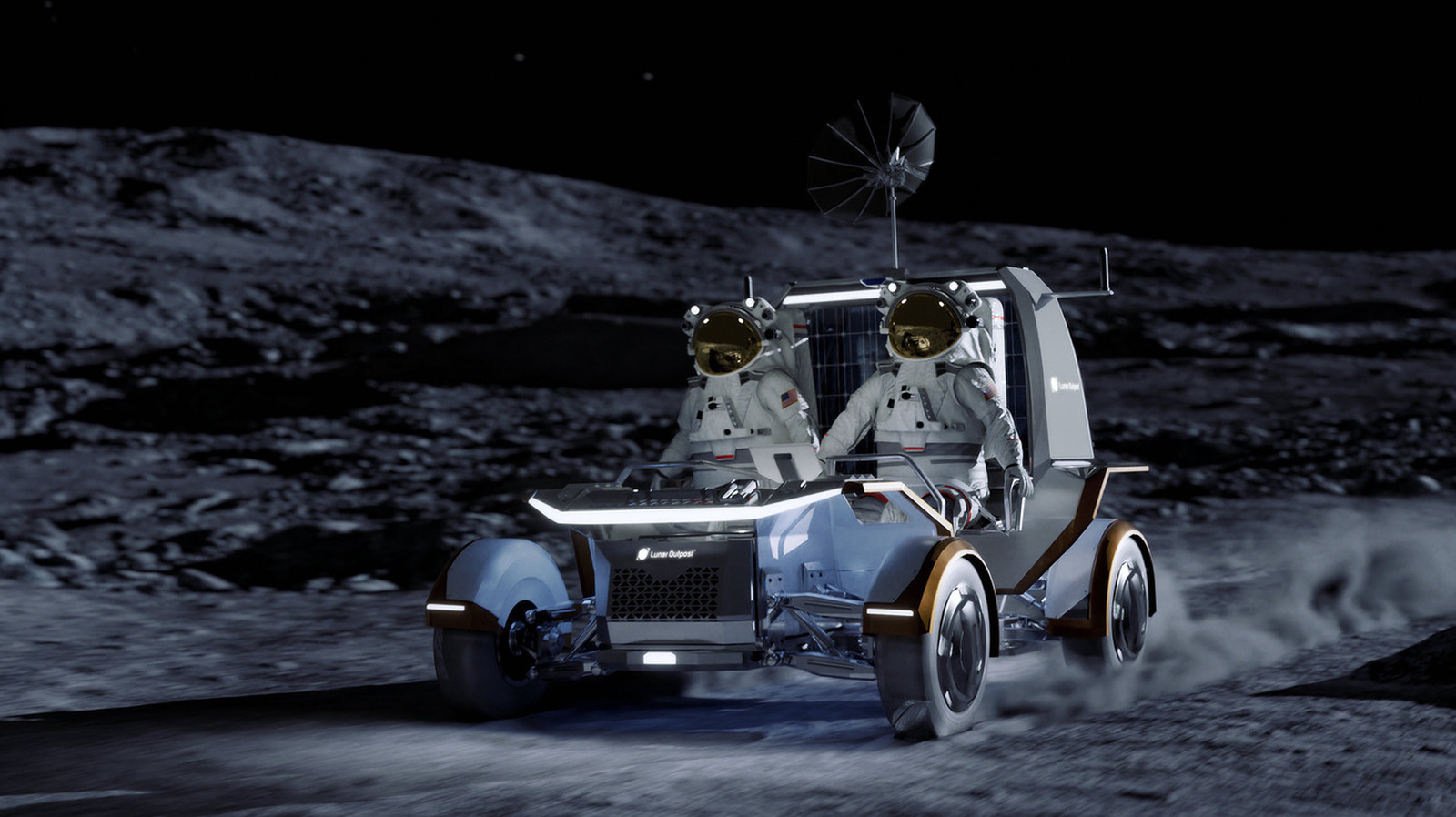
NASA has revealed its next-generation lunar vehicles as the agency moves forward with concrete plans for a permanent Moon base. The shift marks a departure from fantasy into engineering reality, with hardware development now underway rather than concept sketches gathering dust.
The new rover designs reflect lessons learned from Apollo-era missions and decades of robotic exploration. These vehicles must handle extreme lunar terrain, temperature swings from 250 degrees Fahrenheit to minus 280 degrees, and operate in near-vacuum conditions for extended periods. Pressurized cabins will protect astronauts during long-range missions across the lunar surface, addressing a critical limitation of Apollo's short excursions.
NASA's strategy centers on establishing sustainable infrastructure at the Moon's south polar region, where permanently shadowed craters harbor water ice. This resource becomes the foundation for everything that follows. Astronauts will need reliable transportation to extract ice, establish habitats, and conduct scientific research. The new rovers must support these operations while carrying crews of two to four over distances previous lunar vehicles never attempted.
Private industry plays a larger role than in Apollo's day. Companies like Lockheed Martin, General Motors, and others have partnered with NASA to develop these platforms, spreading development costs and accelerating timelines. This public-private approach differs fundamentally from Cold War-era space race dynamics.
The lunar base concept extends beyond a flag-planting exercise. NASA envisions using the Moon as a testing ground for deep-space technologies and as a staging point for eventual Mars missions. Astronauts would spend weeks or months on the surface rather than days, requiring vehicles designed for durability and self-sufficiency that far exceed Apollo specifications.
Engineering challenges remain substantial. Life support systems must function reliably in an alien environment. Power systems must operate through two-week lunar nights. Navigation demands precision without GPS infrastructure. These obstacles explain why the timeline extends years into the future,