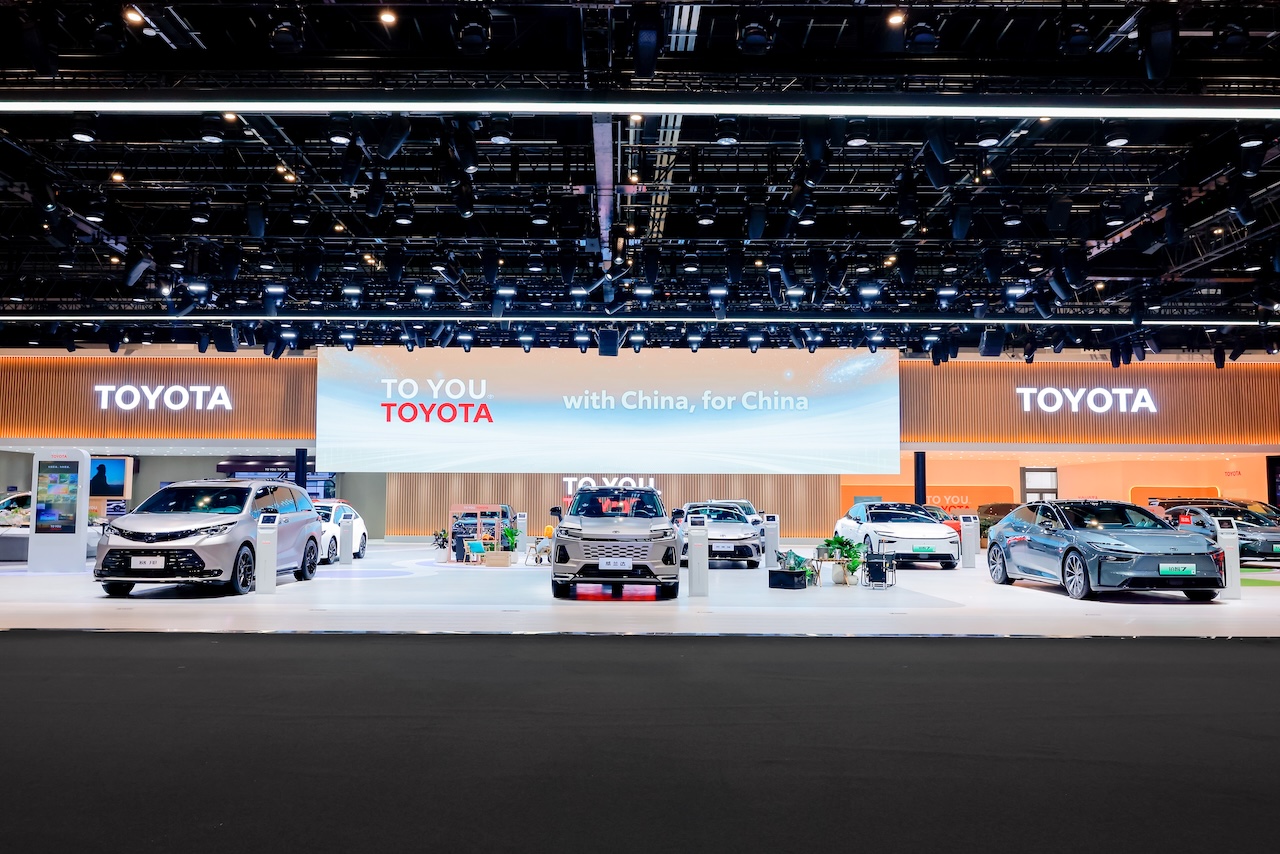
Toyota faces a critical inflection point in China, its second-largest market by revenue, as domestic sales decline and homegrown competitors gain ground at alarming speed. The Japanese automaker's China operations once defined growth expectations across the industry. That era appears to be ending.
Chinese brands like BYD, Geely, and Li Auto now dominate segments Toyota long controlled, particularly in electric vehicles and plug-in hybrids where Beijing's industrial policy favors local manufacturers. BYD has become the world's largest EV producer by volume. Meanwhile, Tesla and other foreign EV makers have carved into Toyota's traditional sedan and SUV strongholds.
Toyota's China sales have stalled relative to the broader market expansion. The company's joint ventures with FAW and Guangqi continue to produce Corolla, Camry, and RAV4 models, but pricing pressure intensifies as competitors offer more features at lower price points. Chinese consumers increasingly perceive Toyota as premium-priced and cautious on electrification compared to aggressive local rivals rolling out affordable EVs with advanced software.
The automaker's hybrid strategy, historically a strength, faces headwinds in China where government subsidies favor full battery electrics over hybrids. Toyota's BZ4X electric SUV launched late and competes in a crowded field against cheaper, locally-engineered alternatives from BYD's Atto 3 and Geely's Geometry models.
Toyota's China exposure matters globally. The region accounts for roughly 12 percent of worldwide Toyota sales and serves as a testing ground for new powertrains and technologies. A sustained China slowdown forces Toyota to rely more heavily on North America, Japan, and Southeast Asia to meet growth targets. It also signals shifting competitive dynamics where price, electrification speed, and software integration now matter more than brand heritage and reliability reputation.
The company must