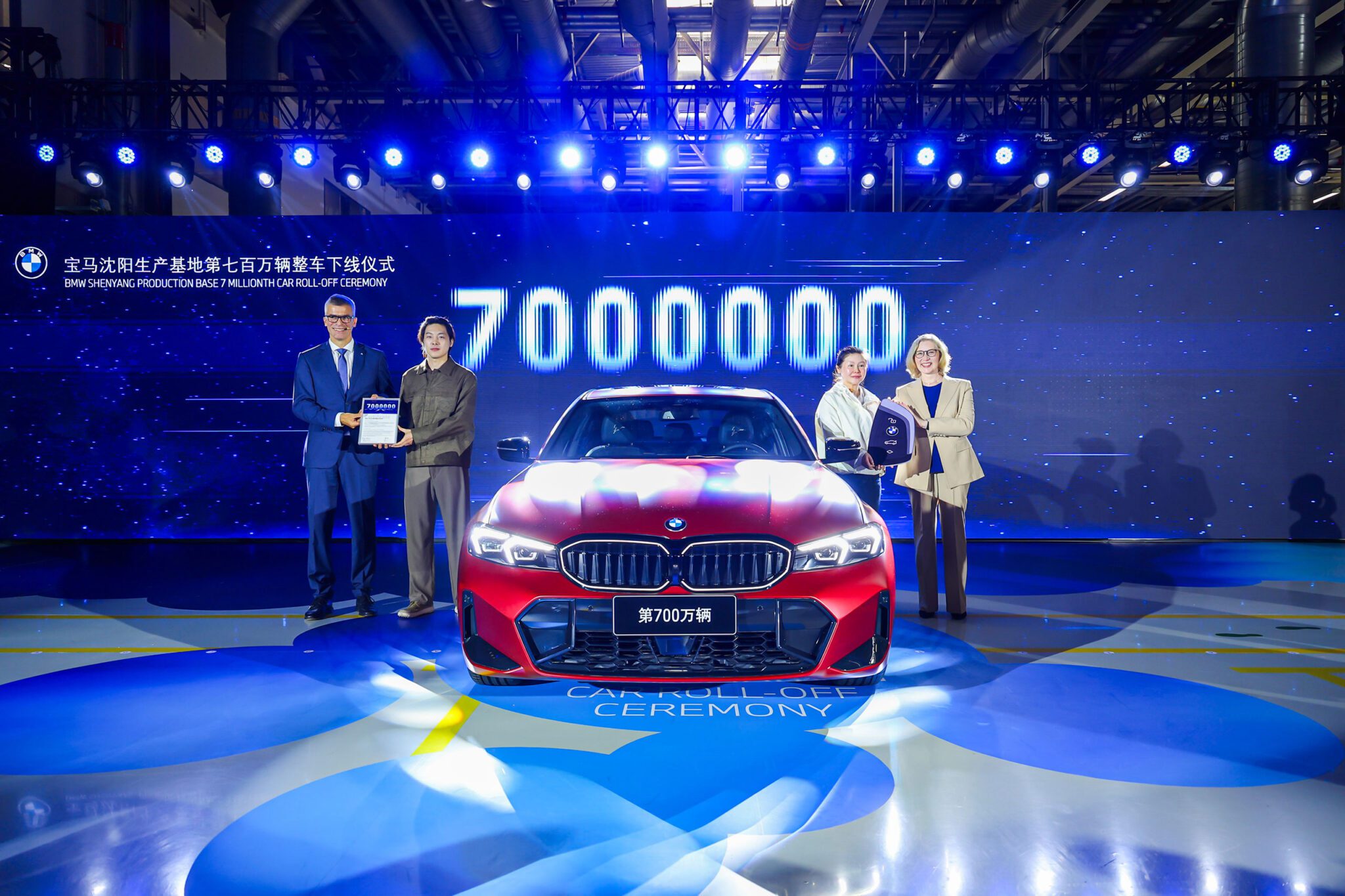
BMW Brilliance Automotive Ltd. reached a major production milestone at its Shenyang plant in northeastern China, rolling off the seven-millionth vehicle from the facility. The achievement underscores the German automaker's deep commitment to manufacturing in China, its largest market outside Europe.
The joint venture between BMW and Brilliance Auto has operated the Shenyang facility since 2003. The plant produces a range of BMW models, including 3 Series, 5 Series, and X3 and X5 variants tailored for the Chinese market. Two decades of continuous expansion transformed Shenyang into one of BMW's critical manufacturing hubs globally.
The timing matters. BMW faces mounting pressure from Chinese EV competitors like BYD, NIO, and Li Auto that dominate the domestic market. The company needs local production capacity and pricing advantages to compete.
Later in 2025, BMW Brilliance will begin localizing production of the Neue Klasse, BMW's next-generation platform architected around electrification. This shift marks a strategic pivot toward battery electric vehicles in China. The Neue Klasse will underpin future BMW and Mini models and feature modular battery architecture designed for flexibility across sedan, SUV, and crossover categories.
Bringing Neue Klasse production to Shenyang signals BMW's bet on staying relevant in China's EV-dominated future. Chinese automakers control roughly 60 percent of the domestic market. Foreign manufacturers including BMW, Audi, and Mercedes have lost significant ground to homegrown competitors over the past five years.
The seven-million-unit milestone also reflects China's recovery as a production hub after pandemic-related disruptions. BMW and other legacy automakers require manufacturing scale in China to achieve competitive cost structures on EVs. Shenyang's expanded capacity supports this imperative.
The Neue