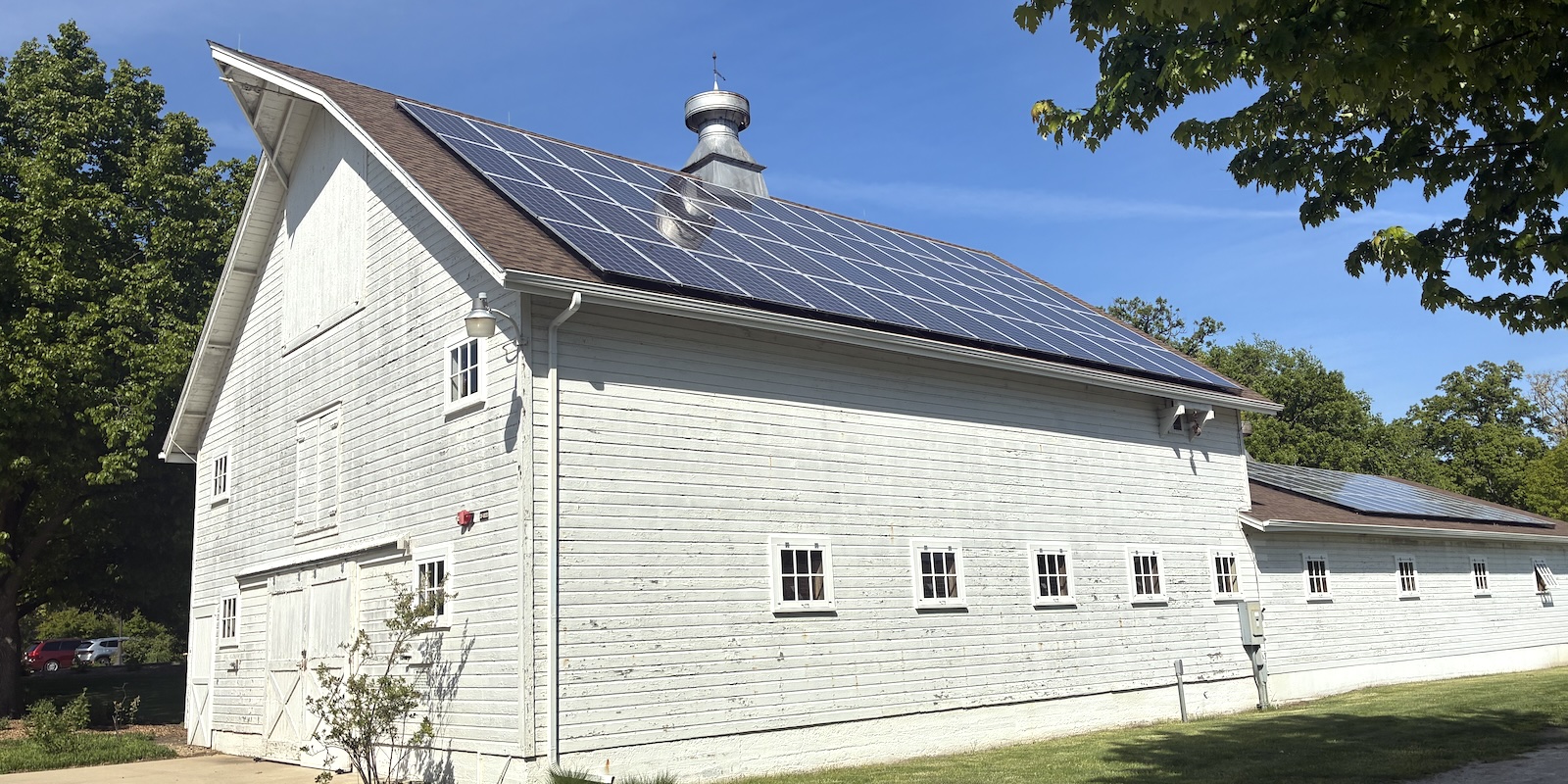
A homeowner's 880-watt rooftop solar array produced over 1,050 watts of power this week, temporarily exceeding its rated capacity by more than 20 percent. The phenomenon stems from a rare atmospheric condition involving cloud cover that amplified sunlight hitting the panels.
Solar panels commonly exceed their nameplate rating under specific weather conditions. When light clouds scatter and reflect sunlight while the sun remains visible, panels receive both direct and reflected radiation simultaneously. This "albedo effect" bounces light off cloud surfaces and ground surfaces, concentrating more photons on the panel surface than on a completely clear day. Panel efficiency also climbs in cooler temperatures, and cloud cover naturally cools panels compared to full summer sun.
The Physics Behind Overperformance. A panel rated at 880W represents its performance under standard test conditions: 1,000 watts per square meter of irradiance at 25 degrees Celsius. Real-world conditions frequently differ. Actual solar irradiance can spike above 1,000 W/m2 during certain atmospheric configurations. Cool temperatures amplify the effect further, since silicon photovoltaic cells lose efficiency as they heat up. A cool, partly cloudy day with high reflectivity delivers ideal conditions.
The Reddit post caught attention because such conditions remain uncommon. Most solar monitoring apps show sustained overperformance only occasionally. Systems rarely sustain output above 100 percent of nameplate capacity for extended periods, making this instance noteworthy among solar owners tracking daily generation.
Installers and manufacturers acknowledge this behavior in technical literature. Standard test conditions represent controlled laboratory settings, not typical outdoor performance. Actual systems regularly see variance between 80 and 110 percent of rated output depending on weather, temperature, angle, and seasonal factors. The appearance of exceeding rated output doesn't indicate a system malfunction or measurement error. It