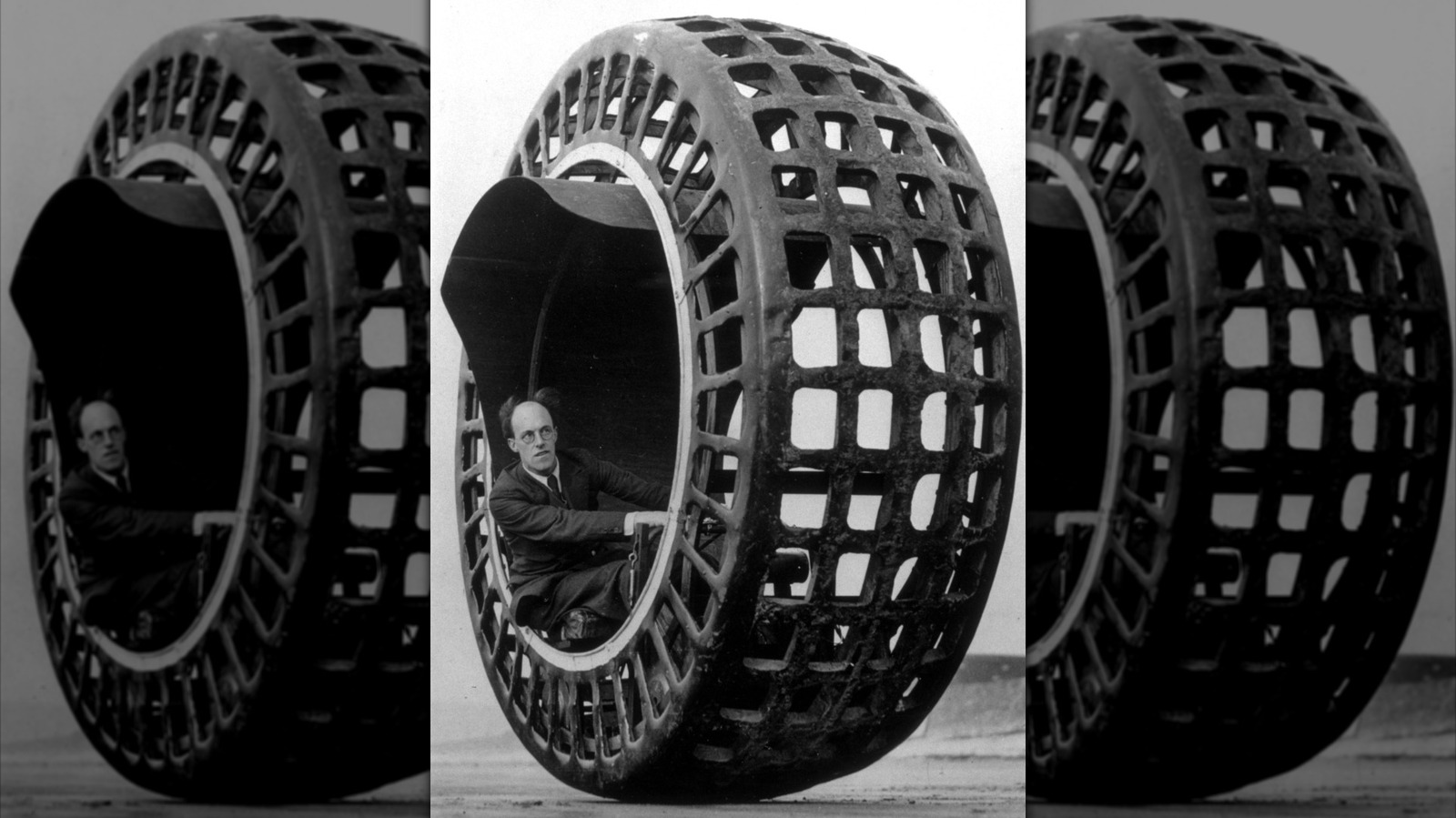
# The Monowheel: Engineering Ambition Meets Practical Reality
The monowheel represents one of automotive history's most audacious engineering experiments. This fully functional single-wheeled contraption could reach 30 mph and promised superior efficiency over conventional automobiles. Despite those specs, the vehicle proved to be a rolling death cage that never achieved commercial viability.
The monowheel's appeal centered on physics and efficiency theory. A single rotating wheel eliminated the friction and weight of multiple wheels and axles. Engineers calculated that monowheels required less power to move than traditional four-wheel cars. The concept attracted serious attention from inventors across multiple decades, resulting in working prototypes that actually operated on roads.
However, the machine's design harbored catastrophic flaws. Operator visibility was severely compromised since the driver sat inside the wheel structure. Steering proved unpredictable and difficult. The vehicle's gyroscopic properties made it prone to sudden, violent directional shifts. Stopping required mechanical skill that amateur drivers could not master. Any loss of control sent the entire wheel rolling with the operator trapped inside.
The monowheel's instability became apparent during real-world testing. Drivers reported that small obstacles caused dangerous wobbling. At higher speeds, the wheel could flip or collapse. The device offered no protection in a crash. Insurance companies refused to cover them. Accidents were frequent and often severe.
The monowheel never transitioned from novelty to practical transportation. Manufacturers abandoned the concept as safety concerns mounted and liability exposure became prohibitive. Conventional four-wheel automobiles, despite their theoretical inefficiency, offered superior control, visibility, and crash protection. Those practical advantages overwhelmed any marginal efficiency gains the monowheel promised.
Today, the monowheel survives as a footnote in automotive history. Modern iterations exist as carnival attractions and hobby