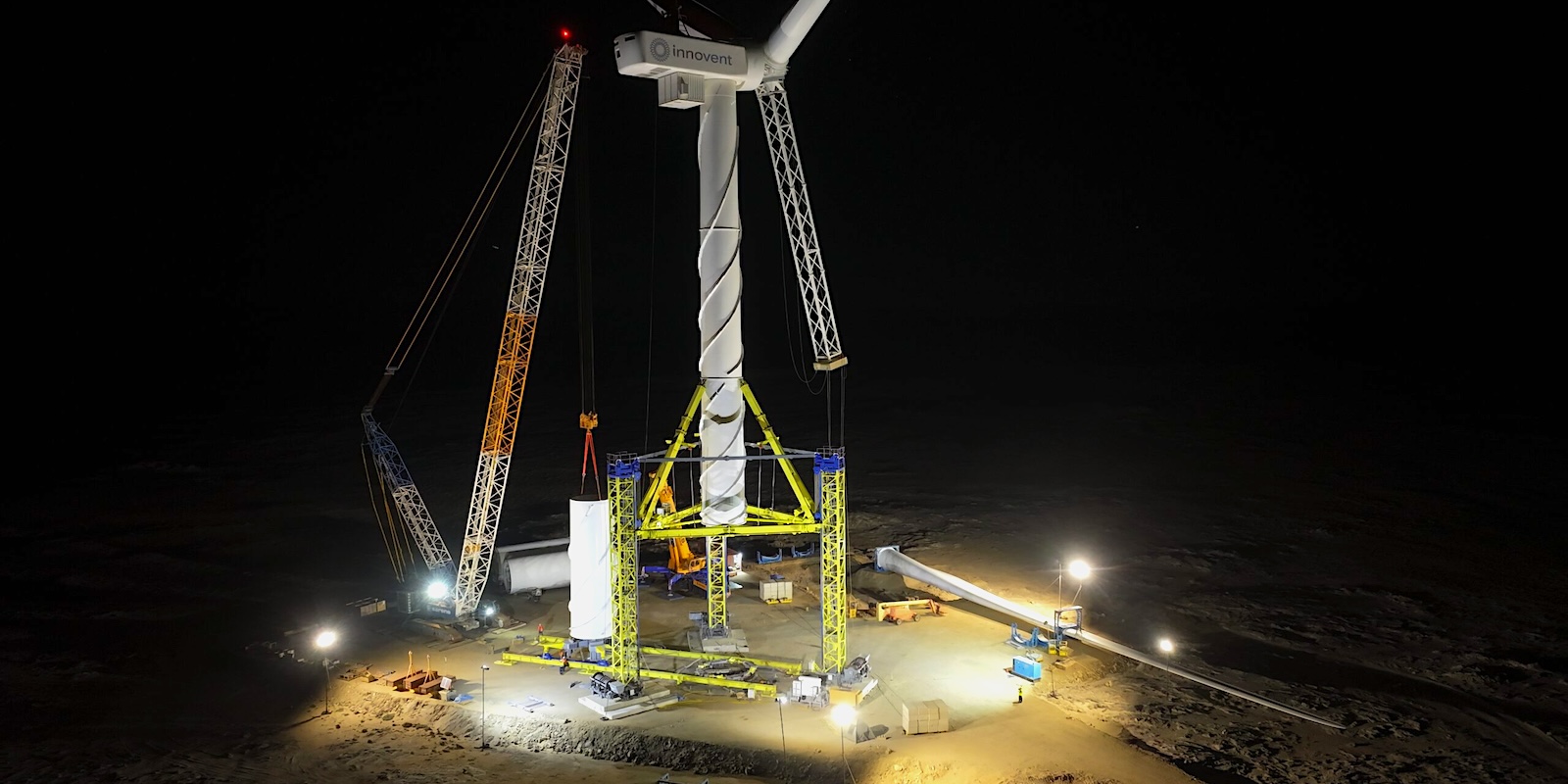
Fortescue's turbine subsidiary Nabrawind has successfully deployed the first crane-less wind turbine in Africa, marking a technical breakthrough previously considered impossible. The installation took place in Namibia under harsh environmental conditions using an entirely new deployment methodology that eliminates the need for heavy cranes.
This achievement carries real implications for wind energy expansion across Africa and other remote regions. Traditional wind turbine installation demands massive mobile cranes, which creates logistical bottlenecks in areas with limited infrastructure, poor road conditions, or restricted access. Namibia's terrain presents exactly these challenges. By removing the crane requirement, Nabrawind has opened deployment possibilities in locations previously deemed economically unviable for wind farms.
The crane-less system addresses a genuine industry pain point. Mobile cranes cost hundreds of thousands of dollars to mobilize, require specialized operators, and depend on adequate ground conditions. They also need significant lead times and coordination with local authorities. In developing markets, these barriers often make small-to-medium wind projects uneconomical. Nabrawind's solution potentially changes that calculus entirely.
Fortescue acquired Nabrawind to diversify its renewable energy portfolio beyond its core iron ore business. The conglomerate has committed to achieving net-zero emissions and recognizes wind energy as central to that strategy. This African deployment serves as both a proof-of-concept and a marketing demonstration of the technology's viability in challenging environments.
The full-scale turbine operating in Namibia proves Nabrawind's system works at production scale, not just laboratory conditions. That distinction matters. Many innovative deployment methods fail during real-world application where weather variability, equipment wear, and logistical friction expose design flaws.
This development positions Nabrawind as a potential leader in distributed wind deployment for emerging markets. As Africa pursues renewable energy targets to meet growing electricity demand, crane-