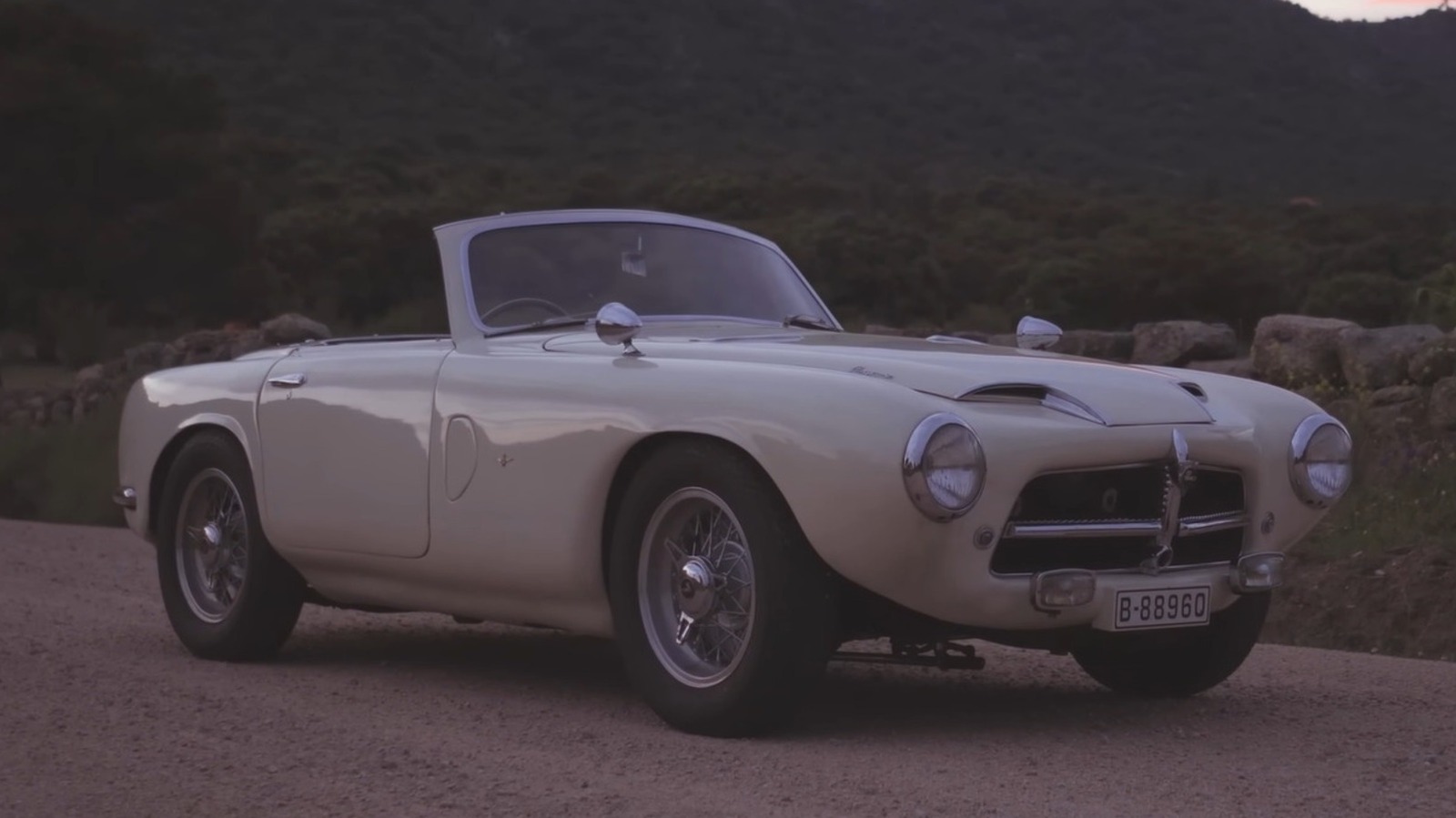
Spain's Pegaso Z-102 remains one of automotive history's strangest success stories. Built by a truck manufacturer between 1953 and 1958, this hand-assembled supercar packed a quad-cam V8 engine that rivaled contemporary Ferrari and Maserati powerplants in sophistication, even if it never matched their sales success.
Pegaso, a Spanish commercial vehicle builder, created the Z-102 as a prestige project to showcase engineering prowess beyond heavy trucks. The engine itself was a marvel. A 2.8-liter quad-cam V8 producing around 160 horsepower, it featured advanced overhead-cam design that manufacturers like Ferrari had only recently mastered. Maintenance proved nightmarish for owners. The complex valve train demanded expertise few Spanish mechanics possessed at the time, and parts availability was virtually nonexistent outside the factory.
The price tag positioned the Z-102 at premium levels. Buyers paid supercar money for a car built outside the established luxury automotive capitals. Only around 100 examples left the factory, making it far rarer than the Ferraris and Maseratis it competed against. Performance was credible but not groundbreaking. The Z-102 achieved roughly 150 mph, respectable for the 1950s but not class-leading.
What truly distinguished the Z-102 was its aesthetic appeal. The lines flowed with Italian elegance despite Spanish construction. Coachwork varied between customers, with both roadster and coupe versions available. Pegaso contracted Saoutchik, Touring, and other renowned carrozzerie for bodywork, ensuring visual distinction from mass-produced competitors.
The Z-102 ultimately failed commercially because Pegaso lacked the dealer network, brand prestige, and service infrastructure that Ferrari and Maserati controlled. A truck company building