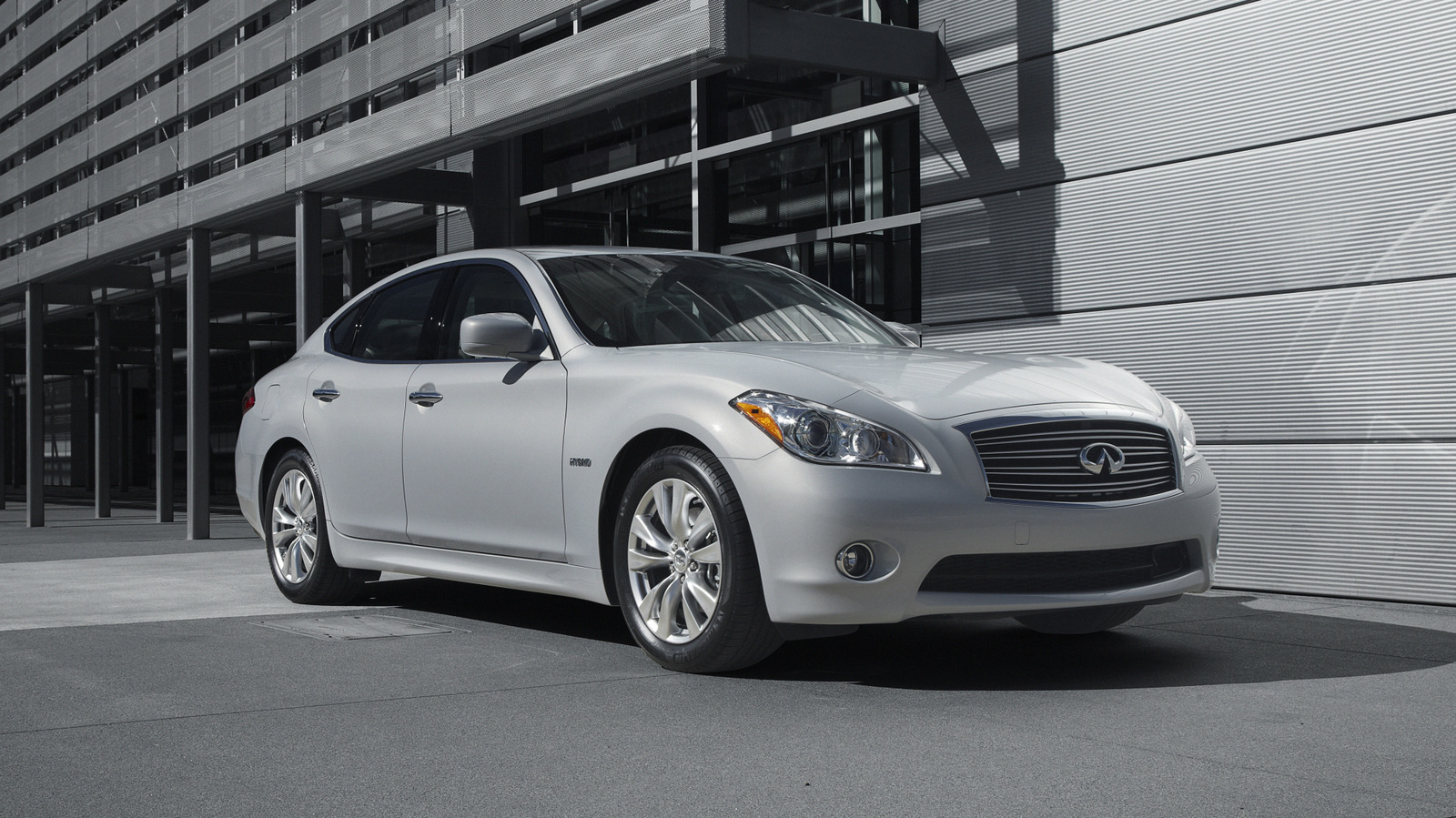
Infiniti's 2012 M35h held the Guinness World Record for quickest hybrid in a quarter-mile back in 2011, but that achievement reads as quaint by today's standards. The luxury sedan's time now seems slow relative to what performance hybrids accomplish in the current market.
The M35h paired a 3.5-liter V6 engine with an electric motor to produce 360 horsepower, enough to turn heads at the time. Quarter-mile performance mattered for brand positioning then. Infiniti's record demonstrated that hybrids could compete in straight-line acceleration, challenging the perception that electric-assisted powertrains meant compromised performance.
Since then, the hybrid performance landscape transformed completely. Ferrari entered the game with the SF90 Stradale, a plug-in hybrid hypercar producing 986 horsepower from its 4.0-liter twin-turbo V12 and three electric motors. Chevrolet pushed harder with the Corvette E-Ray, the first mid-engine hybrid from the American brand, delivering 495 horsepower and 479 pound-feet of torque through a hybrid system paired with its LT6 V8.
These machines obliterate what the M35h achieved. The Ferrari and Chevy examples represent the evolution of hybrid technology and performance expectations over a single decade. Manufacturers learned to integrate electric motors seamlessly while preserving or enhancing traditional engine character. Weight distribution improved. Battery technology matured. Thermal management became sophisticated.
The M35h record also reflects how quickly automakers abandoned midsize luxury sedan performance as a marketing tool. That segment shifted toward crossovers and larger SUVs. Meanwhile, performance hybrids migrated to supercars and sports cars where horsepower counts more in marketing materials.
Infiniti's achievement