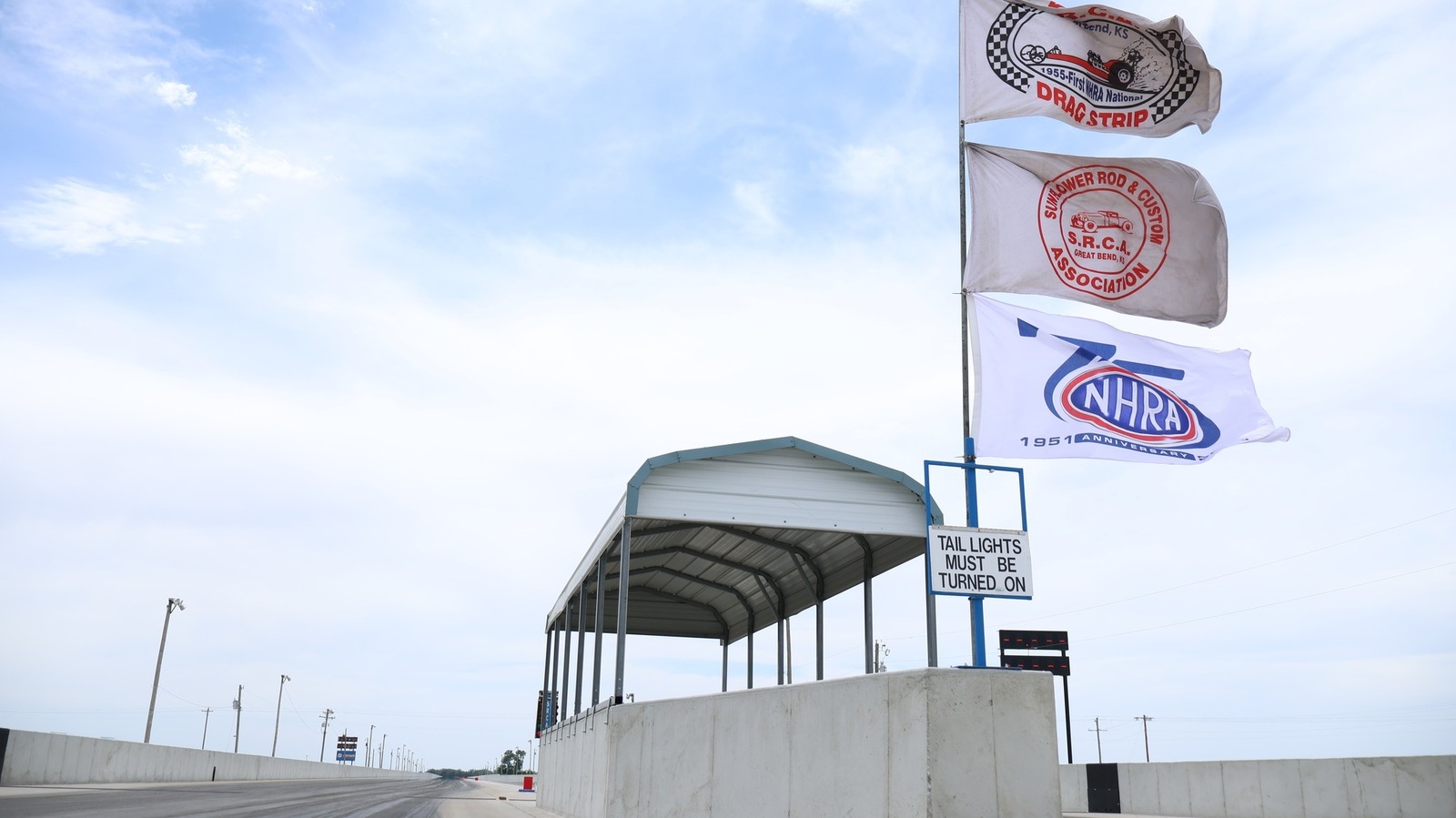
Great Bend, Kansas has reversed a national trend by reopening its historic drag strip, a facility that sits idle while racing venues across America shutter. The track, operated by SRCA, benefited from community support and city backing that allowed restoration efforts to proceed where similar venues have failed.
The reopening marks a rare win for drag racing infrastructure. Across the country, drag strips and road courses face closure due to rising operational costs, liability insurance, and declining spectator attendance. Many tracks cannot sustain themselves financially, forcing owners to sell property for development. Great Bend's success hinged on local enthusiasm and municipal cooperation, factors absent in most struggling markets.
The facility reopened with community events and grassroots racing programs, positioning itself as both a recreational venue and economic driver for the region. This model differs from commercial tracks dependent entirely on gate revenue and sponsorships. By leaning on local engagement and city resources, Great Bend's operation found stability that purely market-driven venues cannot match.
The drag racing landscape has contracted significantly over the past two decades. NHRA sanction tracks have consolidated, and independent strips have vanished at accelerating rates. Younger audiences gravitated toward motorsports content online and video games, diluting traditional spectator bases. Insurance and environmental compliance costs pushed many owners toward closure rather than reinvestment.
Great Bend's reopening offers a blueprint but limited scalability. Most communities lack either the political will or organizational capacity to restore defunct tracks. The effort required sustained leadership, volunteer labor, and genuine grassroots demand. Those elements rarely align simultaneously.
For drag racing enthusiasts, the reopening represents hope that heritage venues can survive beyond nostalgia. SRCA's success demonstrates that community-supported facilities operate differently than traditional commercial enterprises. However, the broader closure trend will likely continue. Most remaining independent tracks face aging infrastructure and aging fan bases. Great Bend stands as exception rather