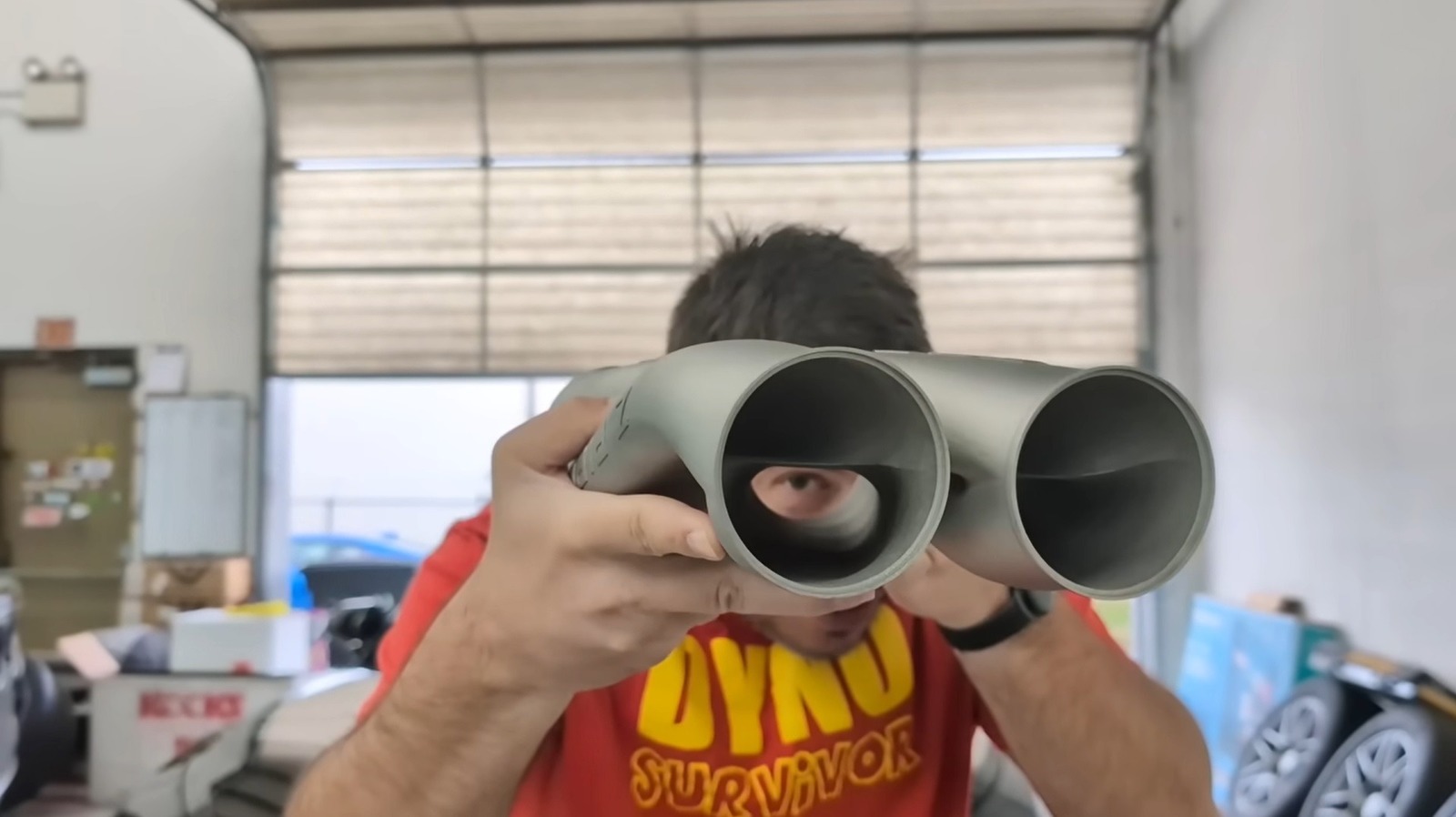
A 3D-printed Z-pipe exhaust design outperforms traditional X-pipe configurations in dyno testing, delivering measurable horsepower gains for modified engines. The unconventional geometry optimizes exhaust scavenging and reduces turbulence compared to the crossover path of standard X-pipes, which remain the performance exhaust standard across most platforms.
The Z-pipe's design routes exhaust flow in a way that maximizes cylinder scavenging efficiency, a critical factor in naturally aspirated and forced-induction builds where exhaust velocity and timing directly impact cylinder filling on the intake stroke. Independent testing shows the Z-pipe produces gains over competitors, though the margin depends on engine configuration, displacement, and boost levels.
However, cost presents a significant barrier. 3D printing custom exhaust components carries steep manufacturing expenses compared to mass-produced X-pipes. Most enthusiasts can source quality X-pipe systems for $400 to $800. A custom 3D-printed Z-pipe likely commands multiples of that investment. The return on investment becomes questionable unless the builder is chasing maximum output from a high-horsepower platform where 10 to 20 extra horses justify the expense.
Durability remains an open question. Additive manufacturing exhaust systems must handle extreme thermal cycling, vibration, and corrosive exhaust gases. Material selection matters enormously. Stainless steel or heat-resistant alloy printing processes exist but drive costs higher than conventional fabrication.
The Z-pipe demonstrates that aftermarket exhaust innovation continues despite X-pipes achieving maturity. For budget-conscious tuners, X-pipes remain the practical choice with established reliability and reasonable cost. For competitors and high-dollar builds pursuing every fraction of a percent, 3D printing offers design flexibility that traditional mandrel bending cannot match. But performance gains alone do not justify adoption