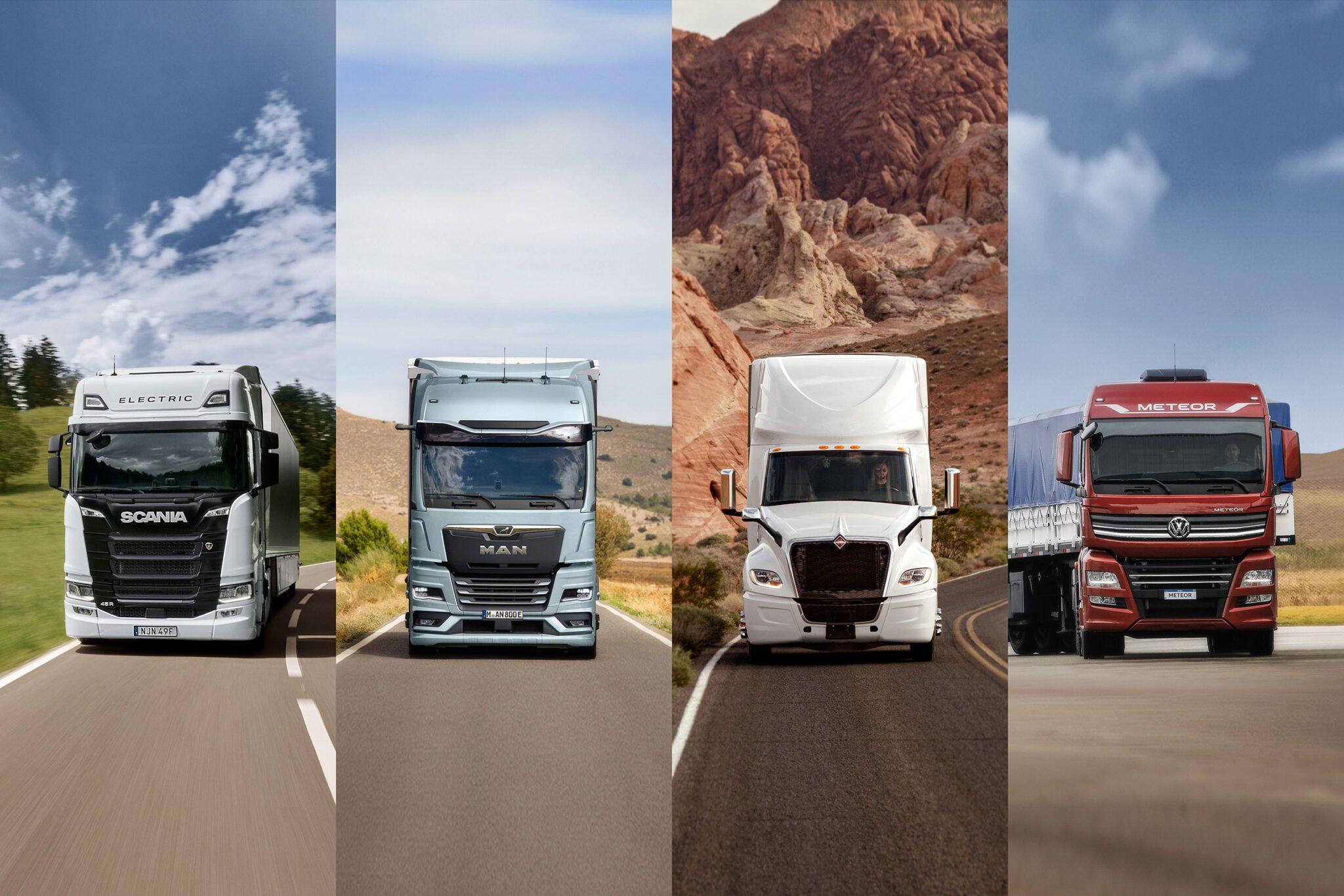
Traton Group, the truck and bus manufacturer owned by Volkswagen, faces a pivotal decade ahead as it navigates the shift to electrification and meets fluctuating demand across global markets. Automotive World's forecast through 2030 projects the company's production trajectory and financial performance during a period when commercial vehicle makers must balance legacy diesel operations with mounting EV investments.
Traton operates under the Scania, MAN, and Volkswagen Truck brands, collectively serving Europe, Latin America, and Asia. The group commands roughly 15 percent of the global heavy-duty truck market. Its 2030 outlook reflects recovery from pandemic-era disruptions and semiconductor shortages that hammered production in 2021 and 2022, alongside ongoing supply chain volatility.
The forecast anticipates gradual production increases as economies stabilize and fleet operators accelerate replacement cycles. However, growth remains constrained by the global transition to zero-emission vehicles. Traton has committed to battery-electric trucks across its brands but faces competition from Tesla's Semi, Volvo's FH Electric, and Chinese OEMs scaling EV capacity faster than traditional players.
Traton's profitability hinges on two factors. First, pricing discipline on remaining ICE trucks, where margins remain stronger than on early EV models. Second, manufacturing cost reductions as battery prices decline. The company must also navigate regional regulations. Europe tightens CO2 standards annually; the United States imposes stricter heavy-duty emissions rules by 2027; China dominates EV truck sales already.
By 2030, Traton's mix will shift significantly toward electrified powertrains, though diesel trucks will likely represent 50 to 60 percent of sales. The forecast assumes modest volume growth to roughly 500,000 to 550,000 units annually by decade's