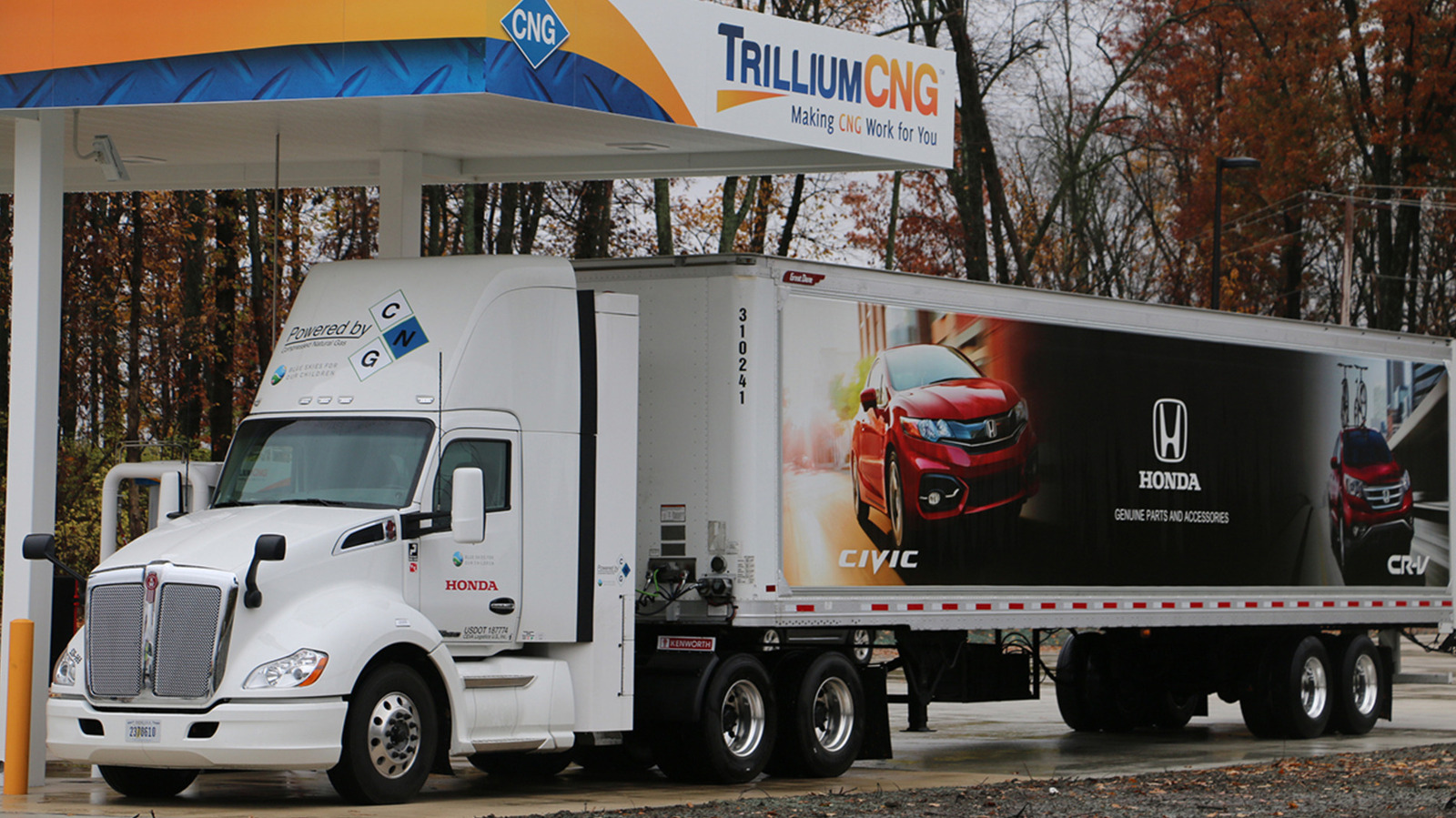
Compressed natural gas (CNG) and gasoline are distinct fuels despite sharing the "gas" label and fossil fuel origins. Gasoline is a liquid refined from crude oil through distillation, containing hydrocarbons that burn in internal combustion engines. CNG is natural gas compressed to high pressure, stored in specialized tanks, and used primarily in fleet vehicles and commercial applications.
The fuels differ fundamentally in storage and delivery. Gasoline exists as a liquid at atmospheric pressure, making it straightforward to pump into standard fuel tanks. CNG requires pressurized cylindrical tanks rated for 3,000 to 3,600 PSI, necessitating dedicated refueling infrastructure. This explains why CNG vehicles remain niche products, concentrated in commercial and municipal fleets rather than consumer markets.
Performance characteristics diverge significantly. Gasoline engines operate through spark ignition at high compression ratios. CNG engines require different combustion timing and lower compression ratios, producing less power and torque per cylinder. A gasoline-powered sedan outaccelerates its CNG equivalent substantially. CNG's advantage lies in lower emissions and reduced fuel costs, particularly for high-mileage operators running predictable routes.
Putting gasoline in a CNG-only vehicle destroys the engine immediately. The fuel ignites prematurely in the combustion chamber, causing catastrophic damage. Conversely, using CNG in a gasoline engine is impossible without complete fuel system replacement. CNG vehicles feature reinforced fuel lines, specialized regulators, and engine management systems calibrated for natural gas combustion.
The automotive industry has largely abandoned CNG for consumer vehicles in North America. Rising gasoline prices and emissions regulations spurred interest in the 1980s and 1990s, but the fuel's infrastructure limitations and performance penalties proved insurmountable. Electric vehicles now capture alternative-fuel attention