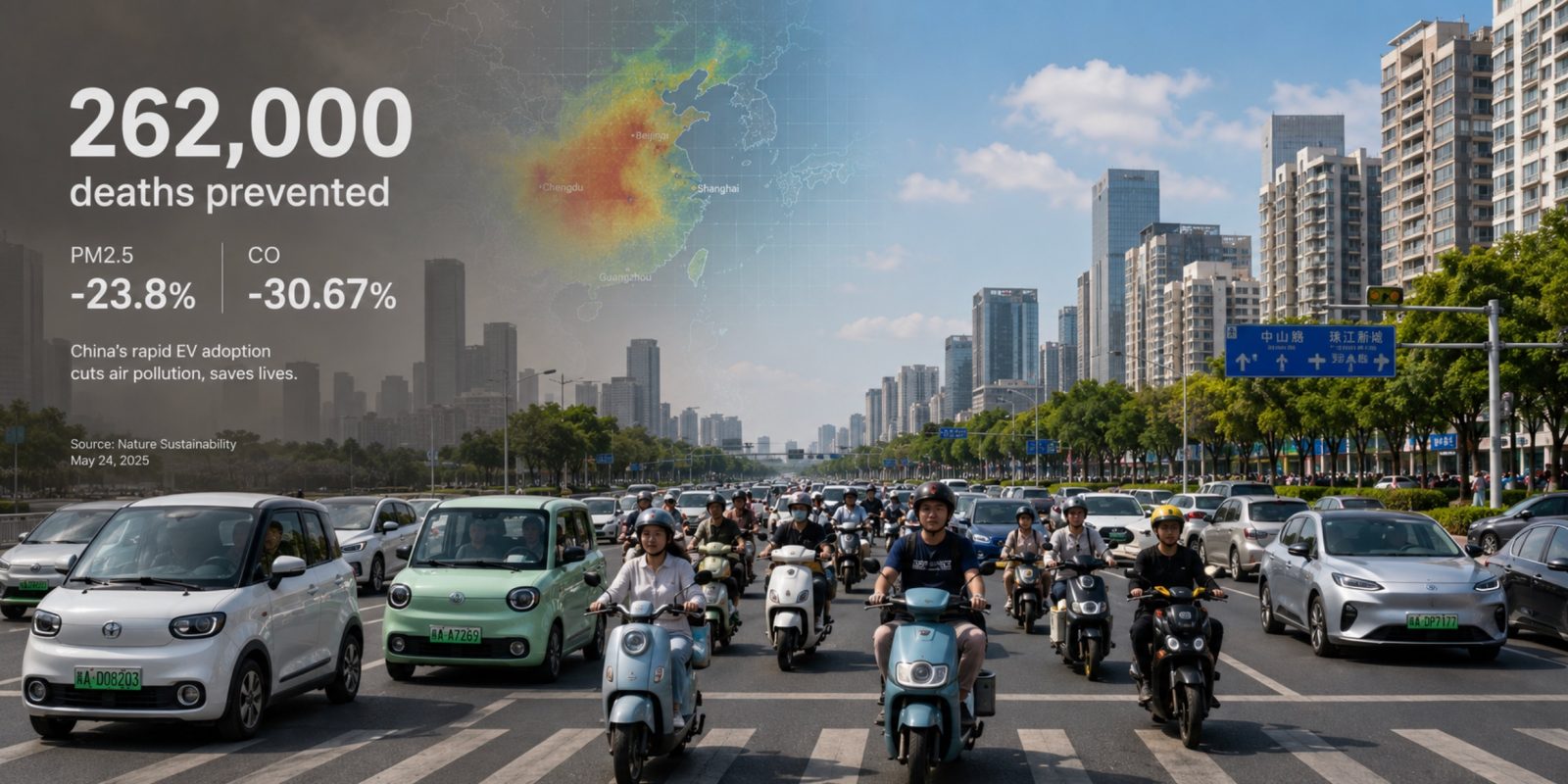
China's rapid electrification of its vehicle fleet prevented an estimated 262,000 premature deaths by reducing urban air pollution, according to a peer-reviewed study published in Nature Health. The research provides concrete evidence that mass EV adoption delivers tangible public-health benefits beyond lower tailpipe emissions.
The study quantifies what environmental scientists have long theorized. As China deployed millions of electric vehicles across its cities over the past decade, particulate matter and nitrogen oxide concentrations dropped measurably. Those reductions correlated directly with fewer respiratory and cardiovascular deaths in major urban centers.
This matters because it shifts the EV conversation beyond climate metrics and fuel economy. For consumers in polluted regions, the health argument for EVs becomes local and immediate. Cleaner air reduces hospital visits, medication costs, and lost work days. Manufacturers can now cite actual mortality data when marketing electric vehicles to governments and the public.
China's scale amplifies the impact. The country produces roughly 60 percent of the world's electric vehicles and sold over 10 million EVs in 2023 alone. That volume creates a real-world laboratory for measuring EV benefits. Western automakers and policymakers watch closely because China's results suggest that aggressive EV targets in Europe and North America could deliver similar health gains.
The study also exposes the hidden costs of conventional combustion engines. Gasoline and diesel vehicles have long externalized their pollution burden onto public health budgets. That 262,000-death figure represents a direct economic benefit that rarely appears in traditional auto industry cost-benefit analyses.
For EV skeptics who focus on battery mining and energy sources, this research adds necessary nuance. Even accounting for the electricity grid's mix of fossil fuels, EVs produce cleaner air in the cities where people actually breathe. That's the outcome that moves public policy and influences consumer choices in densely populated regions