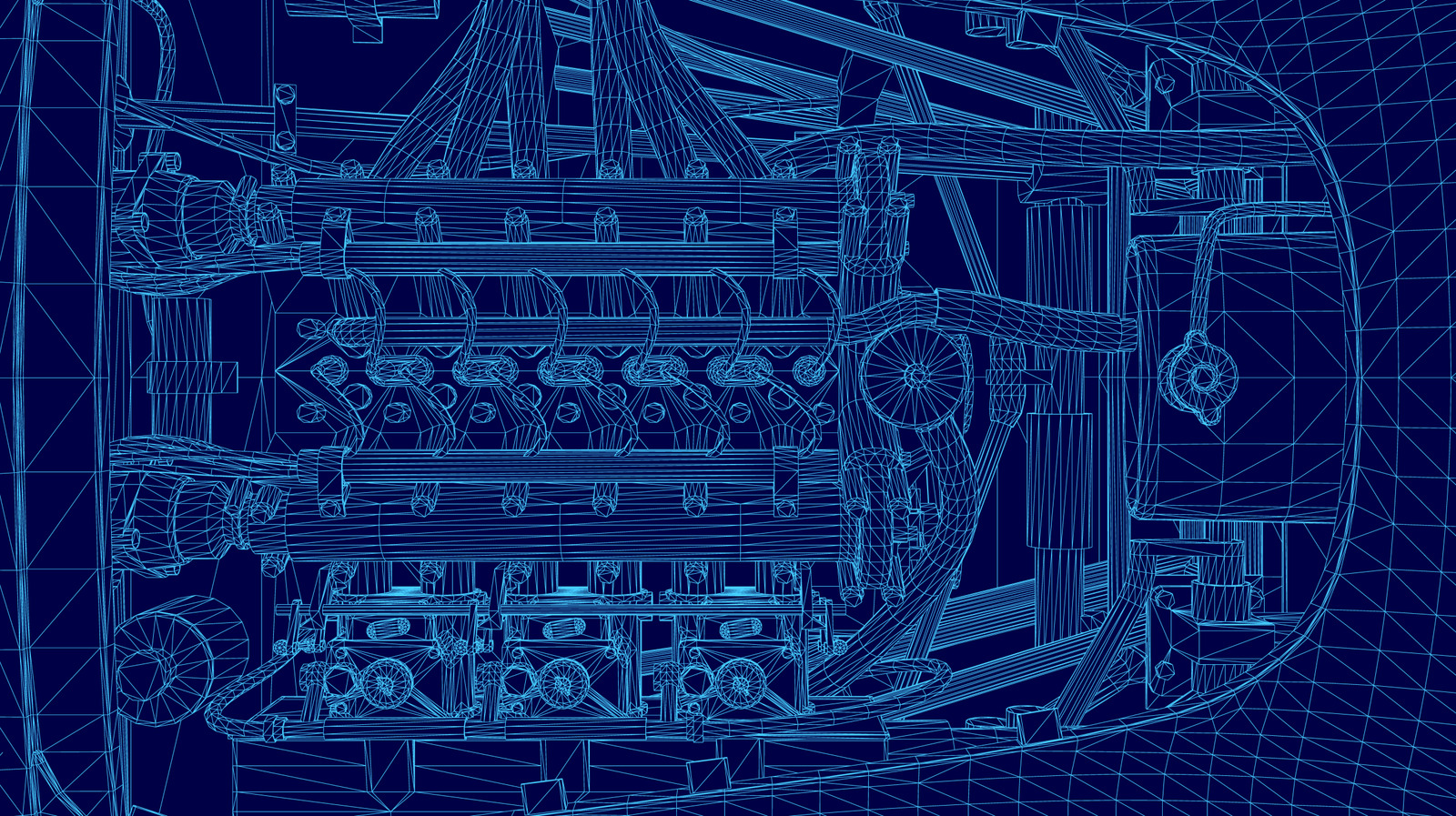
Engine blueprinting represents a methodical approach to extracting maximum performance from an internal combustion engine by bringing every component into precise alignment with manufacturer specifications. The process involves disassembling an engine completely, then measuring and inspecting every part—pistons, rods, crankshaft, cylinder walls, valve seats—against factory tolerances.
The goal differs fundamentally from simple tuning. Rather than adding power through bolt-ons or forced induction, blueprinting eliminates manufacturing inconsistencies that exist even in new engines. Factory tolerances allow for variation. A piston might measure within spec but still be slightly oversized compared to its cylinder. A rod could be fractionally shorter than ideal. These tiny deviations accumulate, creating friction losses and reducing efficiency.
Blueprinting corrects this. Technicians precisely match piston-to-bore clearances, hone cylinders to exact dimensions, and ensure rod lengths are identical. They balance reciprocating parts to eliminate vibration. They flow-test cylinder heads and optimize valve timing geometry. The result is an engine operating at peak mechanical efficiency within its original displacement and design parameters.
Drag racers prioritize blueprinting because consistency matters at the strip. In competition, reliability and repeatability trump raw power. A blueprinted engine won't necessarily produce more horsepower than stock, but it will produce the same horsepower consistently, lap after lap, run after run. It also runs smoother and lasts longer under stress.
The downside: blueprinting demands expertise and time. Technicians must own precision measuring equipment and possess deep mechanical knowledge. Costs reflect this labor intensity. For casual drivers, blueprinting delivers minimal benefit. The stock engine already works. But for competitors and enthusiasts running the same engine repeatedly, blueprinting transforms reliability and performance consistency while respecting the original design intent rather than forcing artificial modifications