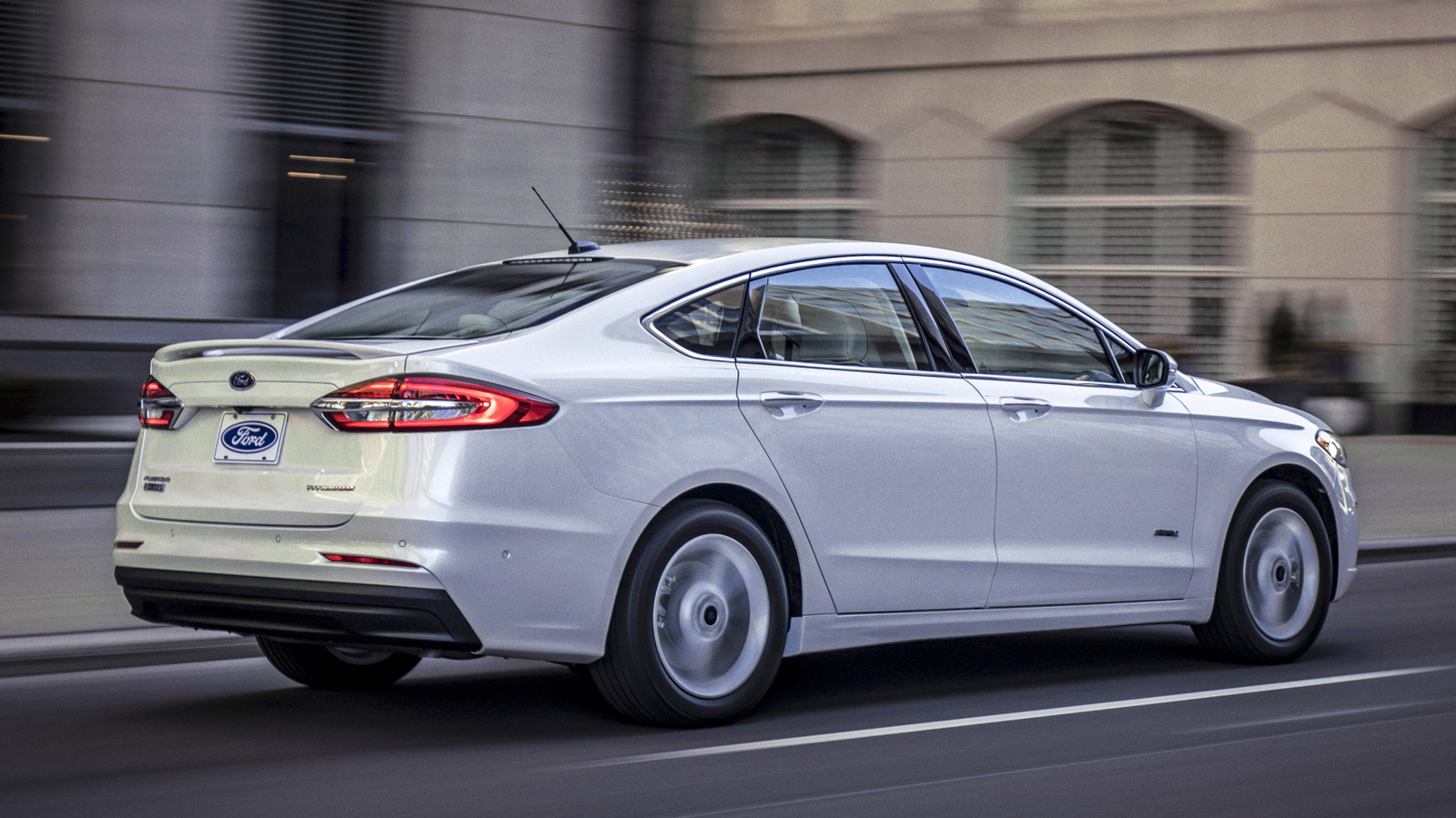
Ford's exit from the sedan market looks permanent, but the automaker hasn't completely closed the door on cars. The manufacturer discontinued its Focus, Fusion, and Taurus sedans by 2020, pivoting entirely toward SUVs and trucks where profit margins run deeper. Yet industry dynamics shift faster than model cycles.
The sedan segment itself hasn't disappeared. Competitors like Toyota, Honda, and Hyundai continue selling Camry, Accord, and Elantra models, albeit with shrinking market share. These manufacturers print money on volume, even if sedan sales peaked a decade ago. Tesla's Model 3 and Model Y proved electrified sedans and crossovers can coexist profitably in the EV era.
Ford's calculation was straightforward. SUVs and trucks dominate North American sales and command higher transaction prices. The F-150, Escape, and Explorer generate substantially more revenue per unit than a sedan ever could. The company's crossover lineup, headlined by the Edge and Escape, effectively captured the compact and midsize sedan buyers who prefer slightly elevated seating position and cargo flexibility.
But several factors could theoretically resurrect Ford sedans. Stricter fuel economy regulations might force the industry back toward lighter vehicles. A major recession could shift consumer preferences toward affordable, efficient cars. Electric powertrains eliminate many traditional sedan disadvantages, including engine bay space requirements and transmission packaging constraints.
The real obstacle isn't engineering or market desire. It's Ford's current product strategy and manufacturing allocation. The company invested heavily in truck and SUV platforms. Reintroducing sedans would require fresh product development, new tooling, and factory retooling at a moment when Ford prioritizes its EV transition.
Consumer sentiment matters too. Ford sedans faced entrenched competition from Japanese rivals with superior reliability reputations. The Fusion never matched