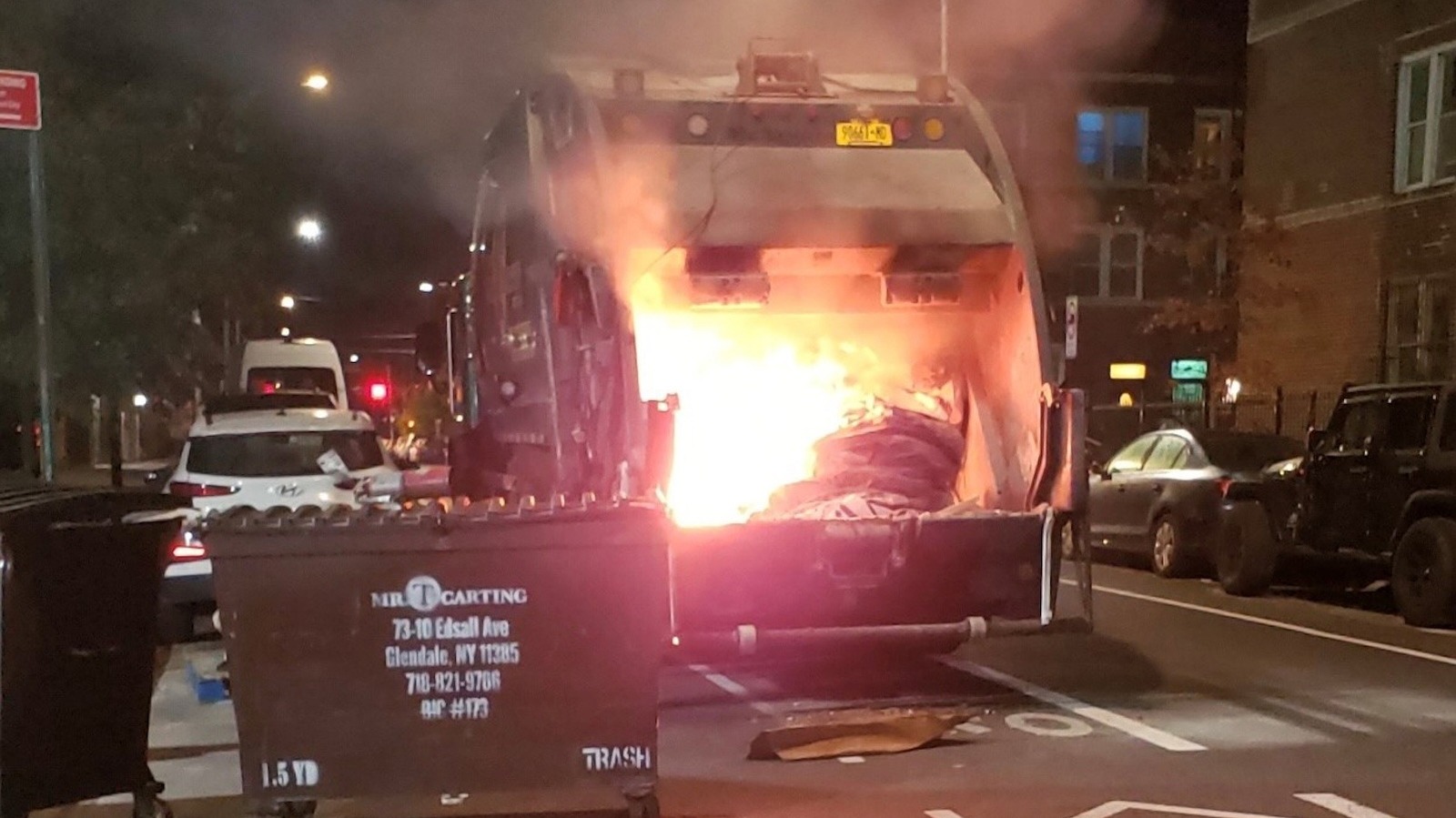
New York City confronts a growing crisis with lithium-ion battery fires in its waste management fleet. Between 2022 and 2025, the city recorded 800 lithium-ion battery fires that killed 30 people and injured 400 others, mostly sanitation workers and first responders handling contaminated loads.
The problem stems from lithium-ion batteries entering the waste stream improperly. E-bikes, e-scooters, power tools, and discarded consumer electronics contain these batteries. When crushed, compressed, or damaged during collection and transport, they ignite spontaneously. Garbage trucks compact waste under tremendous pressure, creating the perfect conditions for thermal runaway in damaged cells.
Sanitation workers face the direct threat. They open bins containing hidden batteries without warning, then load material into compactors that generate heat and friction. Once a fire starts inside a truck's cargo hold, it spreads rapidly through the entire load. Firefighters struggle to extinguish these blazes because water accelerates lithium-ion fires. They require specialized suppression methods and careful handling.
The city's waste infrastructure lacks comprehensive battery sorting and removal protocols. Residents often toss dead batteries into regular trash, unaware of the hazard. Schools, offices, and households contribute billions of discarded devices annually. NYC's sanitation department processes 14,000 tons of waste daily across five boroughs.
Proper battery disposal requires dedicated collection points and recycling facilities designed to handle lithium-ion chemistry safely. Several northeastern recycling companies exist but lack sufficient capacity. The infrastructure gap between collection volume and recycling availability creates the dangerous bottleneck.
Cities nationwide face similar pressures. As EV adoption accelerates and consumer electronics proliferate, lithium-ion battery waste will grow exponentially. Manufacturers bear responsibility for designing safer battery formats and funding collection infrastructure. Regulators must establish