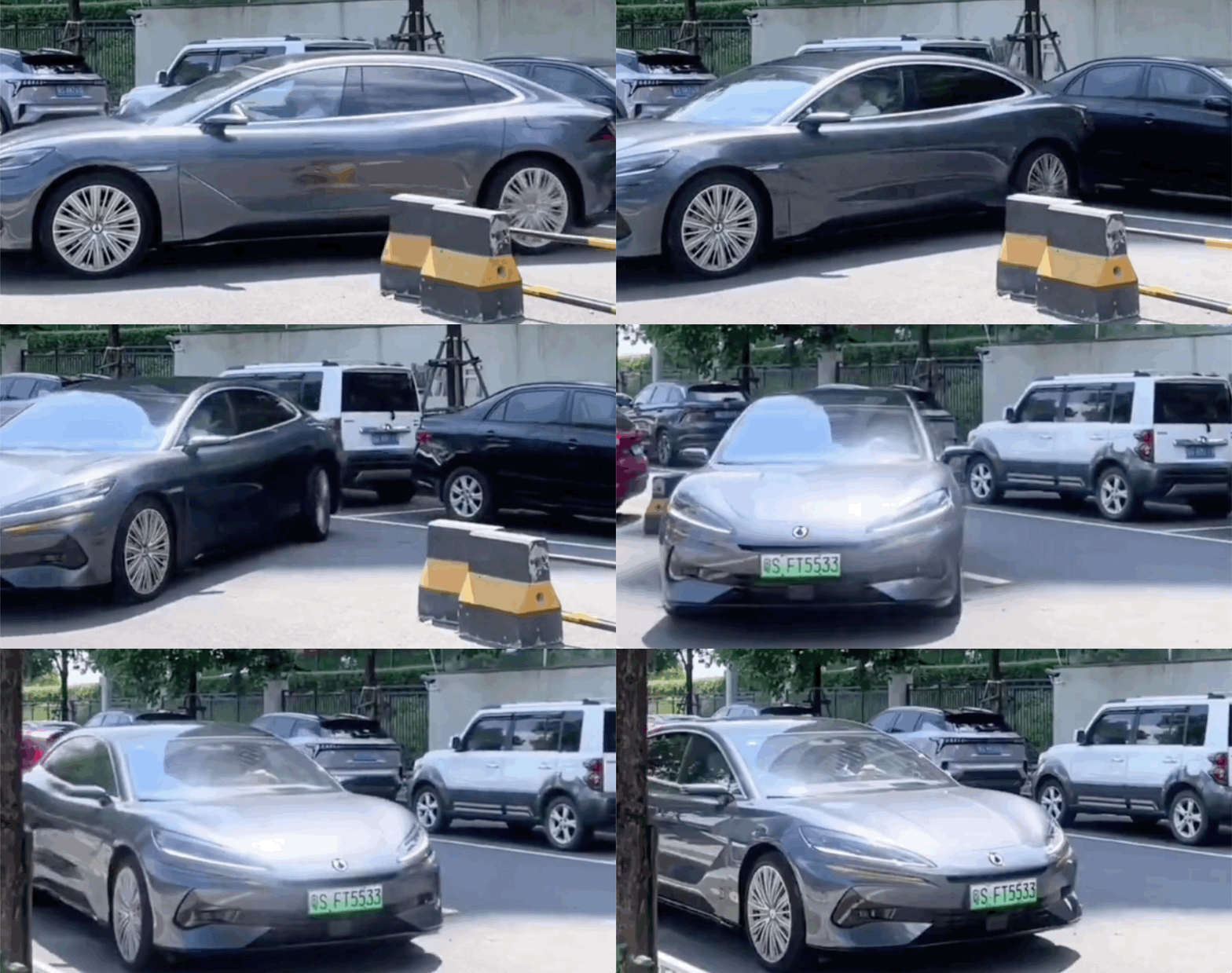
BYD's latest viral video showcases its electric sedan executing a tank turn in a space so tight it seems physically impossible. The maneuver has racked up hundreds of thousands of views, demonstrating what independent electric motors and torque vectoring deliver in real-world driving.
Tank turns represent a party trick that EV engineering finally makes practical. Traditional combustion vehicles cannot perform them because they lack the mechanical flexibility of independent motor control. BYD's system rotates the vehicle nearly 180 degrees within its own footprint by spinning wheels in opposite directions at different speeds.
The Chinese automaker's demonstration carries real significance. Electric motors at each wheel offer granular control that hydraulic steering simply cannot match. This isn't theater. Torque vectoring improves handling dynamics, aids emergency maneuvers, and solves genuine parking problems in cramped urban environments where BYD dominates the market.
American manufacturers have promised similar capabilities for years. Tesla teased "crab mode" for the Cybertruck. General Motors previewed comparable features. Yet delivery remains sparse. BYD already delivers these systems on production vehicles sold to millions of customers across Asia.
The gap reflects different market priorities. China's dense cities reward tight maneuverability. American roads emphasize highway performance and raw capability. BYD has optimized for where its customers actually drive daily.
Independent motor control unlocks other advantages beyond party tricks. Regenerative braking becomes more efficient when each wheel manages its own energy recovery. Traction control gains precision. Stability in emergency situations improves when software orchestrates each motor independently rather than fighting traditional differentials.
This video matters because it shows what EV architecture can accomplish when engineers exploit its advantages rather than simply replicating combustion-era drivetrain concepts. BYD didn't invent tank turns. It deployed existing physics in a production sedan customers buy today. American