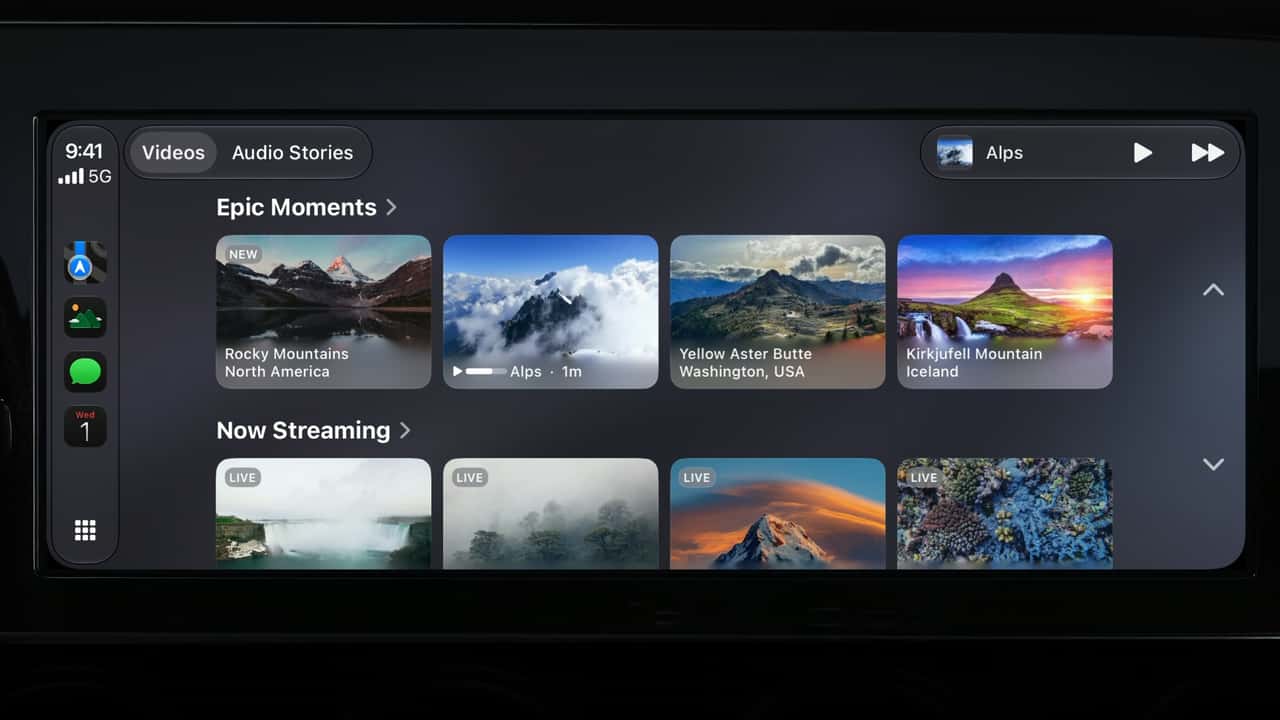
Apple is adding video playback functionality to CarPlay beginning with iOS 27, matching a feature Google rolled out on Android Auto. This expansion transforms the in-car infotainment system into a more comprehensive media platform, allowing drivers to access video content directly through the dashboard display when the vehicle is stationary.
The move reflects intensifying competition between Apple and Google for control of the automotive software layer. Google's Android Automotive platform and Android Auto have gained traction with manufacturers, pushing Apple to evolve CarPlay beyond its traditional role as a smartphone mirroring service. Video playback on CarPlay addresses a real user demand—passengers can now stream content during stops without relying on a separate device or the car's native system.
The feature comes with expected safety guardrails. Video playback activates only when the vehicle is parked, preventing driver distraction. This mirrors Android Auto's implementation and aligns with regulatory concerns around in-car distraction. Apple hasn't disclosed which video apps will support the feature at launch, though major services like Apple TV, Netflix, and YouTube are logical candidates.
CarPlay's evolution matters because it increases stickiness for Apple ecosystem users. Every feature that keeps drivers and passengers within Apple's software ecosystem reduces reliance on vehicle manufacturers' infotainment systems. For automakers, this creates a delicate balance: integrating deep Apple and Google services improves user experience but also cedes control of the in-car experience to tech companies.
The iOS 27 update represents incremental rather than revolutionary progress. Apple still lags in native vehicle integration compared to Android Automotive, which controls more of the underlying system architecture in partner vehicles. However, video playback signals Apple's commitment to deepening CarPlay's utility and staying competitive as infotainment becomes a key selling point for new vehicles. Expect both platforms to continue feature parity races in navigation, media, and vehicle controls as the