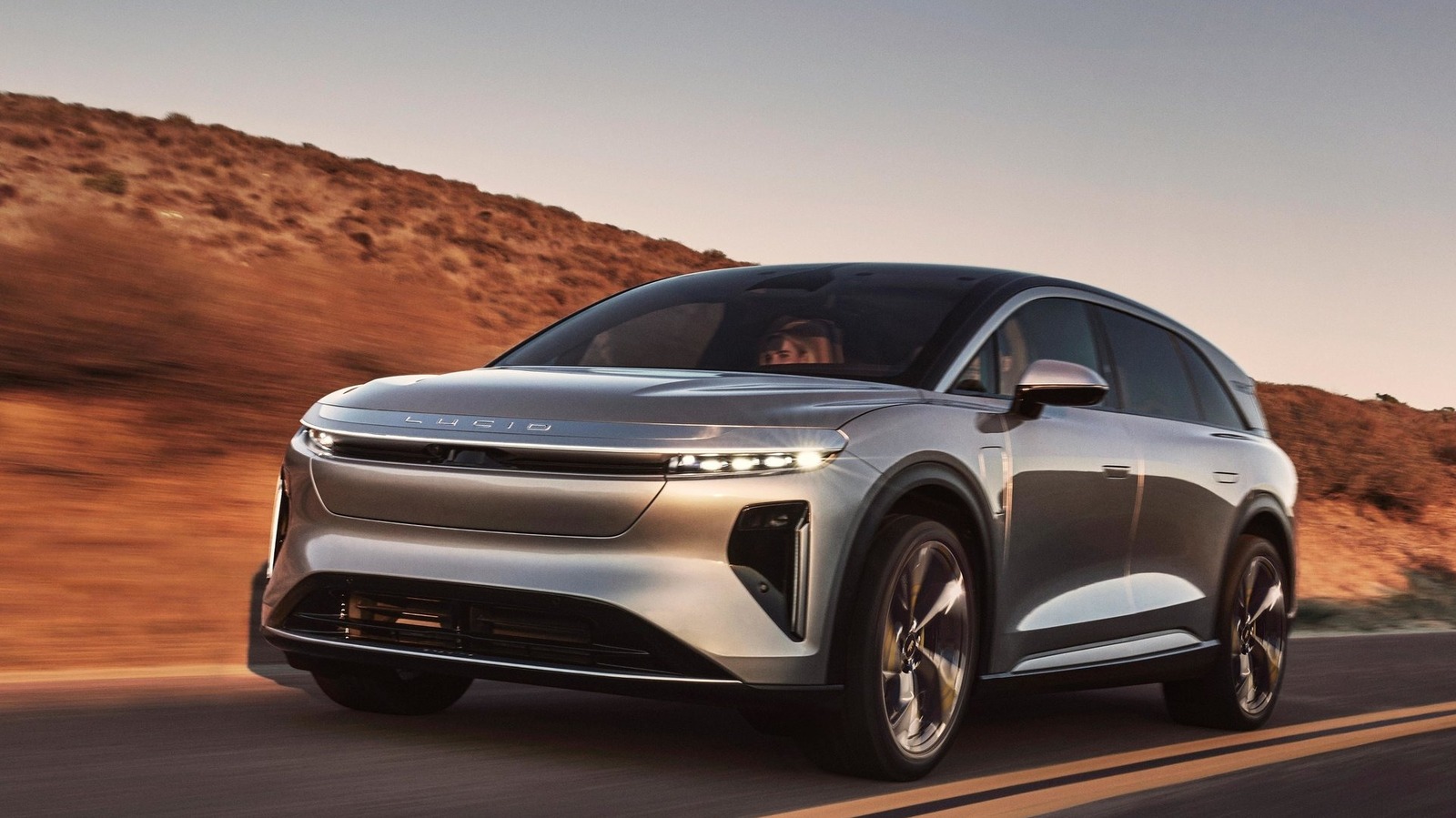
Lucid has extended its hands-free driving assistance software to the Gravity SUV through a recent over-the-air update. The automaker previously deployed this capability on the Air sedan, so the technology represents an expansion of existing functionality rather than a new development.
Hands-free driving assistance allows drivers to navigate highway stretches without holding the steering wheel, provided they remain attentive to road conditions. Lucid's implementation joins a competitive field where Tesla's Autopilot, General Motors' Super Cruise, and BMW's driving assistance systems already offer similar capabilities. The feature typically relies on camera and radar inputs to maintain lane position and respond to traffic patterns.
For Lucid, this rollout addresses a core competitive necessity. The luxury EV market demands advanced driver assistance features as table stakes. The Air, Lucid's flagship sedan, established the technological baseline. Extending the same capability to Gravity, the company's three-row SUV launched in 2024, ensures consistency across the lineup and justifies the premium pricing both models command.
The Gravity fills a critical gap in Lucid's strategy. The Air targets direct competition with the Tesla Model S and Mercedes-Benz EQS. The Gravity targets the Model X and BMW iX segment. Both vehicles carry base prices exceeding $100,000, placing them in the luxury sphere where buyers expect software sophistication alongside performance.
Over-the-air updates have become the delivery method of choice for automotive software enhancements. They allow manufacturers to improve vehicles post-purchase without dealership visits, building customer satisfaction while reducing service center burden. Lucid, like Tesla, views OTA capability as a fundamental advantage over traditional manufacturers still transitioning to this model.
Lucid remains unprofitable and faces production scaling challenges. Each software feature that enhances the ownership experience without manufacturing complexity helps justify existing pricing and supports retention of the