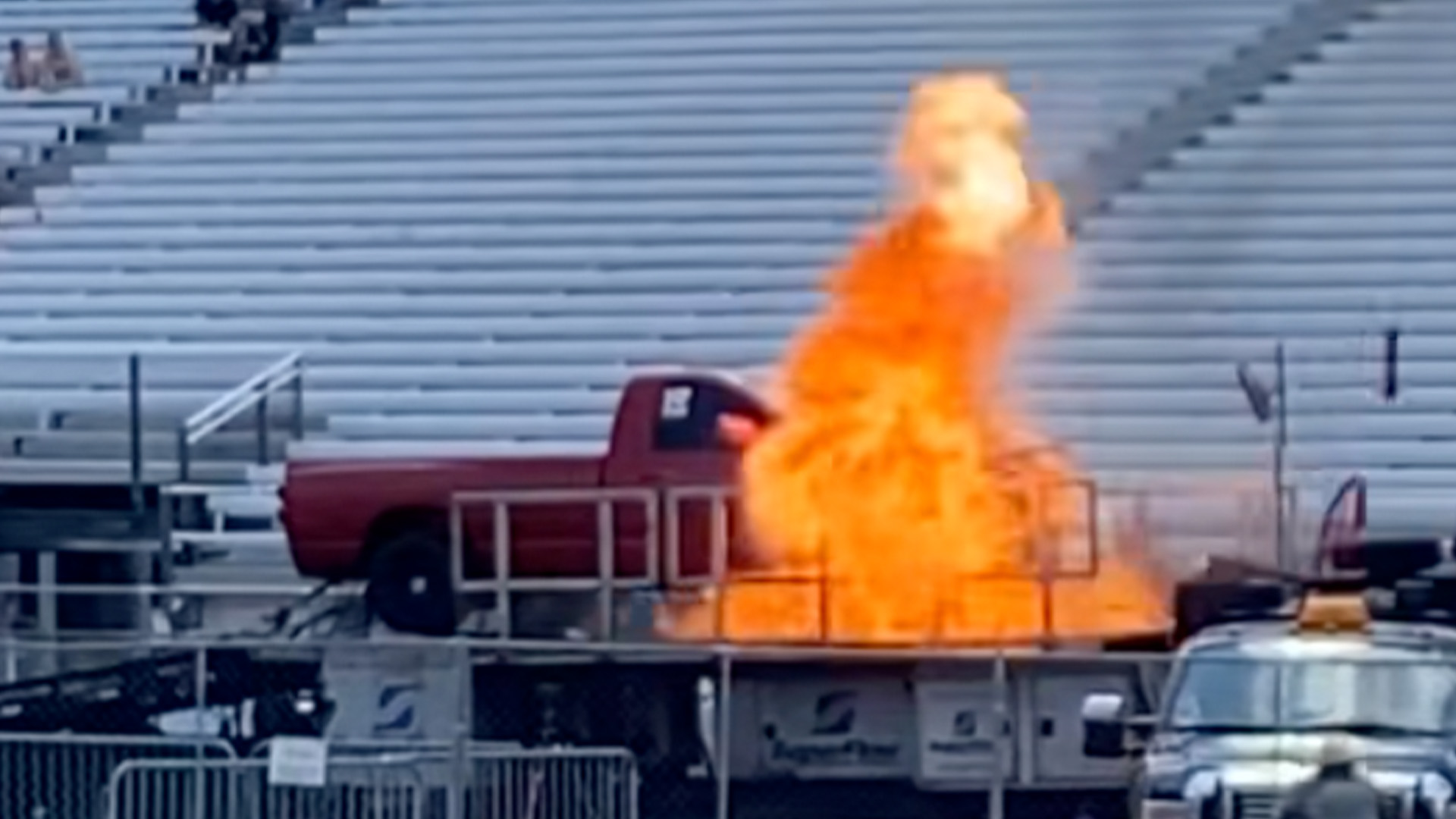
A heavily modified Cummins-powered Ram pickup truck catastrophically failed during a dynamometer test after reaching 2,695 horsepower. The diesel engine suffered a nitrous controller malfunction during the run, resulting in a violent explosion that destroyed components and sent a fireball erupting from the engine bay.
The incident underscores the extreme risks of pushing heavily turbocharged diesel engines far beyond their factory specifications. This Ram represented the kind of full-tilt build common in competitive diesel tuning circles, where nitrous oxide injection systems augment already-aggressive turbocharger setups. At 2,695 hp, the truck operated at roughly six times the stock output of a factory Cummins engine.
The nitrous malfunction proved catastrophic. Unlike a tuned engine that gradually exceeds its limits, a controller failure can dump unmetered fuel and oxidizer into cylinders simultaneously, creating explosive pressure spikes that bend rods, split blocks, and ignite fuel outside the combustion chamber. The resulting fireball visible in footage of the incident represents the rapid oxidation of pressurized fuel escaping the engine.
Dyno testing remains essential for tuners chasing power records, but it also exposes vehicles to real failure risks. Professional shops typically employ safety systems, proper fire suppression, and monitoring equipment to catch problems before catastrophic failure occurs. However, when running triple-digit power adders on engines never designed for such abuse, failure happens fast.
The Ram's demise reflects both the engineering challenge and the appeal of extreme diesel modification. Modern Cummins engines respond well to turbocharging and fuel system upgrades, but each modification layer adds complexity and failure points. Nitrous systems introduce additional variables, requiring precise controller tuning and flawless electrical integration.
This wreck will likely circulate through diesel forums as a cautionary tale. Builders will note