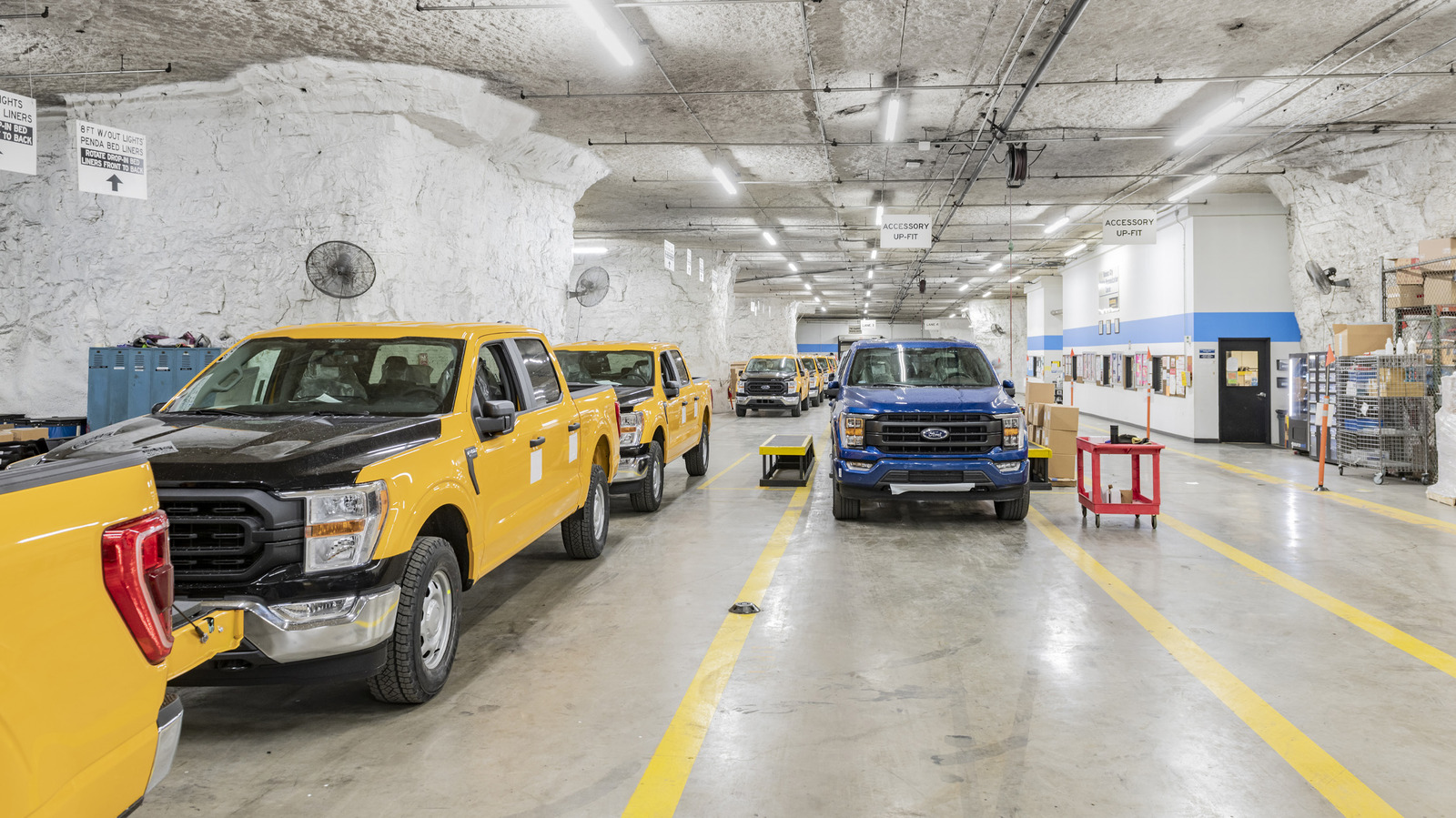
Ford and the U.S. Postal Service both operate out of SubTropolis, a sprawling underground facility carved into a limestone cave system beneath Kansas City, Missouri. Ford's footprint in the facility has grown to more than 1 million square feet since the 1960s, making it one of the automaker's key logistics and storage hubs.
SubTropolis exists 150 feet below street level and spans 55 million square feet total, making it one of the largest man-made caves in the world. The underground location offers Ford significant operational advantages. Temperature and humidity remain constant year-round, protecting sensitive parts, prototypes, and archived materials from weather damage. Energy costs drop substantially compared to traditional above-ground warehouses. The facility also provides Fort Knox-level security for confidential vehicle components and development work.
The Postal Service similarly benefits from SubTropolis's climate control and security for mail sorting and storage. Both organizations depend on the cave's ability to shield operations from extreme weather, tornadoes, and external disruptions common to the Great Plains region.
Ford's use of SubTropolis reflects broader industry trends toward consolidation of logistics infrastructure. Automakers increasingly rely on centralized, climate-controlled warehousing to manage just-in-time supply chains and expensive components. The Kansas City location positions Ford well for distributing parts across the midwest and serving its Kansas City Assembly Plant.
The cave facility has housed industrial tenants since the 1960s, when Ford first recognized its value. Today SubTropolis represents a blend of Cold War-era ingenuity and modern supply chain optimization. Both Ford and USPS represent the facility's dual appeal: a secure, stable environment for operations that demand reliability. For Ford specifically, the underground warehouse provides protection for intellectual property, prototype vehicles, and critical components that can't tolerate temperature swings or humidity fluctuations