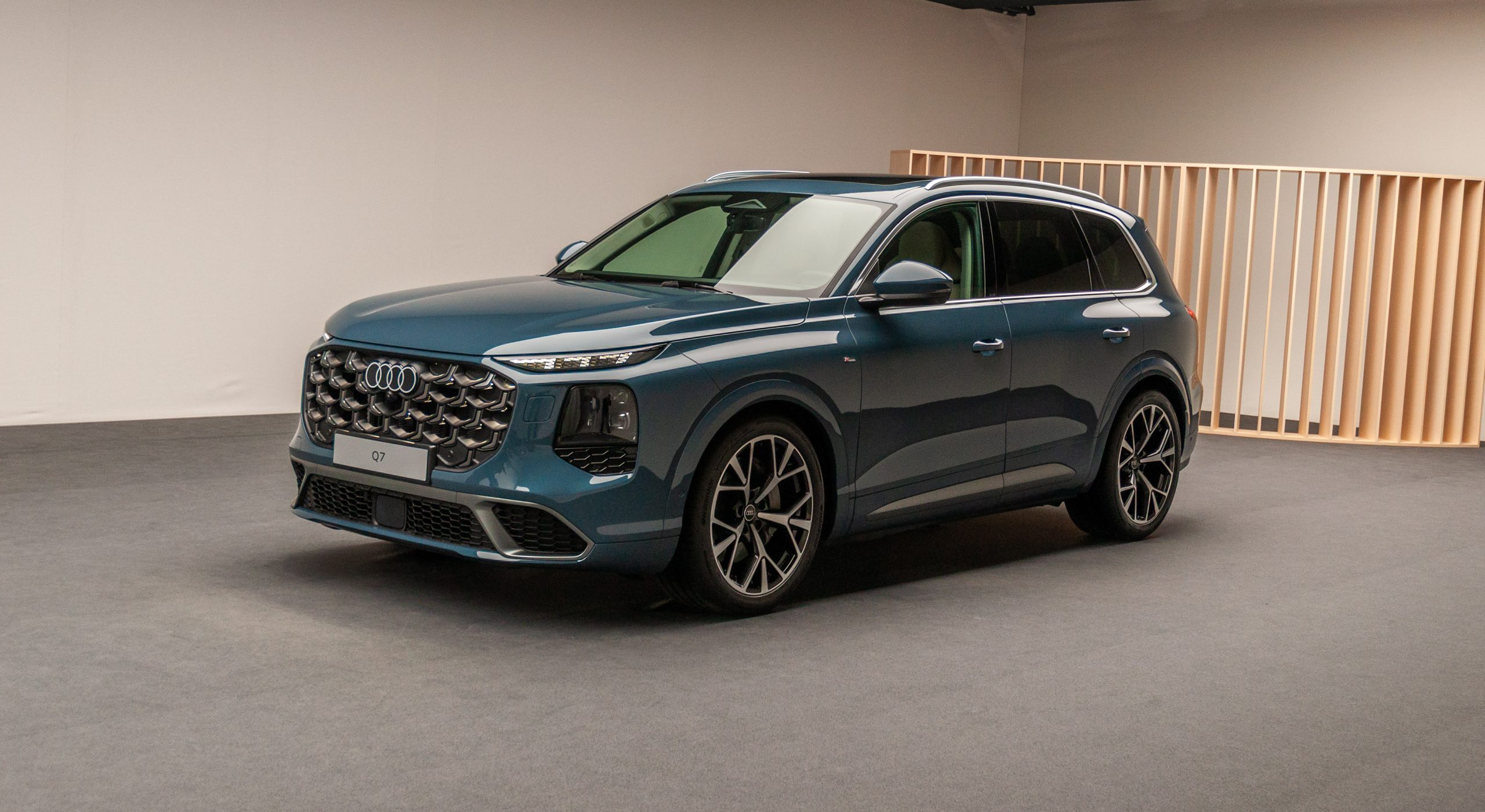
Audi's 2027 Q7 midsize luxury SUV arrives with flagship design language and technology trickling down from the larger, costlier Q9. The three-row family hauler gets a fresh exterior, a 429-horsepower base engine, and an interior cabin lifted almost directly from Audi's upcoming Q9 flagship.
This strategy reflects the industry trend of consolidating platform architectures and cabin designs across model ranges to reduce development costs while maintaining brand consistency. Audi faces stiff competition from BMW's X5, Mercedes-Benz's GLE, and Range Rover's Sport variant. All three competitors offer similar power outputs and interior tech at comparable price points.
The 429-horsepower base engine positions the Q7 competitively. BMW's X5 xDrive50 produces 503 horsepower, while the GLE 580 delivers 503 horsepower as well. The Q7 sits below those benchmarks but should appeal to buyers prioritizing value over maximum acceleration.
Borrowing the Q9's interior represents smart engineering. Audi avoids duplicating R&D spending by sharing infotainment systems, climate controls, and dashboard layouts across platforms. This approach accelerates time-to-market and reduces tooling expenses. Buyers get proven cabin technology rather than experimental features. The Q9, sitting above the Q7 in Audi's three-row lineup, establishes design language that filters downward. This vertical integration keeps the brand looking cohesive.
The redesigned Q7 exterior separates it visually from its interior donor. New body panels, bumpers, and headlight graphics differentiate the SUV despite shared cabin DNA. Audi's design team ensures the Q7 stands on its own rather than appearing as a badge-engineered Q9.
The