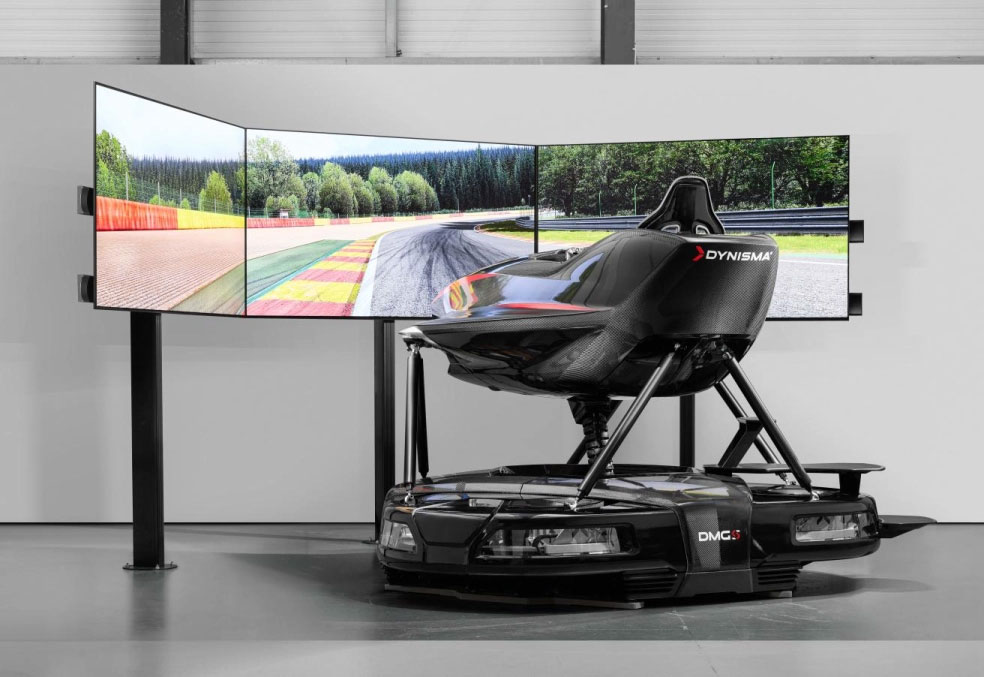
Dynisma unveiled the DMG-S, a compact Formula 1 simulator that matches the performance specifications of its full-scale F1 platforms. The system delivers motion latency below 5 milliseconds and bandwidth exceeding 50Hz, the same core metrics that define Dynisma's professional-grade simulators used by teams and drivers.
The DMG-S targets a broader market than traditional F1 simulators. While Dynisma's full platforms serve elite competition and manufacturer R&D, the compact model opens the technology to esports teams, driver development academies, and facilities with space or budget constraints. The sub-5ms latency proves critical for driver feedback. That response time closely mirrors real vehicle dynamics, allowing drivers to trust simulator data and develop muscle memory that transfers to track performance.
Bandwidth above 50Hz matters equally. This refresh rate captures high-frequency steering inputs and suspension feedback that drivers experience at racing speeds. Lower bandwidth systems miss these nuances, creating a disconnect between simulator and car that erodes training value.
Dynisma faces competition from other simulator makers pursuing similar compression strategies. Cruden and Faros both offer compact platforms with comparable latency specs. The market sees growing demand from esports operators and smaller teams seeking simulator access without $2 million-plus capital expenditure. Costs for compact systems typically run $500,000 to $1.2 million, still substantial but achievable for regional racing programs.
The DMG-S announcement reflects broader simulator adoption across motorsport. Teams now use simulators for driver testing, setup validation, and track familiarization. Esports integration has legitimized consumer-grade motion platforms, raising expectations for what counts as "real" training. Manufacturers including Red Bull and Mercedes rely on simulators for development before physical prototyping, making performance specs non-negotiable.
Dynisma