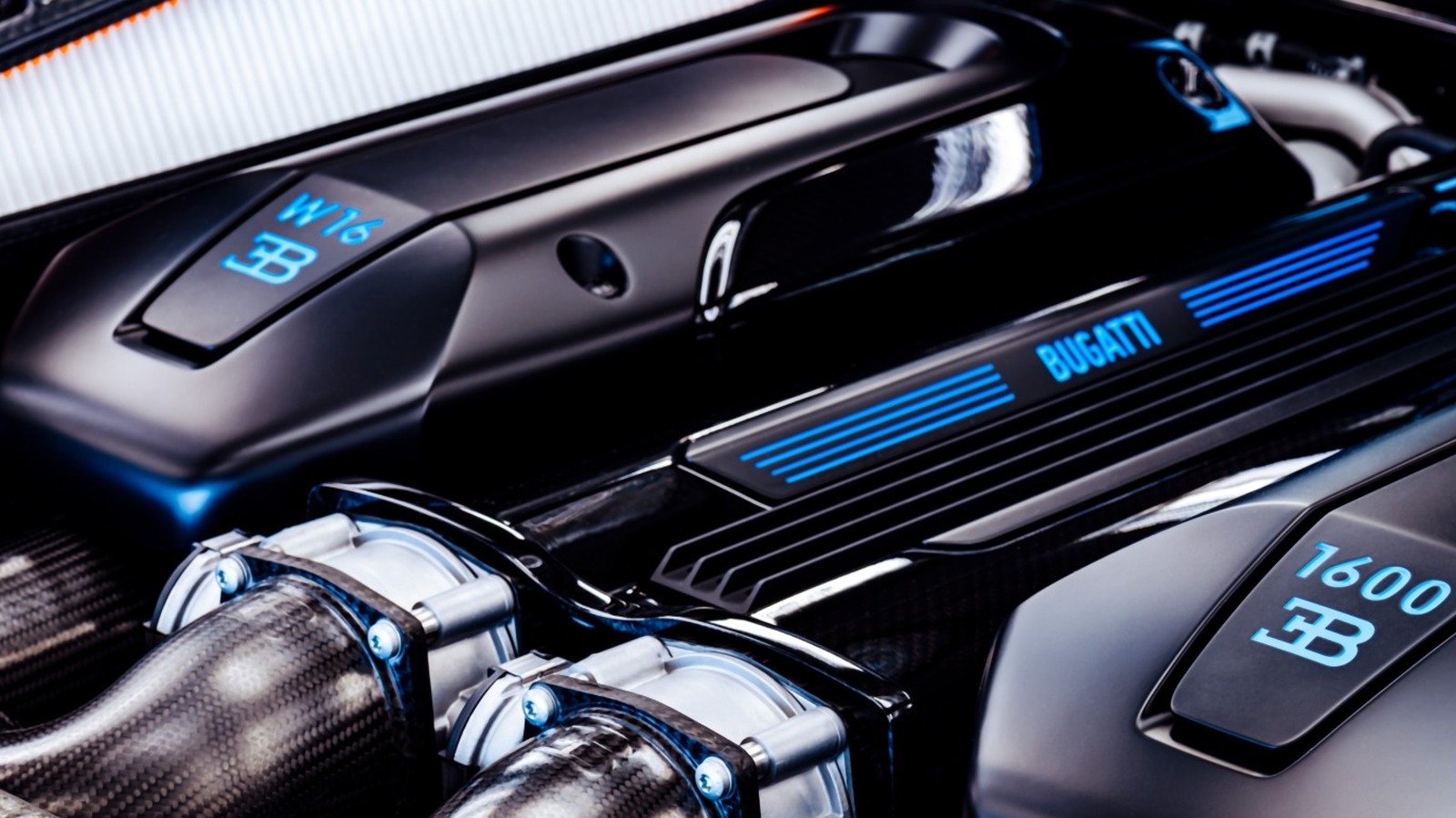
W engines represent a distinct architecture that arranges cylinders in a W configuration, creating a compact alternative to traditional V layouts. Volkswagen pioneered this technology in the 1990s and early 2000s, deploying it across multiple engine families to maximize displacement and power output while minimizing overall length.
The W architecture stacks two V-banks at angles, essentially creating a double-V formation. This layout allows manufacturers to fit more cylinders than conventional designs without extending the engine bay significantly. A W12, for instance, packs twelve cylinders into a footprint comparable to a V10.
Volkswagen's W12 engine powered the Phaeton luxury sedan and featured in the Bugatti Veyron hypercar, producing 626 horsepower in the Veyron's quad-turbocharged variant. The company also built W8 engines for the Passat and Phaeton, offering eight cylinders with less bulk than a V8 would demand.
The W16 represents the ultimate evolution of this concept. It combines two turbocharged W8s into a single engine producing 1,479 horsepower in the Bugatti Chiron. This configuration delivers extraordinary performance while maintaining a relatively compact installation compared to a traditional 16-cylinder layout.
W engines deliver smooth power delivery thanks to balanced firing orders and reduced vibration compared to comparable straight engines. However, they demand greater engineering complexity, precision manufacturing, and higher production costs. More cylinders also mean increased weight and component count.
The architecture remains niche. Production complexities and the shift toward electrification have largely ended W-engine development. Porsche and Audi, both VW Group brands, experimented with W configurations in performance applications, but discontinuation followed market realities.
Modern manufacturers increasingly favor efficient smaller engines with turbocharging or hybrid systems rather than