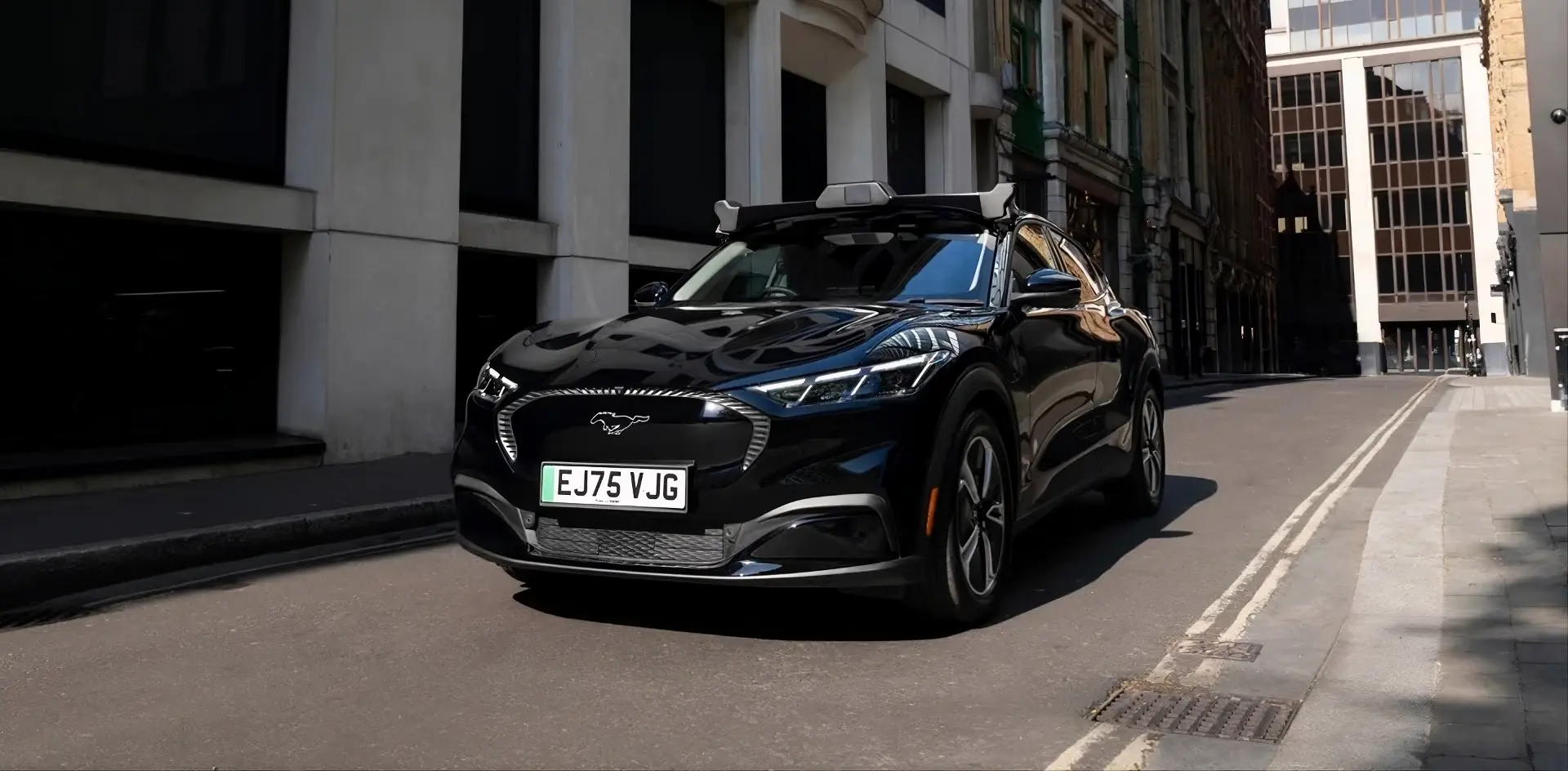
Uber and Wayve are launching London's first robotaxi service, leveraging the AI startup's dynamic self-driving technology designed to handle the city's complex medieval street layout without relying on traditional geofencing.
Wayve's approach differs sharply from competitors like Waymo and Cruise. Instead of restricting operations to carefully mapped zones, Wayve's model learns to navigate unpredictable urban environments through machine learning. The system adapts to London's narrow lanes, roundabouts, and historic street patterns in ways that geofenced competitors cannot match. This flexibility proves critical in a city where street layouts defy grid systems and change frequently due to construction or event closures.
The partnership represents a significant expansion for both companies. Uber gains robotaxi capability in a major global market without building its own autonomous driving infrastructure from scratch. Wayve, which has raised over $1 billion in funding, validates its technology through deployment with one of the world's largest ride-hailing platforms.
London presents both opportunity and challenge. The UK market shows strong demand for mobility services, yet regulators remain cautious about autonomous vehicles. London's traffic patterns, cyclist presence, and pedestrian density demand robust safety systems. Wayve's learning-based approach offers advantages here. Rather than pre-programming every scenario, the AI improves continuously as it encounters real-world situations.
The timing aligns with broader industry momentum. Waymo operates established robotaxi services in San Francisco and Phoenix. Cruise faced setbacks but continues testing. Meanwhile, traditional automakers like BMW and Mercedes pursue autonomous capabilities through partnerships and in-house development.
Wayve's London entry tests whether AI-first autonomous driving can scale beyond its training grounds. Success here positions the startup as a serious player against well-funded competitors. For Uber, it hedges against dependency on any single autonomous technology while preparing for a future where