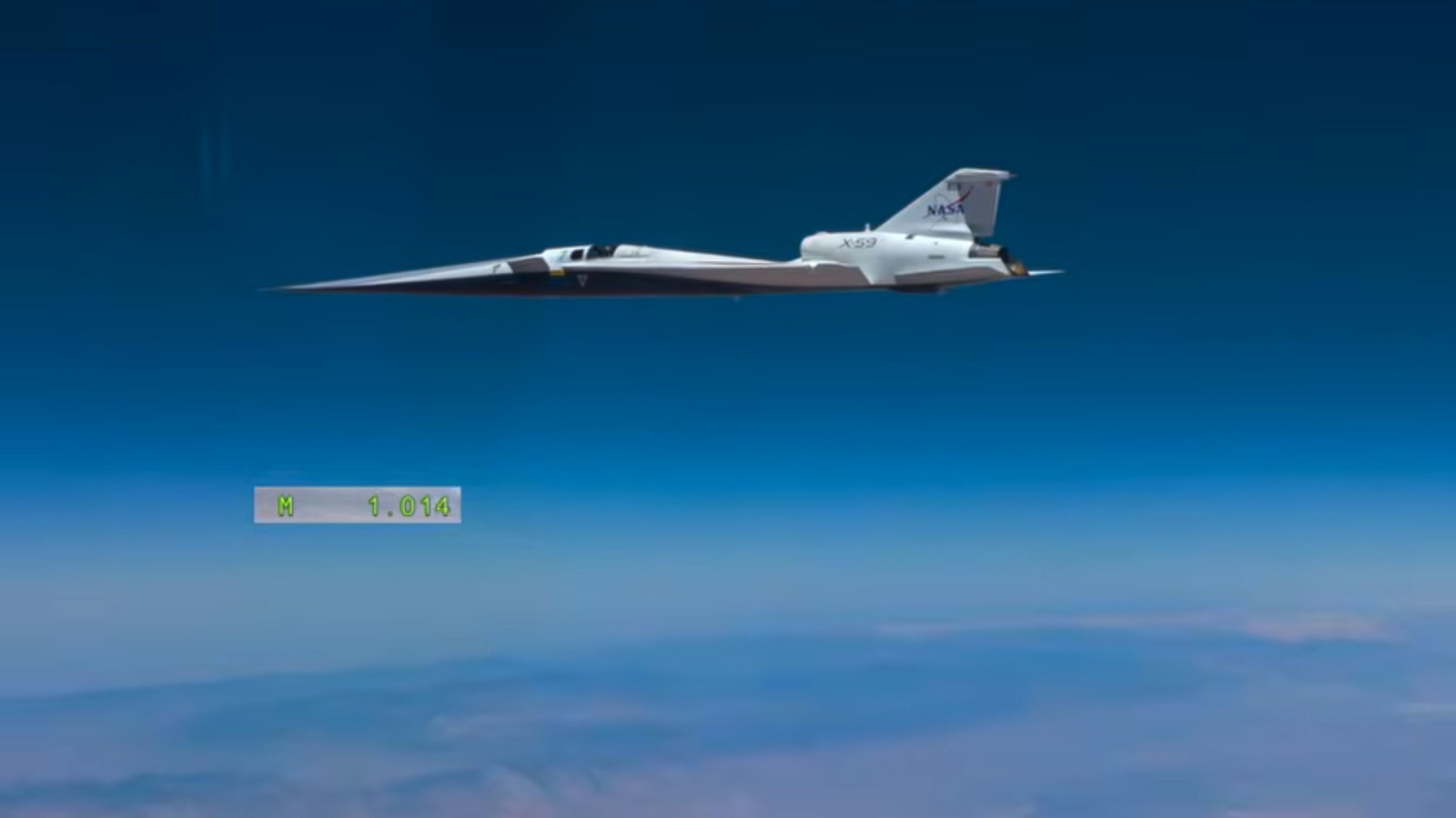
NASA's X-59 experimental aircraft completed its first supersonic flight, marking progress toward quieter hypersonic travel over land. The aircraft, designed to test low-boom flight technology, operated at supersonic speeds while generating minimal sonic shock waves that traditionally rattle homes and communities below flight paths.
The X-59 uses shaped fuselage design and advanced aerodynamics to compress shock waves rather than create the sharp, disruptive sonic booms that have restricted supersonic flights over populated areas for decades. Instead of a single loud bang, the aircraft produces a series of softer thumps, reducing ground noise significantly.
This breakthrough matters because it removes a major regulatory barrier to commercial supersonic travel. The Federal Aviation Administration currently prohibits supersonic flights over the continental United States specifically due to sonic boom disruption. If NASA validates the low-boom concept through the X-59 program, airlines could eventually operate aircraft like Boom's Overture or Aerion's AS2 at supersonic speeds across American airspace, cutting transatlantic flight times nearly in half.
The testing program represents years of theoretical work becoming reality. NASA partnered with Lockheed Martin Skunk Works to build the X-59, which cost roughly 400 million dollars. The aircraft's unique shape, with its smooth nose and specially designed wings and tail, represents a departure from traditional fighter jet aesthetics built around performance alone.
NASA plans additional test flights over the coming months to gather acoustic data and refine the low-boom design. The agency will eventually conduct flights over populated areas to measure actual community response to the quieter shock waves.
The broader aerospace industry watches closely. Supersonic travel represents an enormous market opportunity if noise regulation becomes workable. Aircraft manufacturers have poured billions into next-generation supersonic designs, but all face the same sonic boom problem. The X-59's success could unlock an entire category of