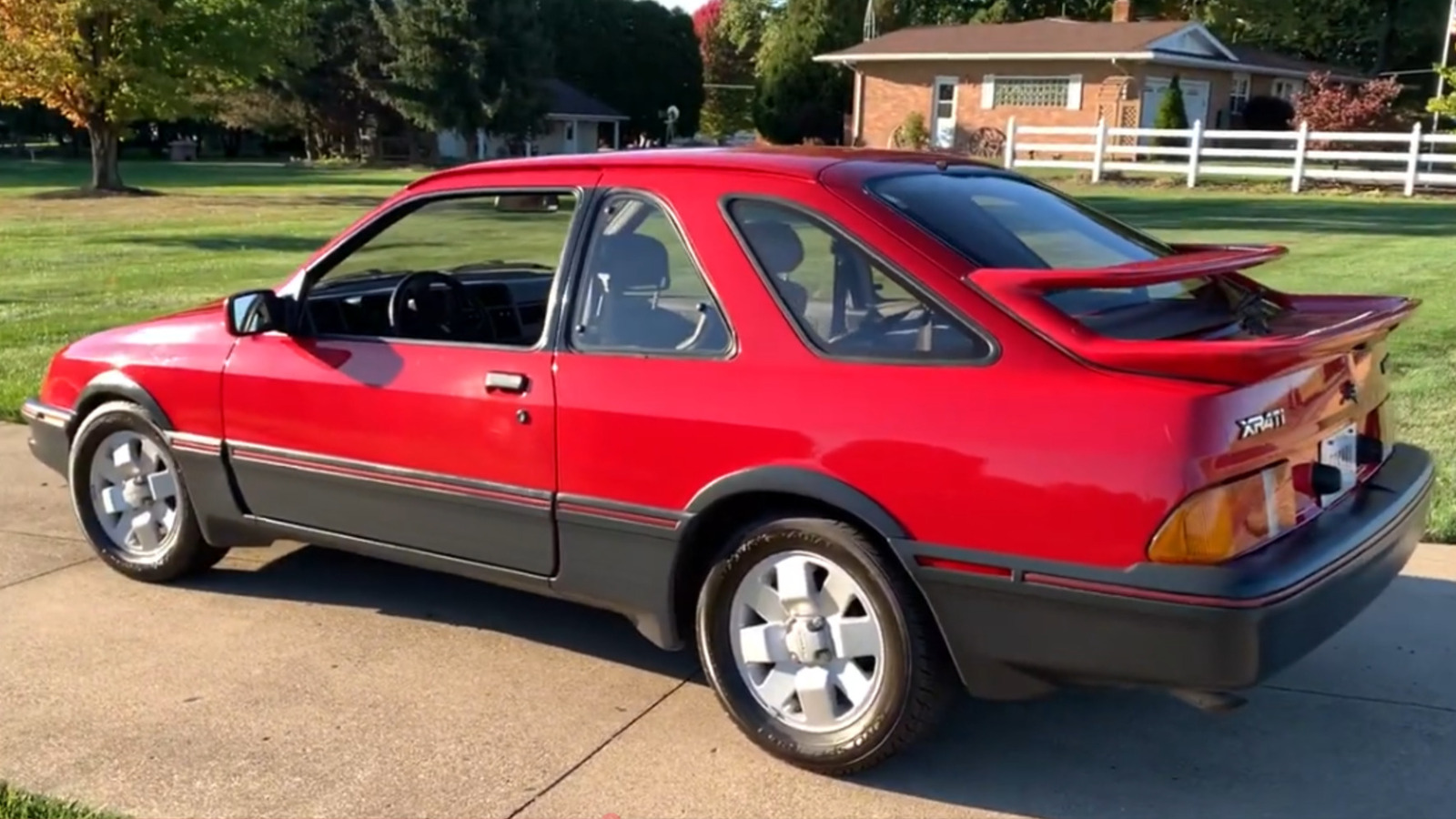
Ford launched the Merkur XR4Ti in 1985 as its answer to the BMW 3 Series, importing the European Ford Sierra platform and federalizing it for American buyers. The car packed genuine performance credentials: a 2.3-liter turbocharged four-cylinder engine producing 175 horsepower, independent suspension, and a five-speed manual transmission. It handled better than most American competitors and delivered the driving engagement that sportier buyers wanted.
Yet the XR4Ti failed commercially despite solid engineering. Ford faced several headwinds. The marque itself, Merkur, meant nothing to American consumers accustomed to the Ford nameplate. BMW owners viewed the Merkur as a budget alternative rather than a legitimate threat. Domestic rivals like the Mustang and Camaro dominated the performance segment, while Japanese imports from Nissan and Toyota undercut the price. The XR4Ti cost around $15,000 at launch, positioning it between mass-market compact cars and genuine luxury sport sedans.
Interior quality lagged behind BMW standards, and Ford's reliability reputation didn't match Mercedes or Porsche in buyers' minds. American drivers also preferred V8 power and straightforward performance over European-style turbocharged efficiency. The car's availability remained limited to select dealerships, restricting market reach further.
Production ended in 1989 after just 60,000 units sold worldwide, with North American sales accounting for roughly half that figure. The Merkur brand shut down entirely, ending Ford's most ambitious attempt to compete directly in the premium sport compact segment.
The XR4Ti represented a strategic misstep. Ford built a genuinely competent car but misjudged how Americans perceived imports versus domestic brands, and how brand identity trumps engineering substance in luxury markets. The car deserved better, but market forces and marketing execution proved