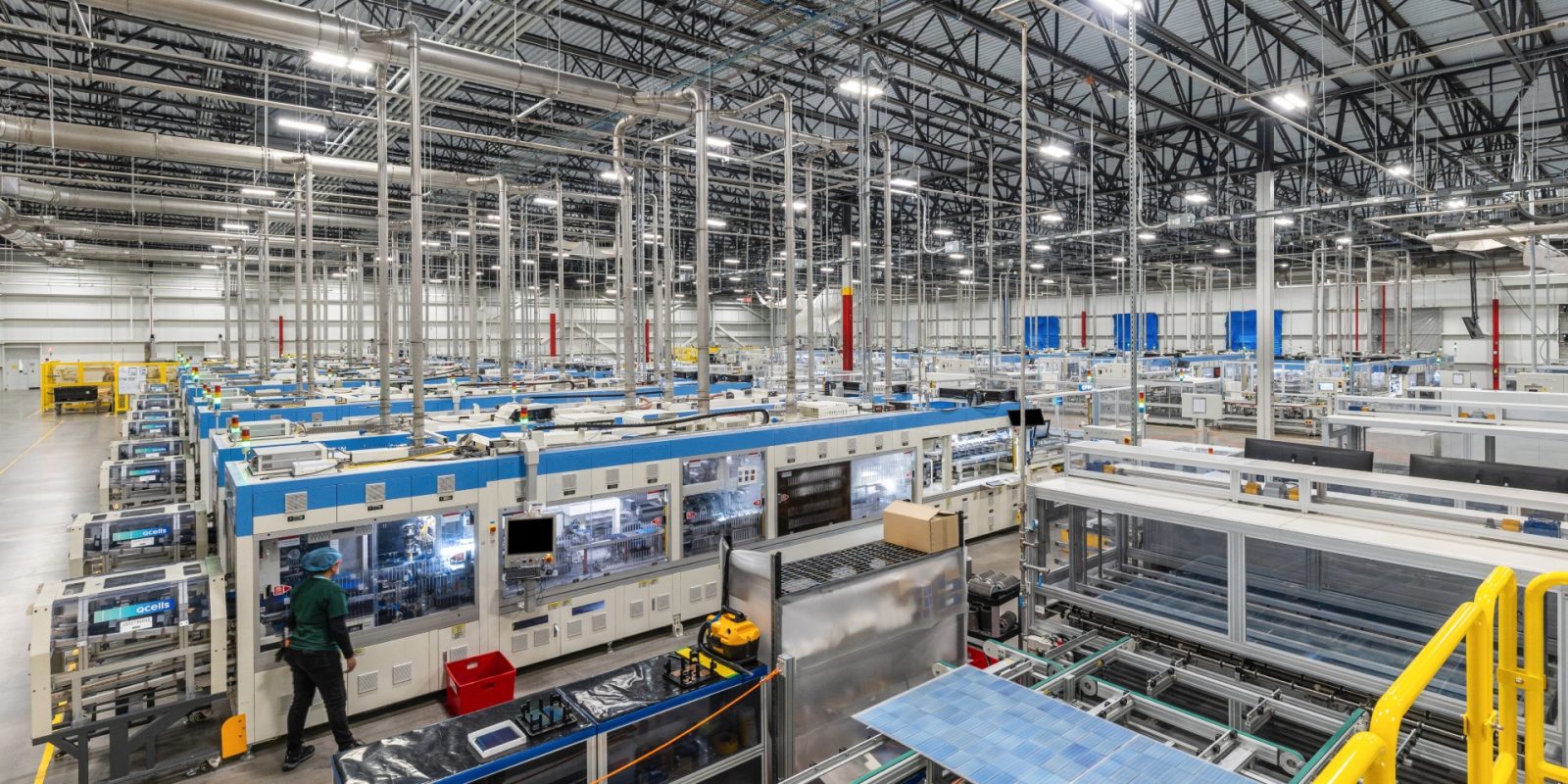
Qcells has begun production at its Cartersville, Georgia manufacturing facility, positioning it to become the largest solar cell factory ever built in the United States by the third quarter of 2026. The South Korean solar manufacturer's expansion into domestic production marks a watershed moment for American renewable energy infrastructure.
This factory represents a direct response to shifting U.S. trade policy and tariffs that have reshaped the solar supply chain. Rather than import finished cells from Asia, Qcells now manufactures them domestically, reducing logistics costs and vulnerabilities to overseas disruptions. The facility's scale underscores how tariffs and onshoring incentives drive capital investment in American manufacturing.
The Cartersville plant's capacity will dwarf existing U.S. solar cell production. Prior to this facility, no American solar cell manufacturer operated at industrial scale. Most U.S. solar companies have assembled panels from imported cells or relied on foreign manufacturing partners. Qcells breaks that pattern with a facility engineered from the ground up for mass production.
Georgia's selection reflects tax incentives and workforce availability in the region. The state has aggressively recruited automotive and battery manufacturers, creating infrastructure and labor pools that support energy manufacturing. Qcells benefits from state and federal support designed to rebuild American solar supply chains.
The timeline matters. Reaching full capacity by Q3 2026 means Qcells will ramp production aggressively over the next 18 months. This speed depends on stable regulatory environments and sustained demand for solar panels. If tariffs shift or demand softens, timelines could slip.
For the broader industry, Qcells' bet signals confidence in long-term U.S. solar growth. Competitors including JinkoSolar and Canadian Solar have also announced American manufacturing plans. The result is a reshuffled supply chain that strengthens domestic capacity but adds manufacturing costs relative